
The Illusion of World War III
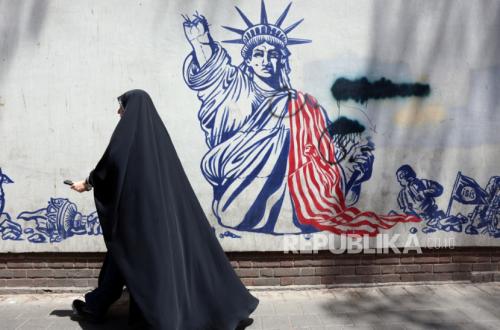
Every time the conflict in the Middle East enters a new chapter, an old question resurfaces: is this the beginning of World War III? The concern intensified when Iran warned that President Trump’s ultimatum could trigger a global war, while world military spending reached its highest point since the end of the Cold War. However, the question is wrong. The greatest danger is not the outbreak of World War III, but a regional war that slowly expands across territorial boundaries, actors, and sectors of global life without ever officially becoming a world war. In its historical sense, a World War requires a political architecture that the current US-Iran crisis does not possess. World War I and II became global conflicts because of alliance systems that automatically bound major powers. A single event in Sarajevo in 1914 dragged almost all of Europe onto the battlefield because every country was bound by an obligation to defend its allies. Such a situation is not found in the current conflict. Neither China nor Russia has a military obligation to defend Iran. Both are actually advantaged by remaining outside the conflict. As long as Washington drains its military resources and political attention in the Middle East, the United States’ room for manoeuvre in the Indo-Pacific and Eastern Europe becomes increasingly limited. Beijing does not need to send a single warship to enjoy the strategic consequences of a war that weakens its main competitor. Another distinguishing factor is nuclear deterrence. Although Iran is not a nuclear-armed state, relations between the major powers remain overshadowed by the logic of mutually assured destruction. The risk of direct war between superpowers has become too expensive to choose. At the same time, economic interdependence between the United States, China, and various world economic centres creates a much stronger disincentive compared to conditions in 1914 or 1939. However, the low probability of World War III does not mean the world is heading towards a safer situation. On the contrary, what is taking place is horizontal escalation: conflict expands not merely through territorial expansion, but through the increase of actors, arenas, and forms of warfare. This phenomenon is clearly visible in the Red Sea. Since late July, the Houthis in Yemen have reopened a front of attacks against Saudi Arabia by striking oil tankers and disrupting international shipping lanes. What is occurring is not merely an extension of Iran’s reach, but a non-state actor exploiting the momentum of war to revive its own conflict agenda. The Yemeni civil war has regained space to escalate. As a result, the world now faces two flashpoints simultaneously—the Strait of Hormuz and Bab al-Mandab—both of which determine the stability of global trade and energy. In other words, modern war no longer develops solely through territorial expansion, but through the expansion of actors. The more parties bring their own interests into the conflict, the less ability major states have to control the direction of escalation. The potential for conflict expansion is also seen in Washington’s pressure on several European allies to provide support for its military operations against Iran. Although it does not create automatic alliance obligations like in World War I, this dynamic shows how a regional conflict can gradually draw in the involvement of more and more countries. The dividing line between a regional war and a multi-state conflict becomes increasingly blurred, even though both remain fundamentally different from a world war. War escalation also does not always occur on the battlefield. In Iran itself, various reports of tension between the Iranian President and Supreme Leader Mojtaba Khamenei show that the pressure of war is beginning to test the cohesion of the political elite. In a protracted conflict, internal rifts can complicate the decision-making process and increase the risk of miscalculation, both in military escalation and opportunities for diplomatic resolution. The expansion of war also occurs beyond the military domain. Cyber-attacks on critical infrastructure, digital disinformation that deepens public polarisation, and the potential for cross-border radicalisation show that modern conflict moves far beyond the conventional battlefield. Even its environmental impacts often escape attention. Attacks on energy facilities have the potential to increase carbon emissions and marine pollution, while military emissions themselves are still not fully covered in international climate reporting mechanisms. For Indonesia, the issue is not simply whether World War III will occur. What is far more important is readiness to face the impact of a conflict that has already spread to various sectors. Disruption to the energy supply chain through the Strait of Hormuz and Bab al-Mandab could drive import inflation. Cyber threats, disinformation, and transnational radicalism also have the potential to increase as the war continues. World War III may not have begun. Yet, the world has already started to bear the costs that have been synonymous with a world war. Therefore, the measure of a war is no longer determined by how many countries are fighting, but by how widespread its impact is on the world.