
The History of the Youth Pledge of 28 October and Its Meaning
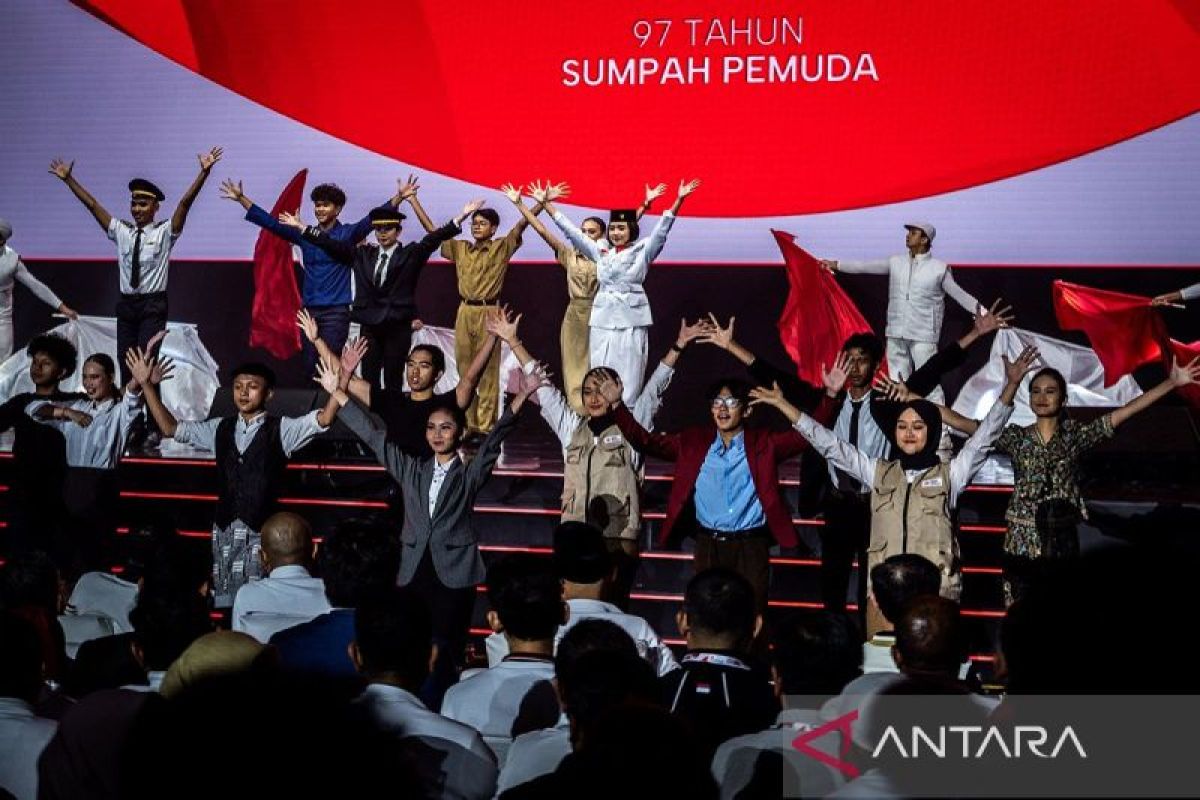
Jakarta (ANTARA) — The Youth Pledge, commemorated every 28 October, is a major milestone in the history of Indonesia’s struggle. The pledge, made at a gathering of young people in 1928, affirmed their commitment to one homeland, one nation and one unifying language, despite their different regional and organisational backgrounds.
The Youth Pledge did not emerge suddenly. It was the culmination of a developing youth movement that fostered national consciousness and sought to move beyond regional identities in pursuit of shared aspirations.
The event became an important part of Indonesia’s long journey towards independence, proclaimed on 17 August 1945.
Before the Youth Pledge was declared, youth organisations had emerged in various regions. Groups such as Jong Java, Jong Sumatranen Bond, Jong Bataks Bond, Jong Celebes, Jong Ambon and Jong Islamieten Bond provided young people with forums for discussion and for developing an awareness of the importance of unity.
Although they came from different regional and organisational backgrounds, young people began to recognise that the struggle would be stronger if pursued with a shared national spirit.
These efforts continued at the First Youth Congress, held in Jakarta from 30 April to 2 May 1926. The meeting was an early step towards strengthening cooperation among youth organisations and developing the idea of Indonesian unity.
Two years later, the Indonesian Students’ Association (PPPI) initiated the Second Youth Congress. Ahead of the congress, young people held preparatory meetings on 3 May and 12 August 1928 to discuss the organising committee, agenda, venue and costs.
The Second Youth Congress was held in Jakarta on 27–28 October 1928. It consisted of three sessions at different venues: the Katholieke Jongenlingen Bond building, the Oost-Java Bioscoop and the Indonesische Clubgebouw at 106 Jalan Kramat.
The congress discussed issues relating to unity, education, nationalism and the scouting movement. These discussions showed that unity required not only shared aspirations, but also education and a willingness to work together.
At the final session, on 28 October 1928, participants adopted a resolution that later became known as the Youth Pledge. Muhammad Yamin drafted it, and congress chairman Sugondo Djojopuspito read it aloud.
Before the resolution was read, Wage Rudolf Supratman performed the song Indonesia Raya on the violin. The congress participants welcomed the performance, which became an important part of the historic event.
The text of the Youth Pledge of 28 October 1928
The resolution of the Second Youth Congress contained three main declarations affirming unity of homeland, nation and language. The Youth Pledge, as it is known today, reads:
We, the sons and daughters of Indonesia, acknowledge one homeland: Indonesia.
We, the sons and daughters of Indonesia, acknowledge one nation: the Indonesian nation.
We, the sons and daughters of Indonesia, uphold the language of unity: Indonesian.
The three declarations affirmed a shared identity amid the diversity of the Nusantara. They presented the homeland and nation as one, and established Indonesian as the language of unity.
The original 1928 text used the spelling conventions of the time. The version known today has been adapted to modern Indonesian spelling without changing the substance of the pledge.
The Youth Pledge is more than a historical event commemorated each year. It embodies values that remain relevant to Indonesian society.
1. Affirming unity amid differences
Indonesia is home to diverse ethnic groups, regional languages, customs and religions. The Youth Pledge is a reminder that these differences need not prevent people from pursuing shared goals as a nation.
Unity does not mean erasing regional or cultural identities. Rather, every group can preserve its distinctive character while respecting Indonesia’s national identity.
2. Fostering love of the homeland
The pledge to one homeland recognises Indonesia as a shared space that must be protected. This value can be put into practice through care for the environment, respect for fellow citizens and participation in community life.
Love of the homeland can also be expressed by protecting cultural heritage and contributing to development according to one’s abilities.
3. Strengthening Indonesian national identity
The pledge to one nation affirms that a national identity can unite people from different backgrounds. This awareness is important for maintaining solidarity and preventing differences in identity from being used to divide society.
4. Establishing Indonesian as the language of unity
Indonesian plays an important role in connecting people across the regions. A shared language makes communication, education and the exchange of ideas easier.
Upholding Indonesian does not mean abandoning regional languages. Both can be preserved as part of the country’s cultural wealth and national identity.
5. Encouraging young people to contribute
The Second Youth Congress showed that young people have a role to play in shaping national ideas. Today, that spirit can be put into practice through education, social activities, creative work, innovation and participation in addressing problems in local communities.
Contributions by young people need not always be on a grand scale. Acting responsibly, respecting differences and using digital spaces wisely are also ways of helping to preserve unity.
Why is the Youth Pledge commemorated every 28 October?
28 October is commemorated as Youth Pledge Day to recall the resolution adopted at the Second Youth Congress on 27–28 October 1928. The observance provides an opportunity to reflect on how Indonesian national consciousness developed.
The Youth Pledge also connects the struggles of earlier generations with the responsibilities of people today. While young people in 1928 sought to overcome regional differences and build unity, today’s generation faces different challenges, including polarisation, the spread of misinformation and intolerance.
The values embodied in the pledge can still be applied in daily life, from respecting differing opinions to maintaining healthy communication in society.
The Youth Pledge is a reminder that Indonesia was built through a shared commitment to unity. That spirit must continue to be nurtured so that diversity becomes a source of strength, rather than division, in building a better future for the nation.
Source: jawawa.id (https://jawawa.id/newsitem/the-history-of-the-youth-pledge-of-28-october-and-its-meaning-1793012078)
Originally published by Antara (Indonesian) (https://www.antaranews.com/berita/5812475/sejarah-sumpah-pemuda-28-oktober-dan-makna-di-dalamnya), translated from Indonesian