
The History of the PKI in Indonesia, from Madiun 1948 to the 1965 G30S
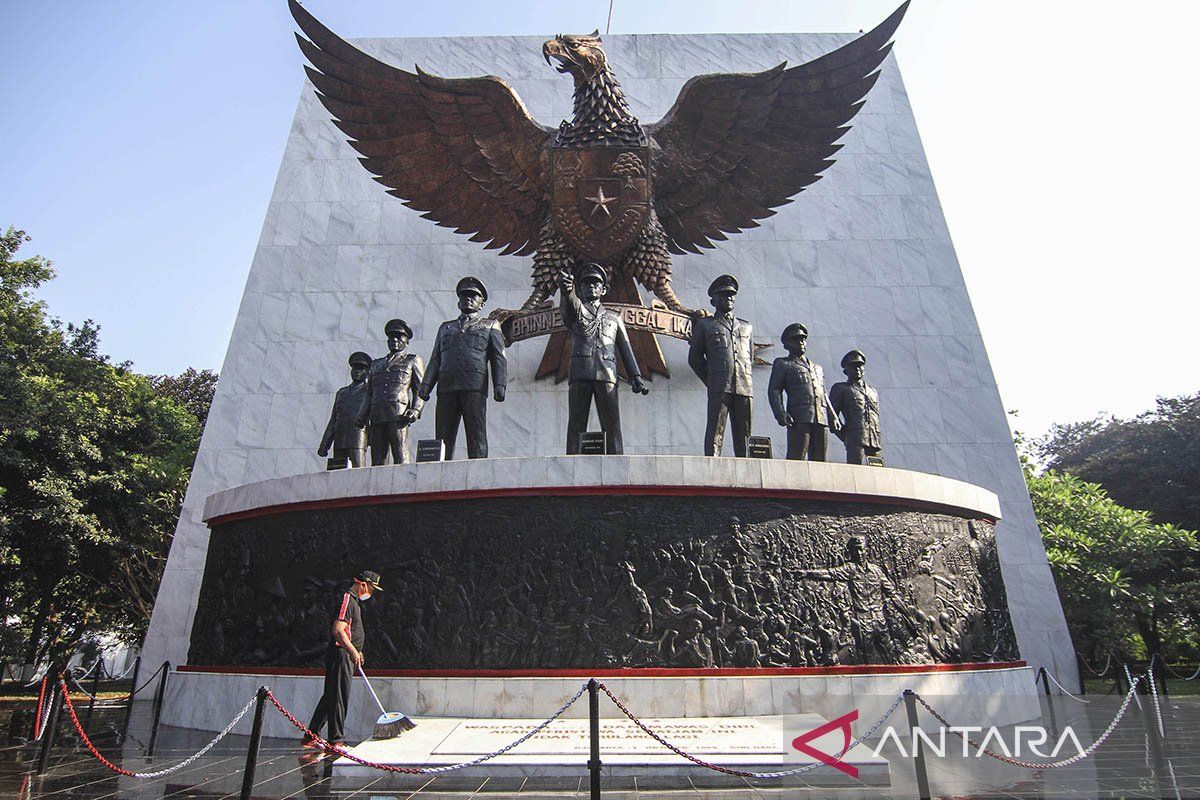
Jakarta (ANTARA) - The Indonesian Communist Party (PKI) was once one of the largest political forces in Indonesia before it was ultimately dissolved and declared a prohibited organisation in 1966.
This journey unfolded through several phases, ranging from the growth of the left-wing movement and political conflicts during the revolutionary period, to its resurgence through political channels in the 1950s, and finally its collapse following the events of 30 September 1965.
Discussions regarding the history of the PKI and the 1965 events also involve various interpretations among historians. The National Archives of the Republic of Indonesia (ANRI) notes that sources regarding these events originate from diverse archives, including collections from Indonesia, the United States, and Japan. Therefore, historical accounts must distinguish between documented facts, official state decisions, and interpretations that remain subject to debate.
The Early Growth of the PKroll PKI
The roots of the communist movement in Indonesia began with the formation of the Indische Sociaal-Democratische Vereeniging (ISDV) in 1914. This organisation later evolved and, in 1920, transformed into the Communist Union in the Indies, subsequently known as the Indonesian Communist Party.
In 1926, the PKI was involved in an uprising against the Dutch colonial government. The movement failed, leading to crackdowns on its members and supporters. Consequently, PKI activities underwent a period of restriction and pressure during the colonial administration.
Following Indonesia’s independence, the PKI re-emerged as a political force. However, the party’s journey faced another major conflict in 1948. On 18 September 1948, the Madiun Affair took place, involving the PKI and left-wing groups in an armed conflict with the Government of the Republic of Indonesia.
The History Encyclopedia of Indonesia from the Ministry of Culture records this event as the peak of the conflict between the Indonesian government and the left-wing opposition, specifically the People’s Democratic Front (FDR). The FDR comprised several left-leaning organisations, including the PKI.
ANRI also records that on 18 September 1948, the proclamation of the Soviet Republic of Indonesia occurred in Madiun, which subsequently escalated into armed conflict. The government managed to end the conflict within several months. Numerous leaders and members of the involved groups were arrested, while others were killed. The Madiun Affair subsequently became a significant turning point in the increasingly strained relationship between the PKI and the government, as well as other political groups.
The PKI’s Resurgence in the 1950s
After the organisational destruction caused by the Madiun Affair, the PKI rebuilt its political strength during the 1950s. Under the leadership of D.N. Aidit and several other figures, the PKI expanded its organisation and support base among labourers, farmers, youth, and other community groups.
This development was clearly evident in the 1955 General Election. According to data from the General Elections Commission (KPU), the PKI obtained 6,179,914 votes, or 16.36 per cent of the national vote for the election of DPR members. This result earned them 39 seats, placing the PKI fourth after the PNI, Masyumi, and NU.
For the election of the Constituent Assembly, the PKI also garnered significant support with approximately 6.23 million votes and 80 seats. This data demonstrates that the PKI had returned to being one of the primary political forces within Indonesia’s parliamentary democracy system in the mid-1950s.
With the onset of the Guided Democracy era following the Presidential Decree of 5 July 1959, Indonesia’s political configuration changed. Political power became increasingly centralised under President Soekarno, while competition between nationalist, religious, military, and communist groups intensified.
The PKI subsequently became one of the political forces supporting the concept of Nasakom—the unification of nationalist, religious, and communist elements in Indonesian political life. By the early 1960s, the PKI’s influence grew even larger. The party possessed extensive mass organisations and secured significant political space within President Soekarno’s administration.
However, relations between the PKI and the Army, as well as other political and social groups, became increasingly tense. Disputes regarding politics, ideology, mass organisations, agrarian issues, and the idea of forming a ‘fifth force’ became part of the political dynamics leading up to 1965.
The 1965 G30S Event
On the night of 30 September to 1 October 1965, the kidnapping and murder of several Army officers took place. The victims were subsequently taken to the Lubang Buaya area in Jakarta.
This event is known as the 30 September Movement, or G30S. There are differing historiographical views regarding the party responsible and the extent of the PKI’s involvement as an organisation in the event.
The official narrative during the New Order era linked G30S to the PKI, whereas other historical research and sources discuss the involvement of various actors with differing levels of responsibility. ANRI emphasises the importance of examining archives from various sources to understand the 1965 events.
Komnas HAM (the National Commission on Human Rights) notes that the 1965 events began with the kidnapping and murder of several generals on 30 September 1965. Komnas HAM subsequently conducted investigations into the series of gross human rights violations that occurred from 1965 to 1966.
After the failure of G30S, the political situation changed drastically. The Army, under Soeharto, took steps to control the situation and take action against the PKI and its associated organisations and individuals.
From late 1965 through 1966, there were arrests, killings, detentions, and various forms of violence against those accused of being members or sympathisers of the PKI.
Komnas HAM stated that within the series of events in 1965-1966, various forms of human rights violations occurred, including killings, forced displacement, slavery, torture, rape, persecution, and enforced disappearances.
Source: jawawa.id (https://jawawa.id/newsitem/the-history-of-the-pki-in-indonesia-from-madiun-1948-to-the-1965-g30s-1789883736)
Originally published by Antara (Indonesian) (https://www.antaranews.com/berita/5749777/sejarah-pki-di-indonesia-dari-madiun-1948-hingga-g30s-1965), translated from Indonesian