
The History of Spirulina: From the Aztecs to Superfood Status
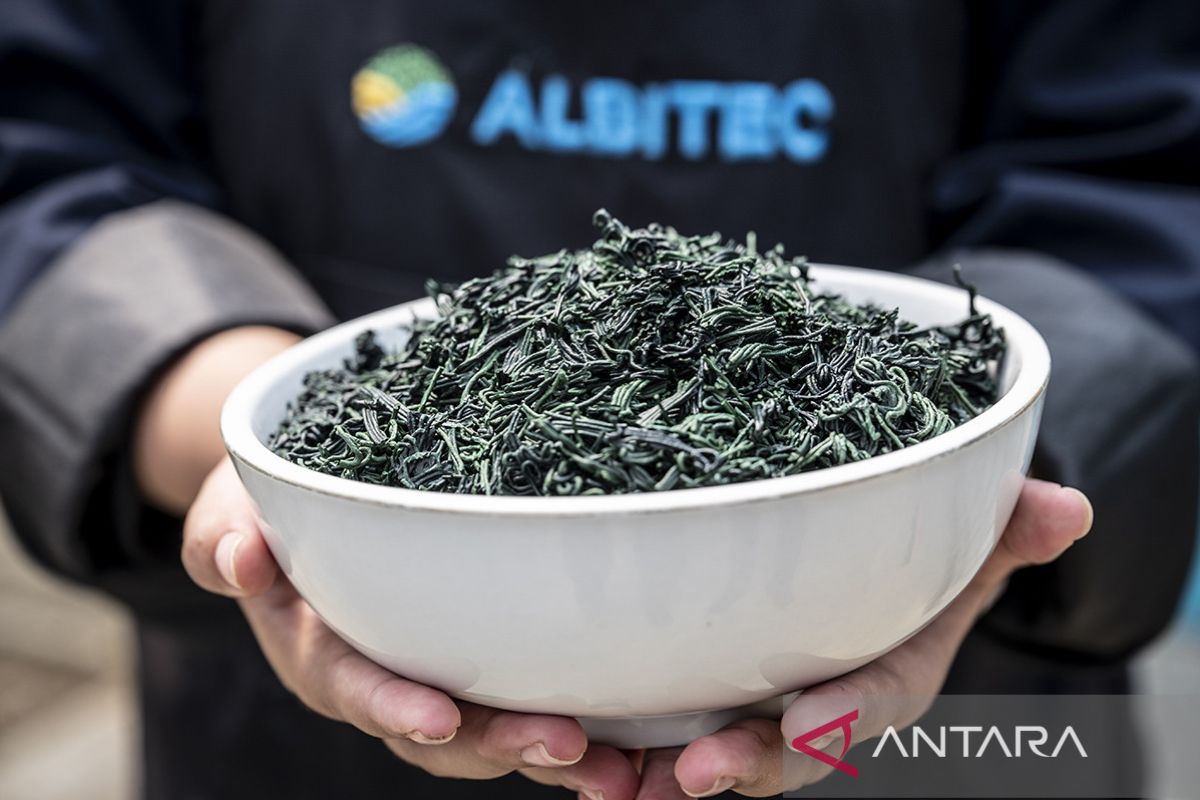
Jakarta (ANTARA) – Spirulina is now widely known around the world as a nutrient-rich superfood, consumed in powder and supplement form. But this blue-green microorganism is not a recent discovery. Spirulina has a very long evolutionary history and was used as a staple food by ancient civilisations as far back as the 16th century.
Natural evolution and biological characteristics
Biologically, spirulina is a cyanobacterium, or single-celled spiral-shaped microalga, belonging to the genus Arthrospira, particularly the species Arthrospira platensis and Arthrospira maxima.
Spirulina thrives naturally in tropical and subtropical lakes with high salt concentrations, known as alkaline lakes. The alkaline environment and high pH enable it to grow rapidly without competition from other microorganisms.
The historical use of spirulina as human food has been recorded in 12 different parts of the world:
The Aztec civilisation in Mexico: In the 16th century, the Aztecs harvested spirulina from Lake Texcoco. They dried the microalga and made it into a yellowish-green cake called Tecuitlatl. It was an important source of protein for warriors and local people.
The Kanembu people in Africa: Around Lake Chad in Central Africa, the Kanembu have long harvested the microalga from alkaline pools. They dry it on sand until it hardens and shape it into a food known as Dihé, eaten with soup or vegetables.
Spirulina’s modern popularity began in the 1960s, when French botanist Jean Leonard investigated the presence of Dihé in traditional markets in Chad. His research revealed spirulina’s exceptional nutritional content, including a high protein level—up to 60–70 per cent of its dry weight—essential amino acids, iron, beta-carotene and the antioxidant compound phycocyanin.
In the 1970s, United Nations agencies such as the Food and Agriculture Organization (FAO) and the World Health Organization (WHO) began promoting spirulina cultivation as a potential way to tackle global hunger and malnutrition.
NASA and the European Space Agency (ESA) have also assessed spirulina as a potential crop for growing on space stations to support astronauts’ nutrition during long-duration missions, according to ResearchGate and other sources.
Source: jawawa.id (https://jawawa.id/newsitem/the-history-of-spirulina-from-the-aztecs-to-superfood-status-1792371036)
Originally published by Antara (Indonesian) (https://www.antaranews.com/berita/5795593/mengenal-sejarah-spirulina-dari-suku-aztek-hingga-jadi-superfood), translated from Indonesian