
The History of Jogja's Rail Line: Silent Witness to the Magnificent Funeral of the King of Solo
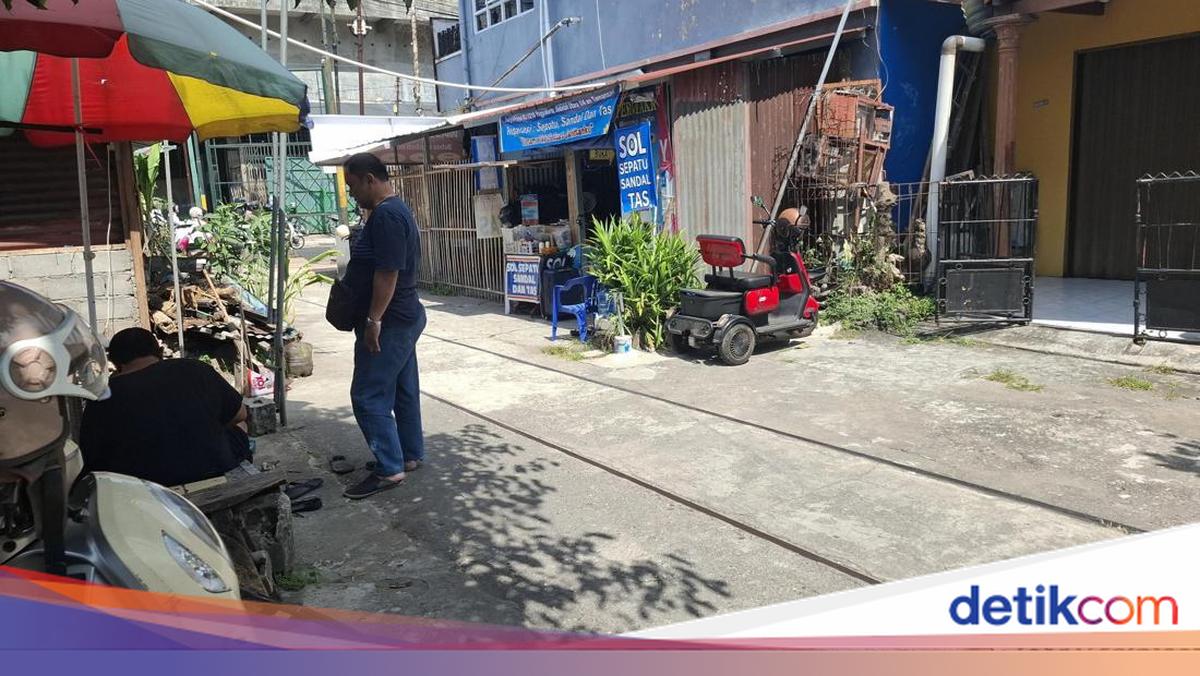
The railway line from Ngabean Station to Pundong Station in Bantul holds a unique history. The sugar cane and sugar rail line from the colonial era once bore silent witness to the funeral procession of Sunan Paku Buwono X, the King of Kasunanan Surakarta, who was known as one of the richest kings in Java at the time.
Historian Baha Uddin from Gadjah Mada University (UGM) explained that the Ngabean-Pundong line was built by the private Dutch railway company, Nederlandsch-Indische Spoorweg Maatschappij (NISM), to support the sugar industry developing in the southern region of the Special Region of Yogyakarta (DIY).
“The rail line was built by NISM for the operational transport of sugar and sugar cane. Various sugar companies were located along the line,” Baha said when contacted on Wednesday (10/6/2026).
According to him, sugar production from the Pundong, Palbapang (Bantul), and Galur (Kulon Progo) areas was transported by train to Ngabean. From there, the produce was forwarded to Tugu Station before being sent to Semarang for trade.
“Production from the Pundong, Palbapang, and Galur areas was transported to Ngabean, then forwarded to Tugu and Semarang,” he stated.
Baha continued that the line, initially built for economic purposes, later gained another historical significance. In 1939, the rail line was used in the funeral procession of Sunan Paku Buwono X, who was interred in the royal cemetery complex of Mataram in Imogiri, Bantul.
Baha recounted that the body of PB X departed from the Surakarta Palace to Balapan Station on a horse-drawn carriage pulled by eight horses. The coffin was then transported by a special train to Yogyakarta.
“The send-off ceremony for Sunan PB X was thronged by thousands of Surakarta residents who came to accompany him, especially from the palace, and was accompanied by sacred gending melodies. From the palace, he was taken by a carriage named Kyai Roto Praloyo, pulled by eight horses, to Balapan Station,” he said.
“So, from the palace to Balapan Station, the coffin was then placed into a special train belonging to NISM.”
From Tugu Station, the journey continued via Ngabean along the southern line to a point near Imogiri.
“From Tugu Station, it went to Ngabean. From Ngabean, it then went south via the Ngabean-Pundong line. Between Ngabean and Pundong, the closest point to Imogiri is Pasar Gede,” he revealed.
According to Baha, the funeral procession of PB X was one of the largest of its time and demonstrated the king’s considerable economic influence. The train used to transport the body even had a specific name: the Begrafenis Trein.
“It could be said to be one of the largest and most magnificent funeral ceremonies of that era. This also reflects the economic aspect, as PB X was one of the wealthiest kings in Surakarta,” he said.
“The train was also a special one called the Begrafenis Trein. ‘Begrafenis’ means funeral and ‘trein’ means train,” he explained.