
The History of Heroes’ Day on 10 November and Its Meaning for the Nation
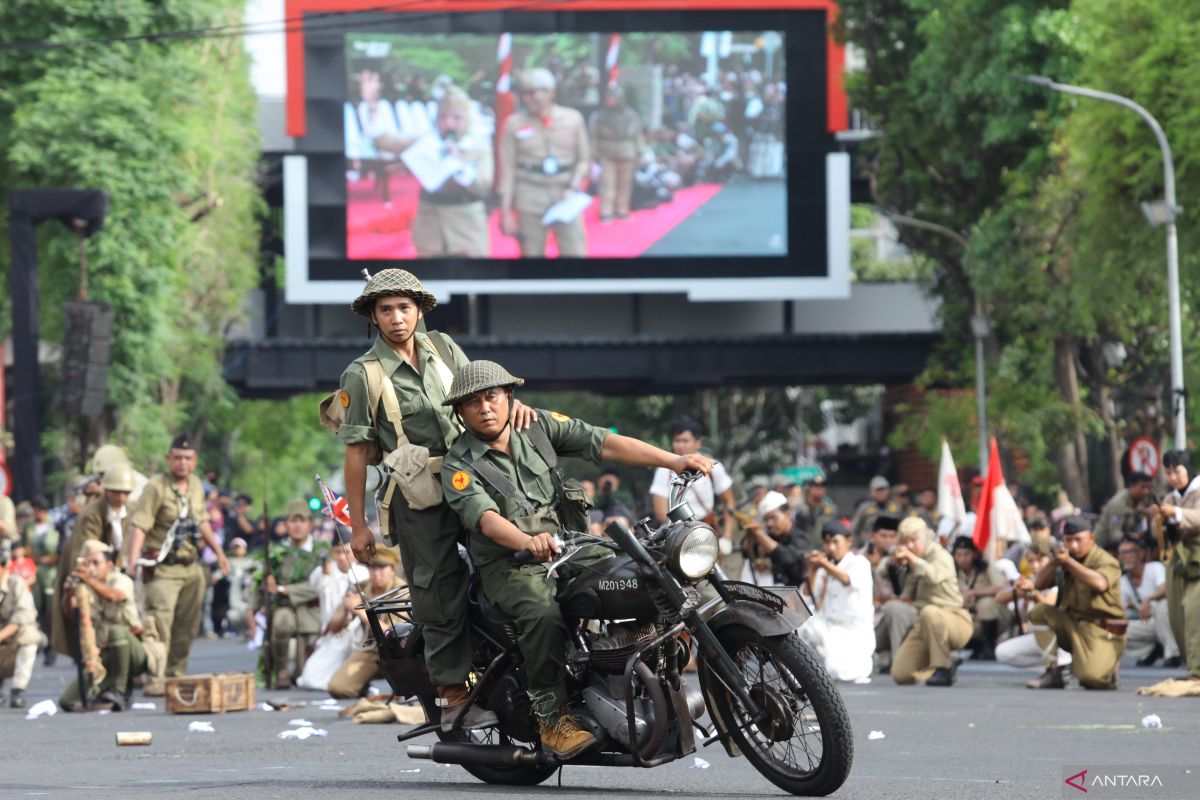
Jakarta (ANTARA) – Heroes’ Day is commemorated every 10 November to remember the Indonesian people’s struggle to defend independence, particularly through the major battle in Surabaya in 1945. The event was a significant chapter in the nation’s history following Indonesia’s Proclamation of Independence on 17 August 1945.
The commemoration is not merely a remembrance of past battles and the sacrifices of those who fought. Heroes’ Day is also an opportunity to reflect on courage, unity, self-sacrifice and the determination to defend independence, values that can be applied in life today.
How did 10 November become Heroes’ Day, and what does the occasion represent?
The history of Heroes’ Day on 10 November
The history of Heroes’ Day began with the Battle of Surabaya, which took place on 10 November 1945. At the time, Indonesians faced British-led Allied forces amid political and security instability following the country’s proclamation of independence.
Allied forces arrived in Indonesia in September 1945, initially to accept Japan’s surrender, free prisoners of war and disarm Japanese troops. However, their arrival alongside personnel from the Dutch administration, the Netherlands Indies Civil Administration (NICA), aroused suspicion and heightened tensions among Indonesians.
Tensions peaked after Brigadier General Mallaby was killed in an incident on 30 October 1945. The event further strained relations between the two sides and increased tensions in Surabaya.
On 9 November 1945, British force commander Major General Robert Mansergh issued an ultimatum to Indonesians in Surabaya, demanding that they hand over their weapons and cease resistance by a specified deadline.
The Indonesian side rejected the ultimatum. As a result, on the morning of 10 November 1945, British forces launched a large-scale assault by land, sea and air. Fierce fighting involved various groups of fighters as well as civilians.
The UK’s National Army Museum records that the assault involved around 20,000 British-Indian troops, supported by warship artillery and air strikes. The Battle of Surabaya is remembered as one of the most severe battles of the Indonesian National Revolution.
One of the figures associated with the events of 10 November 1945 was Sutomo, known as Bung Tomo. In broadcasts on the Radio Pemberontakan (Revolution Radio), he delivered speeches that rallied the people of Surabaya to defend independence.
Bung Tomo’s calls became an important part of the history of the resistance. His message encouraged people not to surrender in the face of pressure from Allied forces.
The battle involved not only soldiers and armed groups, but also many sections of society. Young people, civilians and fighters from several regions supported the defence of Surabaya.
Although Indonesia’s weapons and military strength were no match for those of the British forces, the people put up fierce resistance. Many residents were forced to leave the city to escape the attacks and destruction.
The events in Surabaya became a symbol of the Indonesian people’s resistance in defence of independence. Historians writing in research published by Cambridge University Press have also explained that the battle was significant in the Indonesian Revolution and is commemorated each year through Heroes’ Day.
The designation of 10 November as Heroes’ Day
After the Battle of Surabaya, the Indonesian government designated 10 November as Heroes’ Day.
The designation is set out in Presidential Decree No. 316 of 1959 on National Days That Are Not Public Holidays. President Soekarno signed the decree on 16 December 1959.
Under the decree, 10 November became a national day to remember a historic event in Indonesia’s history. Since then, Heroes’ Day has been observed annually to honour the service and sacrifice of those who fought.
The commemoration is therefore not limited to the people’s struggle in Surabaya; it also honours all the heroes who fought to win and defend Indonesia’s independence.
Heroes’ Day carries several meanings that remain relevant to society today. The values demonstrated by those who fought serve as a reminder that independence and national life require shared responsibility.
Some of the meanings associated with Heroes’ Day are:
- Honouring the service and sacrifice of heroes
Heroes’ Day is a reminder that Indonesia’s independence was not won easily. Many fighters gave their time, energy and possessions, and even their lives, to defend the nation’s sovereignty.
People can honour their service by learning about the struggle for independence, respecting national symbols and upholding national values in everyday life.
- Fostering unity
The Battle of Surabaya showed how different groups in society came together in the face of a threat to independence.
This spirit teaches that differences in background, ethnicity, religion and culture are no reason to divide. Unity is an important strength in confronting the nation’s challenges.
- Instilling a willingness to make sacrifices
Those who fought showed that the common good could be put ahead of personal interests. This willingness to make sacrifices remains relevant today.
It can be reflected in caring for others, helping people in need and contributing to social activities in local communities.
- Continuing the struggle through education
Whereas the heroes of the past fought with weapons, today’s generation faces different challenges. Education, knowledge, skills and critical thinking are vital tools for building the nation.
Studying diligently, improving one’s abilities and using knowledge for the benefit of society are ways for the next generation to contribute.
- Safeguarding independence and national unity
Independence means not only freedom from colonial rule, but also protecting sovereignty, unity and the prospect of a better life for society.
People can carry on the spirit of the struggle by obeying rules, respecting others’ rights, protecting the environment and avoiding provocation by divisive information.
Heroes’ Day, observed every 10 November, is generally marked by various activities to remember the nation’s struggle. People can also take part through simple activities, including:
- Taking part in a flag-raising ceremony
A ceremony is one way to honour the heroes and remember the nation’s struggle.
- Learning about Indonesia’s struggle for independence
Reading history books, visiting museums or learning about national figures can help people understand the long process that led to independence.
- Visiting heroes’ graves
Paying respects at a heroes’ cemetery is a way to honour those who died in the struggle.
- Organising social activities
Helping people in need, taking part in humanitarian initiatives and working together are ways to put heroic values into practice.
- Sharing positive messages
People can use social media to share historical information, stories of the struggle and messages of unity.
Heroes’ Day, observed every 10 November, has its roots in the Battle of Surabaya in 1945. The event became one of the symbols of the Indonesian people’s struggle to defend independence against the threat posed by Allied forces.
The meaning of Heroes’ Day goes beyond remembering history. The values of courage, unity, sacrifice and care for others should be practised in everyday life.
Today’s generation has a responsibility to continue the struggle through education, work, service and positive contributions to society. In this way, the spirit of heroism can live on even as the challenges of the times change.
Source: jawawa.id (https://jawawa.id/newsitem/the-history-of-heroes-day-on-10-november-and-its-meaning-for-the-nation-1794016313)
Originally published by Antara (Indonesian) (https://www.antaranews.com/berita/5837835/sejarah-hari-pahlawan-10-november-dan-maknanya-bagi-bangsa), translated from Indonesian