
The History of Halal Labelling in Indonesia: It Began with a Haram Label
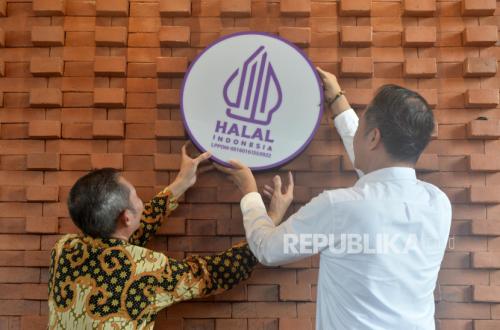
Since 18 October 2026, the government, through the Halal Product Assurance Organising Agency (BPJPH), has begun to require halal labels on products in Indonesia in stages. This marks the latest chapter in the long history of halal labelling in the country.
Long before halal certification became part of Indonesia’s product-monitoring system, the government regulated the labelling of food containing ingredients derived from pork. The policy took effect on 10 November 1976 under Minister of Health of the Republic of Indonesia Regulation No. 280/Menkes/Per/XI/1976 on the Distribution and Labelling of Food Containing Ingredients Derived from Pork.
Under the regulation, manufacturers using pork or its derivatives had to display a warning on the product’s container or packaging. The warning could be printed directly on the packaging or attached as a label.
The label had two main elements: an image of a pig and the words “CONTAINS PORK” in red inside a red box. This enabled consumers to identify products containing such ingredients before deciding whether to buy them.
The idea originated with the Directorate General of Drug and Food Control at the Ministry of Health. Sunarto Prawirosujanto, who was the director general at the time, said the concept was presented to Health Minister G.A. Siwabessy, who approved it immediately.
In his biography, Pioneering the Development of Indonesia’s Pharmaceutical Industry (1997), Sunarto said the policy was based on the assumption that 99 per cent of food circulating in Indonesia was halal, meaning that only haram products needed to be labelled. This assumption would later be challenged by research published in 1988.
The “Contains Pork” labels were not based on research. Instead, they were provided free of charge to companies that needed them through the Indonesian Food and Beverage Producers Association (GAPMMI).
Nearly nine years after the policy requiring labels on products containing pork was introduced, the government changed its approach to food labelling. On 12 August 1985, it issued a joint decision by the Ministers of Health and Religious Affairs on the use of the word “halal” on food labels.
The provision was set out in Joint Decree of the Minister of Health and the Minister of Religious Affairs of the Republic of Indonesia No. 42/Men.Kes/SKB/VIII/1985 and No. 68 of 1985.
At the time, halal labelling did not involve a certification process like the one used today. Manufacturers first had to submit information on product ingredients and processing methods to the Department of Health. Monitoring was carried out jointly by the Departments of Health and Religious Affairs through the Food Registration Assessment Team at the Directorate General of Drug and Food Control.
The system still faced challenges. Information submitted by manufacturers about ingredients did not fully guarantee that all materials and production processes complied with halal requirements. The issue came further to the fore when Indonesia was hit by the controversy over lard content in 1988.
Source: jawawa.id (https://jawawa.id/newsitem/the-history-of-halal-labelling-in-indonesia-it-began-with-a-haram-label-1792115468)
Originally published by Republika (https://analisis.republika.co.id/berita/tmz80j393/sejarah-label-halal-di-indonesia-bermula-dari-label-haram), translated from Indonesian