
The History and Reasons Behind Dedicated Women's Train Carriages
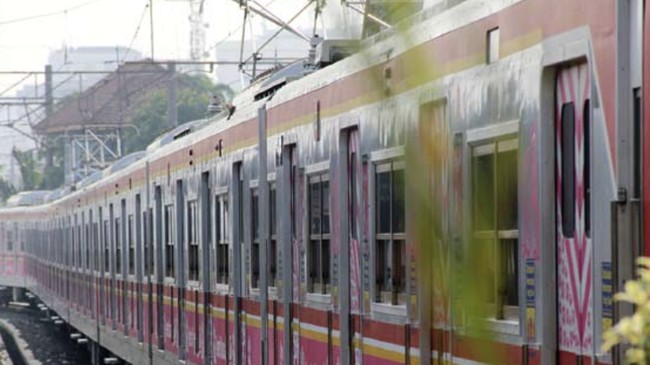
The dedicated women’s train carriage has become a major point of attention following the train accident involving the KA Argo Bromo Anggrek service from Gambir to Surabaya Pasar Turi, which collided with the rear of a KRL Tokyo Metro train heading to Kampung Bandan-Cikarang on Tuesday (27/4/2026) at 20:52 WIB. Most of the victims were from the women’s dedicated carriage on the KRL. There were 15 fatalities in the accident, all women. As a result of this incident, the Minister for Women’s Empowerment and Child Protection (PPPA), Arifah Fauzi, has proposed placing women’s KRL carriages in the middle of the train consist.
Why Are There Pink Women’s Dedicated Carriages?
Women’s dedicated carriages are typically located at the front and rear ends. That is where the women’s dedicated carriages are situated. The pink colour on the doors serves as an easily recognisable marker amid the fast-moving commuter flow.
This policy stems from issues of overcrowding, the risk of sexual harassment, and the need for a sense of safety during daily commutes.
The Central Statistics Agency (BPS) reported a sharp surge in train passengers. In 2021, the number of passengers was recorded at 149.763 million people. This figure rose to 277.1 million in 2022, then 371.5 million in 2023.
In 2024, the number exceeded 504.6 million people, and in 2025, it increased again to 549.8 million people.
Over four years, the number of passengers has more than tripled from the pandemic phase. When human volume rises that quickly, space inside the carriages becomes an economic, social, and security issue all at once.
On weekdays, the average number of KRL users reaches 850,000 people. The record for the highest number of users in one day is 931,082 passengers, according to data from PT KAI Commuter Jabodetabek (KCJ) in 2016.
Additionally, there are 826 KRL trains in operation. Each KRL has a women’s dedicated carriage or women’s train (KKW). The official KCJ website states that KKW has been in effect since 1 October 2012.
The background is simple: many female users feel uncomfortable when having to jostle with male passengers during rush hours. In a dense commuter system, a 40-minute journey can turn into an exhausting experience.
The operator then provided dedicated space as an operational response, not a symbolic one. The main focus is to reduce the potential for harassment and provide a travel option considered safer.
The reason for placing them at the front and rear is more technical than ideological. Positioning at both ends allows passengers to easily identify the carriage location as the train approaches. Passenger boarding and alighting flows can also be divided to both sides of the consist, so crowd concentration does not pile up only in the middle.
From a station operations perspective, this pattern helps female users head directly to consistent queuing points every day.
From a non-security-focused arrangement perspective, placement on both sides provides the easiest efficiency to implement without changing the entire train composition.
Indonesia is not the first pioneer. Britain already knew women’s compartments since 1874 through the Metropolitan Railway in the early era of modern urban transport. At that time, London was learning to cope with mass female mobility in public spaces.
Similar policies later disappeared along with changes in social norms and service designs. Japan introduced modern women’s dedicated carriages in the early 2000s, mainly as a response to harassment cases on very crowded trains. Tokyo then made it part of rush-hour commuter governance. Other countries like India, Egypt, Brazil, Mexico, Iran, and Thailand also have similar formats in various forms.
Women’s carriages typically emerge when cities grow faster than their capacity for movement space.
When millions of people have to arrive at the office at the same time, private space vanishes. Bodies meet bodies, social distance collapses, small conflicts easily arise.
In such situations, transport operators often choose spatial segmentation solutions because they are quicker to implement than adding new tracks or purchasing large fleets that require expensive investments and long times.