
The High Price of Peace: Saudi Arabia, Iran and the Stakes of Vision 2030
Saudi Arabia is facing a complex strategic dilemma. Riyadh must protect its territory from attacks by the Iran-backed Houthis, while ensuring that military escalation does not disrupt the economic transformation that is Crown Prince Mohammed bin Salman’s principal ambition. In this context, diplomacy with Tehran is not merely a political option; it is part of an effort to protect Saudi Arabia’s economic future.
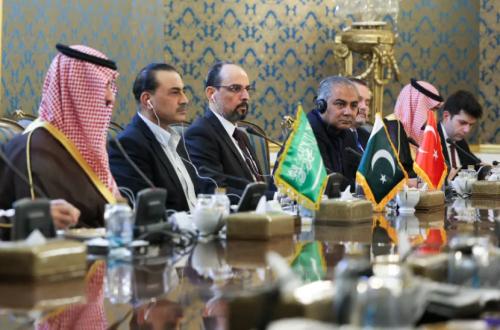
Israel Hayom reported on 26 October 2026 that Saudi Arabia had allegedly offered the Houthis US$1 billion through Iran to halt their attacks. Saudi officials, however, have not confirmed any such transfer. More significant is a meeting in Tehran between Saudi, Turkish and Pakistani officials and Iranian leaders to discuss de-escalation of the regional conflict. The development suggests that diplomacy is still seen as relevant amid growing security threats.
Vision 2030 in the shadow of war
For Riyadh, the issue extends far beyond the conflict in Yemen. Saudi Vision 2030 is designed to reduce the economy’s dependence on oil, expand tourism and entertainment, attract foreign investment, and establish Saudi Arabia as a global economic and logistics hub. The agenda requires stability, investor confidence and a predictable business environment.
Attacks on energy facilities, airports, ports or strategic infrastructure could disrupt that agenda. Security threats could also raise the cost of protecting infrastructure, divert funds from development and make investors more cautious. Major projects requiring long-term investment will struggle to reach their full potential if the risk of conflict continues to loom over them.
Saudi Arabia’s vulnerability, therefore, lies not only in the possibility of physical damage from attacks. More fundamentally, it lies in the risk of undermining confidence in the kingdom’s ability to maintain stability as it seeks to transform its economic structure.
The Houthis understand that pressure on Saudi Arabia need not produce a direct military victory. Disruption to infrastructure and economic activity can impose political and financial costs far greater than the value of the physical damage itself. When security is a prerequisite for investment, tourism and development, even a relatively limited threat can have far-reaching strategic consequences.
This is one of the paradoxes of Saudi power: extensive financial resources do not automatically eliminate vulnerability to asymmetric conflict. The ability to defend the territory must go hand in hand with the ability to prevent conflict from spreading.
Iran and diplomatic leverage
Iran’s involvement presents another paradox in this context. Tehran is Riyadh’s strategic rival, while the Houthis have close ties to Iran. Yet that very relationship gives Iran an important position in efforts to influence the group’s conduct.
If Saudi Arabia needs Iran’s involvement to reduce the risk of Houthi attacks, Tehran gains diplomatic standing that cannot be ignored. Iran can demonstrate that its regional influence derives not only from military capabilities and its network of armed partners, but also from its position in negotiations.
Even so, Iran’s role as a mediator does not automatically mean that Tehran can control every Houthi decision. The group has its own political interests and strategic calculations. Any agreement will therefore require verification mechanisms, clear commitments and guarantees that a halt to attacks is genuinely implemented.
Saudi Arabia’s challenge is to negotiate without allowing diplomacy to become a recurring pattern of coercion: attacks are carried out, concessions are demanded, and then the threat returns. A peace that merely pauses attacks without addressing the underlying issues risks becoming a lull before the next conflict.
Security as the foundation for development
These developments also expose the limits of a security approach that relies too heavily on military force. Defence remains necessary, but it cannot always eliminate threats when an adversary uses asymmetric tactics and exploits economic vulnerabilities.
Saudi Arabia must combine military deterrence, infrastructure protection, diversification of economic routes and regional diplomacy. Türkiye and Pakistan could help establish channels of communication, while Gulf states share an interest in preventing conflict from damaging regional stability. These efforts, however, will endure only if they are backed by verifiable commitments rather than diplomatic meetings alone.
Ultimately, Saudi Arabia is not choosing between war and peace at the expense of its national interests. The question is which strategy can best protect its security while sustaining development.
Vision 2030 is more than an economic programme. It is the Saudi leadership’s long-term political wager on transforming the foundations of the kingdom’s prosperity. If regional conflict continues to disrupt energy security, investment and connectivity, the costs will include not only material losses but also the loss of momentum for transformation.
For Riyadh, therefore, peace is not a gift to its adversary. It is a strategic necessity. The real challenge is to ensure that diplomacy delivers lasting security, rather than simply buying time before the threat returns.
Source: jawawa.id (https://jawawa.id/newsitem/the-high-price-of-peace-saudi-arabia-iran-and-the-stakes-of-vision-2030-1793166741)
Originally published by Republika (https://opini.republika.co.id/berita/tnlp58393/perdamaian-yang-mahal-saudi-iran-dan-taruhan-visi-2030), translated from Indonesian