
The High Court Upholds Nicko Widjaja's 3-Year Sentence in the TaniHub Case Due to ...
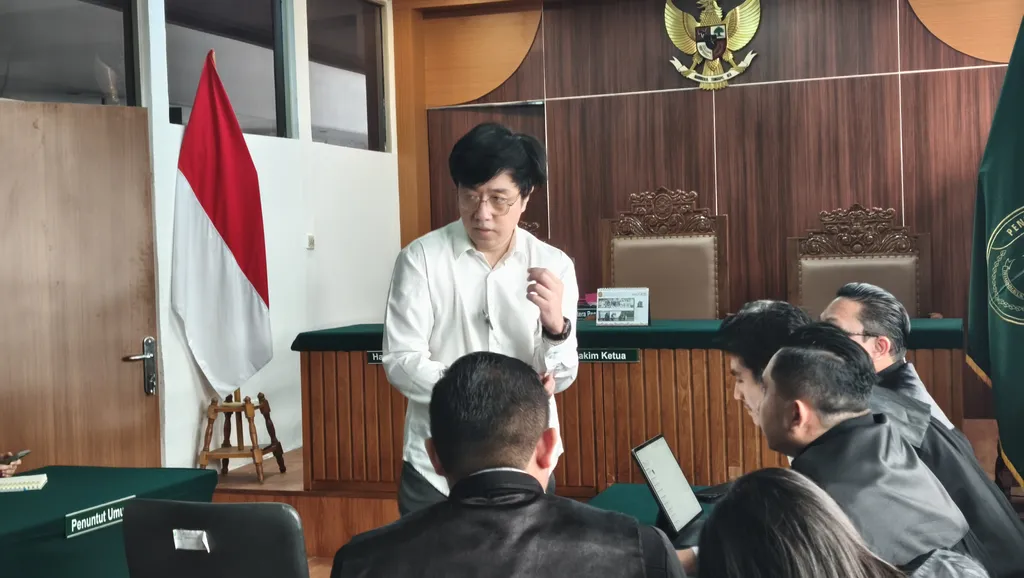
The panel of judges dismissed the defense argument of the defendant, Nicko Widjaja, who sought refuge behind the principle of loss claimed merely as a business risk.
03 Sep 2026 15:59 WIB · Politik & Hukum
Kompas/Willy Medi Christian Nababan
JAKARTA, KOMPAS — The DKI Jakarta High Court officially upheld the first-instance decision against the defendant in the corruption case involving TaniHub Group, Nicko Widjaja. The panel of judges dismissed the defendant’s defense arguments that relied on the Business Judgment Rule or claimed losses merely as business risks.
This was revealed during the verdict reading session of the investment fund management case at PT Tani Group Indonesia (TaniHub) involving the former President Director of PT BRI Ventura Investama, Nicko Widjaja, at the DKI Jakarta High Court, Thursday (3/9/2026). The session was presided over by Chief Judge Elyta Ras Ginting, accompanied by panel judges Pandu Budiono and Agung Iswanto.
The panel of judges upheld the decision of the Corruption Court at the Central Jakarta District Court, sentencing Nicko to three years in prison and a fine of Rp 350 million. The judges also ordered that Nicko remain in custody.
“Strengthening the Decision of the Corruption Court at the Central Jakarta District Court Number 9/Pid.Sus-TPK/2026/PN Jkt.Pst dated June 18, 2026, which is being appealed,” said Elyta.
In her considerations, Elyta revealed that the investment funds from BRI Ventura Investama to the startup company TaniHub were proven to meet the elements of state financial losses. The losses arose from two waves of funding, namely the “Series A+” funding in February and March 2020 amounting to 2 million USD (equivalent to IDR 28.58 billion), and the purchase of shares in the form of “Convertible Notes” in August 2020 amounting to 3 million USD (equivalent to IDR 44.72 billion).
“Considering that Article 603 of the Criminal Code is a material offense that is deemed complete if the loss to the state has truly occurred in a real and certain manner,” said Elyta.
Strengthening the Decision of the Corruption Court at the Central Jakarta District Court Number 9/Pid.Sus-TPK/2026/PN Jkt.Pst dated June 18, 2026, which has been appealed.
Based on the trial facts citing the testimony of a public accounting expert, TaniHub Group was said to be unfit for investment financing because the start-up company had recorded losses of up to IDR 37.9 billion in 2019, and the loss trend had been ongoing since 2017.
The judge continued, explaining that TaniHub’s deteriorating financial track record was completely ignored by the BRI Ventura Investama investment team during the initial screening stage. The due diligence process proved to be merely an administrative formality, with no attempt to confirm the accuracy of the data, either in the company’s data room or pitch deck.
“Considering that the defendant still decided to provide financing despite knowing that the financial report was not valid because it had not been audited by an independent auditor, it is evident that there was an element of intent on the part of the defendant in making the business decision to finance TaniHub Group,” the judge explained.
In his position structure as President Director and Chief Executive Officer (CEO) and sole Investment Committee member, the defendant should have been the last bastion of the principle of checks and balances to prevent reckless investment decisions.
However, the court assessed that the defendant’s action of disbursing the large funds was not a form of negligence, but rather an intentional act that violated the principles of Good Corporate Governance (GCG).
The judge referred to Article 97 Paragraph (5) of Law Number 40 of 2007 concerning Limited Liability Companies which requires four cumulative things, including actions in good faith, caution, and not being an error or negligence so that a decision by the board of directors is legally protected by BJR (Business Judgment Rule).
“Activities within the scope of the Business Judgment Rule are not free from elements of error or deliberate mens rea by the management of a legal entity that are unlawful. It is evident that the defendant’s decision was not based on the implementation of GCG,” the judge added.
Thus, the appellate court judges concluded that the losses of PT BRI Ventura Investama cannot be solely understood as business investment risks. The judges also considered that the length of the criminal sentence previously decided by the lower court was deemed appropriate, precise, and just.
After reading the verdict, Elyta asked the defendant, the lawyer, and the public prosecutor for their responses to the ruling. The legal team along with their client, Nicko, decided to deliberate before choosing to accept or file for cassation. A similar sentiment was expressed by the representative of the public prosecutor.
Writer:
Willy Medi Christian NababanEditor:
Cyprianus Anto Saptowalyono
Source: jawawa.id (https://jawawa.id/newsitem/the-high-court-upholds-nicko-widjajas-3-year-sentence-in-the-tanihub-case-due-to-1788443506)
Originally published by kompas.id (https://www.kompas.id/artikel/business-risk-argument-falls-high-court-upholds-nicko-widjajas-3-year-sentence-in-tanihub-case)