
The high cost of seeing Indonesia from the villages
There is a simple question rarely asked when discussing public perceptions: what does it cost to see something?
For a newsroom in Jakarta, the cost of following a controversy in the capital is almost nil. Sources can be called, a debate can be held in a studio that afternoon, and clips can circulate before sunset.
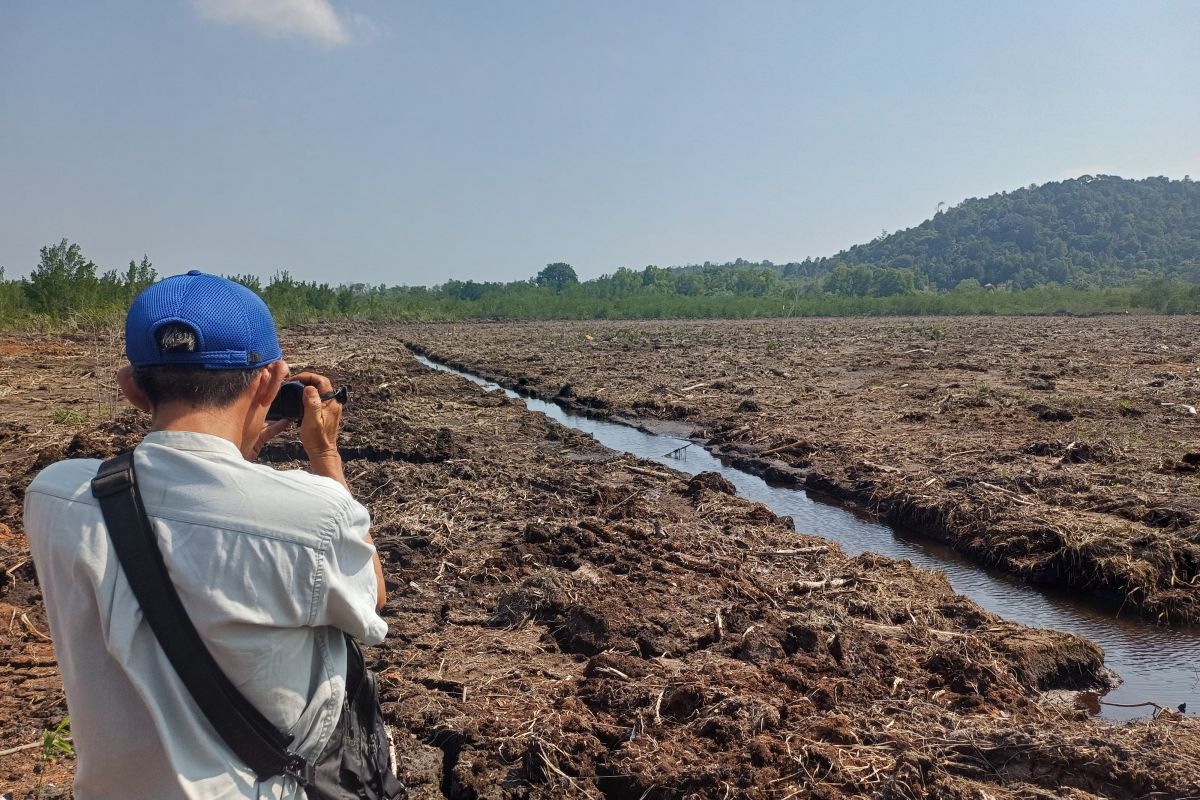
By contrast, verifying that a boarding school in South Central Timor really exists, is functioning and has pupils requires a plane ticket, a hire car, several days of a reporter’s work and a camera operator. This difference in cost—not merely intent or ideology—quietly helps determine what we believe is “happening” in this country.
I call this cost bias: the tendency for an event to receive coverage in proportion to how cheaply it can be reached, rather than to its importance to people’s lives.
Development deliberately moving away from the centre
This bias matters because the direction of development today is moving away from the centre.
The sixth point of President Prabowo Subianto’s Asta Cita agenda is explicitly framed as developing from villages and from the grassroots to achieve economic equality and eradicate poverty. That formulation has spatial consequences.
Take education programmes. According to the Ministry of Higher Education, Science and Technology, new Garuda Schools are planned on sites of around 20 hectares, although their main buildings will occupy only about two hectares; the rest will be green space and outdoor learning areas. They are intended for areas with limited access to high-quality education, including Soe in South Central Timor.
Sekolah Rakyat requires local governments to provide land, generally between five and 10 hectares. Some areas have expanded this to 10 hectares as capacity rises to 2,000 pupils.
Integrated National Schools, covered by Presidential Instruction No. 10 of 2026, are based on a land requirement of around 20–30 hectares, although some sites under review measure 12–14 hectares.
Twenty hectares is 200,000 square metres, roughly the size of 28 standard football pitches.
Finding a tract that large, with clear title and ready for construction, is almost impossible in a densely populated city. Land requirements therefore also push programmes towards regencies and outlying areas. To be clear, not all of these schools are in villages: Sekolah Rakyat schools have also been established in Medan, Surabaya and Tangerang.
But the broader pattern is clear: the centre of gravity of development is shifting to places far from the news studios of Jakarta.
Source: jawawa.id (https://jawawa.id/newsitem/the-high-cost-of-seeing-indonesia-from-the-villages-1794372876)
Originally published by Antara (Indonesian) (https://www.antaranews.com/berita/5845795/ongkos-mahal-melihat-indonesia-dari-desa), translated from Indonesian