
The Hidden Strength of the Islamic Economy and Finance Masterplan within Indonesia's Legal System
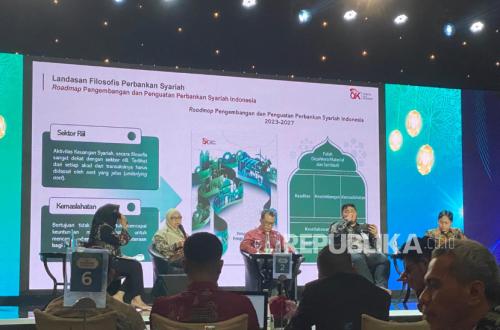
REPUBLIKA.CO.ID, JAKARTA – The Masterplan for Islamic Economy and Finance (MEKSI) 2025–2029 should no longer be viewed merely as a supplementary policy document. It is high time it is affirmed as a living and operational legal instrument within the governance system, while also forming part of the efforts to realise President Prabowo Subianto’s Asta Cita. In this context, MEKSI does not stand on the sidelines but is at the heart of national development planning, both in the National Long-Term Development Plan (RPJPN) and the National Medium-Term Development Plan (RPJMN). Debates questioning MEKSI’s position as a state policy often stem from a narrow understanding of its explicit or implicit presence in legislation. However, the urgency and essence of MEKSI are not solely determined by its existence as a formal document, but by its strategic function in building the national Islamic economy and finance. Therefore, doubts regarding MEKSI as a legal instrument should be set aside. Understanding MEKSI 2025–2029 requires a more judicious, broad, and juridical approach. MEKSI must be understood as a public policy that obtains validity, legality, and legitimacy from various legal sources. It does not only stand on the national development planning system but also on cross-sectoral institutional mandates. The combination of both creates a binding legal force for policymakers and stakeholders, while also making it present in the practice of government administration and national life. The degree of validity, legal certainty, and legitimacy of Islamic economy and finance development has actually been firmly regulated in a number of laws and regulations. Among them are Law No. 59 of 2024 on the National Long-Term Development Plan for 2025–2045 and Presidential Regulation No. 12 of 2025 on the National Medium-Term Development Plan for 2025–2029. Law No. 59 of 2024 affirms that economic transformation to increase productivity through Islamic economy and finance is part of one of the national development missions. Meanwhile, Presidential Regulation No. 12 of 2025 positions the Islamic economy as part of national priorities in promoting national self-reliance.