
The Hidden Message Behind Indonesia's World's Cheapest Big Mac Price
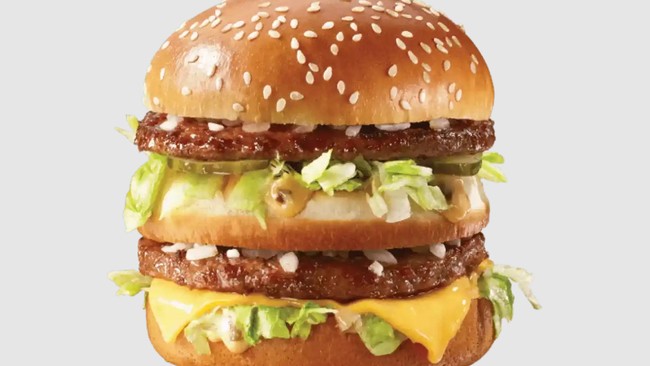
The price of a Big Mac in Indonesia has been recorded as the cheapest among 19 markets featured in the July 2026 Big Mac Index update. After conversion using market exchange rates, the price of one Big Mac in Indonesia is approximately US$2.38. This figure is significantly lower than the price of a similar burger in the United States, which reaches US$6.22.
This comparison shows that the Indonesian Big Mac is about 61.7% cheaper than in the US. Based on the raw Big Mac Index approach, the Rupiah can be categorised as undervalued by almost 62% against the US Dollar. Indonesia’s price is slightly cheaper than Taiwan and India, which recorded prices of US$2.42 and US$2.45, respectively.
Switzerland stands at the opposite end of the spectrum. The price of a Big Mac in that country reaches 7.30 Swiss Francs, equivalent to US$9.04. With the US reference price at US$6.22, the exchange rate based on Big Mac purchasing power should be around 1.17 Swiss Francs per Dollar. The market exchange rate at the time of the survey was only around 0.81 Swiss Francs per Dollar. This difference makes the Swiss Franc assessed as overvalued by approximately 45%. Taiwan and Indonesia show the opposite condition, as burger prices in Dollars are much cheaper.
This calculation uses the principle of Purchasing Power Parity (PPP). In theory, identical products should have relatively the same price after being converted into the same currency. In practice, prices can still differ due to wage levels, rent, taxes, food regulations, and competition in each country.
US prices are widening again from the rest of the world. The Big Mac Index was first introduced in 1986 as a simple way to explain PPP. During the first decade of the 2000s, the prices in the US and the global average were moving closer together. However, the gap has widened again since around 2010. In 2026, the US Big Mac price reached US$6.22, while the global weighted average based on economic size is around US$4.9. Consequently, the global average price is still about 21% cheaper than in the US. US inflation after 2021 is one of the causes, alongside the increasing weight of developing nations that have lower price levels.
Currency imbalances are also rising. In 2026, the average deviation of exchange rates against the value implied by PPP reached approximately 44 log points, one of the highest levels since the mid-1990s. This condition is influenced by US inflation, the relatively cheap Chinese Yuan, and the weakening Japanese Yen. The Big Mac price in Japan is now around US$3.08, or about 21% cheaper than China, which stands at US$3.91.
Why do burger prices differ so much? A Big Mac can be used as a comparator because its composition is relatively uniform. However, the final price is not only determined by meat, bread, and cheese. Burger prices also reflect labour costs, restaurant rent, electricity, transport, and food regulations. Based on average estimates from 34 countries, labour is the largest component. Labour costs in Switzerland are recorded at more than twice those in Taiwan, while rent is more than three times higher. Swiss beef prices are also approximately 2.7 times more expensive.
Conversely, ingredients that are easily traded between countries tend to have smaller price differences. Therefore, wages and local service costs are the primary determinants of whether a Big Mac is expensive or cheap. Developing nations almost always appear undervalued in the raw index. One reason is the lower level of wages and productivity compared to developed nations. To account for this, since 2011, an index adjusted by GDP per capita has been available. This index assesses whether a currency is still too cheap after accounting for its level of economic development.
Indonesia follows this same principle; part of the cheapness of the Big Mac reflects domestic living costs and wages, rather than solely an exchange rate error. The 61.7% undervaluation figure does not mean the Rupiah should immediately strengthen by that same percentage. Rupiah movements are also influenced by inflation, Bank Indonesia interest rates, US monetary policy, trade balances, capital flows, and global risks. The Big Mac Index is best used to understand differences in price levels and purchasing power, rather than as the sole basis for investment decisions.