
The Hajj Is Redefining the Meaning of Innovation
The world has become highly adept at celebrating technological innovation. New artificial intelligence systems, sophisticated digital platforms and cutting-edge applications attract attention and investment, often before anyone has established whether they actually solve important problems.
Yet the true test of innovation is not how impressive a technology looks. It is whether people can use it, whether it makes their lives easier, and whether it delivers meaningful results.
Few settings illustrate this distinction more clearly than the Hajj.
Every year, millions of Muslims travel to Saudi Arabia from countries around the world. They speak different languages and have varying needs, abilities and levels of familiarity with technology. Supporting their journey requires an extensive network of services, from transport and healthcare to navigation and communication.
In this environment, technological sophistication alone is not enough. A service that works perfectly for a confident technology user may offer little help to someone who does not understand its language or is struggling to navigate an unfamiliar setting. Similarly, a simple improvement that helps thousands of pilgrims access information or complete a procedure may have a far greater impact than its technical complexity suggests.
This raises an important question: are we developing technology because it is sophisticated, or because it addresses problems people genuinely face?
Problems must come first
Too often, innovation starts with the technology available rather than the challenge that needs to be solved. Organisations invest in new digital systems and platforms, sometimes treating their adoption as proof of progress in itself.
But introducing technology and improving service quality are not necessarily the same thing.
During the Hajj, practical challenges can include helping pilgrims find their way, reducing delays in getting assistance, or making instructions understandable in multiple languages. The most effective response might involve artificial intelligence, but it could just as well be a simpler interface, clearer communication or a redesigned procedure.
What matters is whether the solution works in the conditions in which people need it.
This is especially important when services must accommodate large numbers of users within a limited period. A minor obstacle for one person may seem insignificant, but when it recurs thousands of times, it can become a substantial operational problem. Conversely, removing a small source of confusion or delay can produce considerable benefits.
Turning innovation into practical value
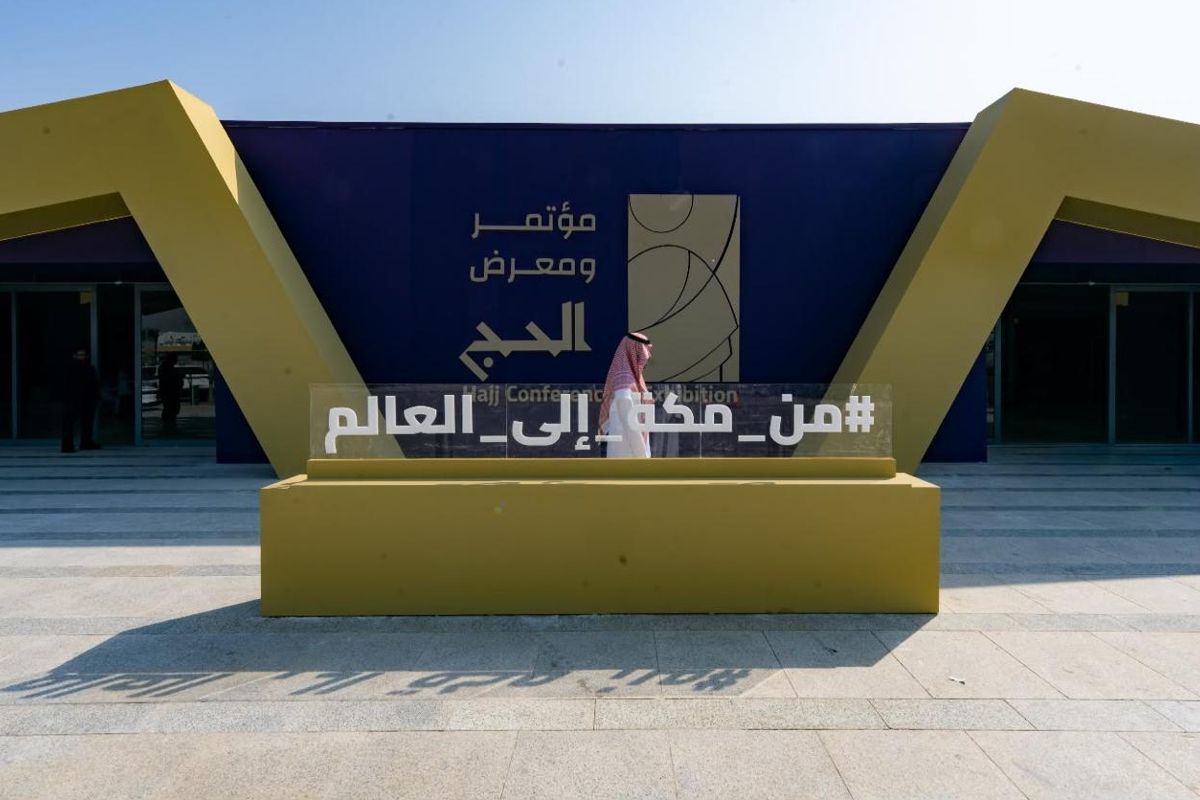
This perspective gives the sixth Hajj Conference and Exhibition, scheduled to take place in Jeddah from 8 to 11 November 2026, a broader purpose than simply showcasing new technology.
Organised by Saudi Arabia’s Ministry of Hajj and Umrah in cooperation with the Pilgrim Experience Programme, the event brings together institutions, researchers, entrepreneurs and technology developers working to improve services for pilgrims.
The Future of Hajj Innovations bootcamp focuses on smart operations and crowd management, sustainability and resource efficiency, the pilgrim experience and services, awareness and training, and the pilgrim journey.
Alongside the conference’s Innovation and Entrepreneurship Zone, Hackathon and Technology Oasis, these initiatives offer opportunities to connect technological development with practical challenges.
However, their success should not be measured by the number of ideas presented or prototypes demonstrated. The more important question is what happens afterwards.
Can promising solutions be tested in realistic conditions? Will they remain accessible to different groups of users? Can they be integrated into existing services and scaled effectively?
Without answers to these questions, even promising innovations risk remaining impressive demonstrations rather than practical solutions.
Lessons that extend beyond the Hajj
The Hajj provides a demanding setting for developing human-centred innovation, but the underlying challenges are familiar to institutions around the world.
Hospitals must serve patients with differing abilities and needs. Airports must guide international travellers through complex procedures. Public transport systems must make information accessible to people unfamiliar with their surroundings.
In each case, the goal is not simply to introduce more technology, but to make services work better for the people who use them.
This is where Saudi Arabia’s experience can contribute to a wider international discussion. By connecting knowledge gained from serving pilgrims with research, entrepreneurship and technology development, the Hajj Conference and Exhibition can promote approaches relevant beyond the holy sites.
Its long-term contribution, however, will depend on whether the ideas and partnerships it generates lead to solutions that are tested, refined and ultimately implemented.
Innovation should not be judged by the sophistication of the tools we create, the attention they attract or the promises made at their launch. It should be judged by the difference they make to the people who rely on them.
Perhaps the most important innovation is not the one that makes technology more visible, but the one that makes a complicated experience feel effortless.
Source: jawawa.id (https://jawawa.id/newsitem/the-hajj-is-redefining-the-meaning-of-innovation-1793868730)
Originally published by Antara (Indonesian) (https://www.antaranews.com/berita/5833747/ibadah-haji-mendefinisikan-ulang-makna-inovasi), translated from Indonesian