
The Gurandil Risking Their Lives on Mount Pongkor
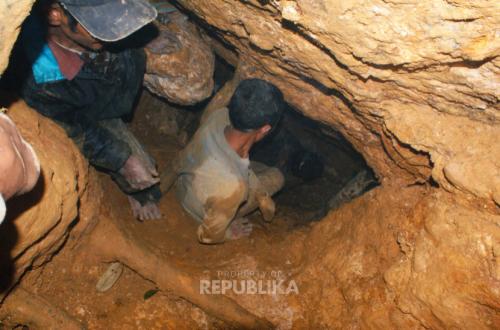
The disappearance of 26 gold miners in the Mount Pongkor area of Bogor Regency in November 2026 was a tragedy. Yet it was not a new story. Republika had investigated the presence of gurandil, or illegal gold miners, and the dangers they faced as far back as 2009.
For thousands of years, people have pursued gold because of its high economic value. In Bantar Karet village, Bogor Regency, the discovery of gold in the Mount Pongkor area transformed local life. Few residents could be seen leaving for work in the morning to farm or raise livestock. Most were taking their chances by mining gold illegally in the Mount Pongkor area.
The Mount Pongkor gold mine concession covers 6,047 hectares in Nanggung district, Bogor Regency. The operating area of state-owned PT Aneka Tambang Tbk (Antam) lies within Gunung Halimun-Salak National Park and includes 10 villages: Pangkaljaya, Hambaro, Kalongliud, Sukaluyu, Parakan Muncang, Nanggung, Curug Bitung, Malasari, Cisarua and Bantar Karet. The last three villages are closest to Antam’s operations and have been most affected by them.
There is only one road into the mining area: through Antam’s gate in Nunggul hamlet, Bantar Karet village. It lies beyond 14 kilometres of Antam Road, after the Cikaniki River bridge on Jasinga Road.
Ten kilometres of Antam Road had recently been resurfaced and was in good condition. The route rises and falls as it follows the fast-flowing Cikaniki River, which cuts through the mountain rock.
Before gold was discovered, Pongkor was one of many remote parts of Bogor Regency without paved roads or electricity. Antam arrived in Pongkor in 1991 and began operations the following year.
Muhammad Ali Sastradinata, who was then head of government affairs at Bantar Karet village, recalled that this was when paved roads began replacing dirt tracks and electricity poles were erected along the route to the mine. From then on, Pongkor and Bantar Karet began to stir. Gold became their magnet and driving force.
Residents of Bantar Karet, once familiar with farming, found a new and more promising source of income in gold processing. What could they expect from farmland on hillsides that had been excavated so extensively?
Almost every home in Bantar Karet, particularly along Antam Road, had a gelundung, a rotating drum used to process gold-bearing ore. The distinctive sound of the machines could be heard from a house behind the village office, five kilometres from Antam’s gate.
At the very least, the owners of these gelundung could be classed as micro, small and medium-sized enterprises. But Ali could not provide figures for the number of gold processors in the village. Local neighbourhood association leaders also said they did not know how many gelundung operated in their areas.
At the time, Bantar Karet had 9,297 residents, including 2,223 farmers, 1,011 unemployed farmers and 638 agricultural labourers. Gold processing did not appear to be a formal business, since the gold-bearing rock being processed came from Antam’s prohibited mining concession. Local residents said they sourced it only from outside Antam’s area. However, there were no markers showing where Antam’s concession ended and other land began.
Whether legal or not, gold processing had become a mainstay for many residents who were unable to share directly in the benefits brought by Antam.
“Working for Antam has long been what residents wanted. But it was difficult because applicants needed to have completed junior secondary school. At the time, most residents had only finished primary school,” Ali said. To attend junior secondary school, children in Bantar Karet then had to walk more than 15 kilometres. The village’s first junior secondary school, the private Yatabo school, was still being completed.
Gurandil is a local term for illegal gold miners. These miners were not indigenous to the area; they were newcomers who knew it was rich in gold. They dug narrow tunnels towards gold deposits, with diameters just wide enough for one person to pass through.
Source: jawawa.id (https://jawawa.id/newsitem/the-gurandil-risking-their-lives-on-mount-pongkor-1795672302)
Originally published by Republika (https://analisis.republika.co.id/berita/tp3gh0393/kisah-gurandil-menyabung-nyawa-di-gunung-pongkor), translated from Indonesian