
The Gulf War: When Everyone Claims Victory
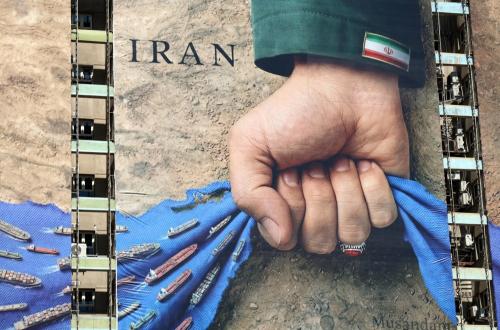
War usually produces a winner and a loser. However, the Gulf War between Israel, the United States, and Iran has given rise to a different paradox. All three parties claim victory. Israel states it has succeeded in weakening Iran’s military and nuclear capabilities. Washington assesses that its military operations achieved strategic objectives. Conversely, Tehran claims it was able to withstand the military pressure of a superpower and its allies, even emerging from the war with a stronger bargaining position than before.
The question is, who actually won? Or perhaps the question itself is misplaced. In international relations, victory is not only measured by military success, but by the ability to convert the results of war into sustainable political advantage. Prussian strategist Carl von Clausewitz, in On War (1832), long cautioned that war is merely the continuation of politics by other means. This means military success is only a tool. The ultimate measure remains whether the political objectives behind the war were truly achieved.
From this perspective, the war offers an important lesson for the United States and Israel. Both once again demonstrated impressive military technological superiority. Yet modern warfare also shows again that military superiority has limitations as an instrument for imposing political outcomes. Destroying military installations, command centres, or strategic facilities of an adversary does not always mean being able to change its political will.
This conclusion aligns with the thinking of Robert A. Pape in Bombing to Win: Air Power and Coercion in War (1996). Based on studies of various modern conflicts, Pape shows that air power is very effective at destroying physical targets, but far more difficult to use to compel an adversary to change its political decisions. In other words, destroying an opponent’s combat capability does not automatically make the opponent willing to change its policies. This view complements Thomas Schelling’s analysis in Arms and Influence (1966), which distinguishes between deterrence (the ability to prevent an adversary from acting) and compellence (the ability to force an adversary to change its behaviour). Experience shows that the latter is almost always far more difficult to achieve.
However, an equally important lesson is directed at Iran. In his article, Iran Won the War but May Lose the Peace, published in Foreign Affairs (2026), Nate Swanson warns that the victory claimed by Tehran could turn into a burden if not managed wisely. Iran’s greatest challenge is no longer how to win the war, but how to win the peace.
This warning becomes relevant as various ideas emerge to exploit the strategic position of the Strait of Hormuz, such as the establishment of a Persian Gulf Strait Authority (PGSA) to manage traffic in the Strait of Hormuz, the requirement to obtain permits before passage, and the possible imposition of transit fees or security levies on foreign vessels.
From Iran’s perspective, such steps may be seen as a reasonable way to convert geopolitical advantage into economic and political influence. Yet in the eyes of many other countries, such policies could potentially be perceived as using an international shipping lane as an instrument of political pressure.
Besides containing political risk, such steps could also raise issues of international law. The majority of international maritime law experts argue that the Strait of Hormuz is a strait used for international navigation, and thus the transit passage regime under the 1982 United Nations Convention on the Law of the Sea (UNCLOS) in principle does not justify a coastal state hindering international navigation or imposing levies solely for the exercise of the right of passage.
Indeed, Iran has its own legal interpretation of these provisions. However, if Tehran goes too far, the debate will no longer concern geopolitics alone, but also its legal legitimacy in the eyes of the international community.
This is where Swanson’s warning for Iran not to overplay its hand becomes highly relevant. That is, Iran must not be tempted to push its strategic advantage too far, thereby triggering a backlash that harms itself. The most effective instrument of deterrence is often the one that does not need to be used excessively.
If Iran exploits its strategic victory too aggressively, the end result could be the opposite of what is expected. Other countries may strengthen security cooperation, seek alternative energy routes, or build new coalitions to limit Iran’s influence. A victory won on the battlefield could thus turn into a diplomatic loss.
Ultimately, Iran’s greatest challenge lies not in the Strait of Hormuz, but at home. After years of facing economic sanctions, high inflation, and limited investment, the greatest hope of the Iranian people is not the creation of new instruments of pressure against other countries, but the creation of jobs, economic stability, and a more prosperous life.
History shows that a government’s legitimacy is ultimately determined more by its ability to improve the welfare of its people than by its ability to sustain the euphoria of victory.
This war, therefore, leaves different lessons for each party. The United States and Israel are reminded that military power has limitations as an instrument for achieving political objectives. Iran, at the same time, faces a test that may be even heavier: resisting the temptation to overplay the Strait of Hormuz card.