
The Guardians of Indonesia's Rhinos
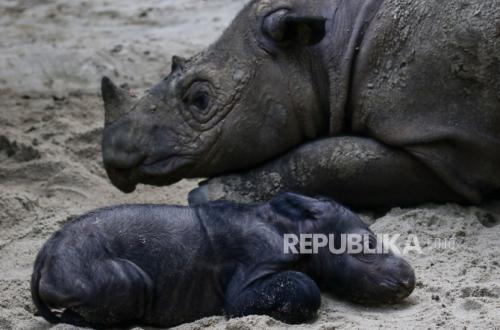
Indonesia bears a significant global responsibility in safeguarding the two rarest rhino species still surviving today: the Javan rhino and the Sumatran rhino. Amidst ongoing forest degradation, climate change, and increasing pressure on conservation areas, the existence of these species has become a powerful symbol of how humanity treats its natural world. Rhinos are not merely ordinary wild animals; they are part of the earth’s long history, having survived for millions of years. Now, their continued existence depends entirely on human decisions and actions in the present era.
The Javan rhino is currently found only in Ujung Kulon National Park in Banten, while the Sumatran rhino survives in small, scattered populations across several conservation areas such as Way Kambas and Bukit Barisan Selatan. The population numbers of both species remain a matter of serious international concern, as they are at critically endangered levels. In the context of global conservation, Indonesia is not only the last home for these species but also the decisive factor in whether they will survive or vanish entirely from the face of the earth.
Ecologically, rhinos play a vital role in maintaining the balance of tropical forest ecosystems. They are known as an umbrella species, meaning that protecting their habitat also safeguards thousands of other plant and animal species within the same area. The Sumatran rhino, in particular, has an important function in aiding forest regeneration through the dispersal of seeds from various forest plants. Their presence helps ensure the natural cycle of the forest continues properly. Indonesia’s tropical forests themselves serve a much larger function than merely being a habitat for wildlife; they are crucial natural carbon sinks that help mitigate the impacts of global climate change. When forest areas are preserved, the earth’s capacity to absorb carbon emissions is maintained. Therefore, protecting rhinos fundamentally also means protecting the future of the human environment.
Amid these significant challenges, the Indonesian Rhino Foundation, or Yayasan Badak Indonesia (YABI), has emerged as an institution playing a key role in rhino protection in Indonesia. Since its establishment in 2007, YABI has worked to strengthen conservation through approaches including habitat protection, community empowerment, environmental education, and semi-natural breeding programmes. Its presence demonstrates that conservation cannot rely solely on the government but requires the involvement of many parties. Many people still perceive conservation as solely the concern of researchers or environmental activists, whereas in reality, rhino preservation demands cross-sector collaboration. The fields of education, technology, economics, media, and the private sector all have important roles in supporting conservation efforts. Even the general public can contribute through simple actions such as caring for the environment, supporting conservation campaigns, and refusing to engage in wildlife trade.
Source: jawawa.id (https://jawawa.id/newsitem/the-guardians-of-indonesias-rhinos-1781761928)
Originally published by Republika (https://analisis.republika.co.id/berita/tgt8rp483/para-penjaga-badak-indonesia), translated from Indonesian