
The Greatest Paradox of the Ukraine War: The Longer It Lasts, the Harder It Is to Ignore Putin
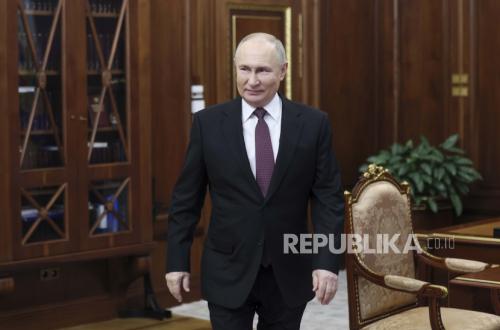
Four years of war in Ukraine have reshaped the global geopolitical landscape. When Russian tanks crossed the border in February 2022, many believed the conflict would end swiftly. Some predicted Russia would conquer Ukraine within weeks. Others trusted that Western economic sanctions would quickly cripple the Kremlin and force President Vladimir Putin to step down. In reality, both predictions missed the mark. Today, the war continues. Thousands of lives have been lost. Cities lie in ruins. Trillions of dollars have been drained. Yet one question, once considered taboo, is now being heard with increasing frequency in European capitals: can this war ultimately be ended without talking to Vladimir Putin?
This question marks a significant psychological shift. For years, the West’s primary strategy was to isolate Putin politically, economically, and diplomatically. Now, some circles are beginning to acknowledge that ending the war may require something long avoided: direct negotiations with the Kremlin. This view is reflected in Sylvie Kauffman’s writing in Le Monde. According to her, Europe is entering a new phase—not because they trust Putin, but because they understand that every war eventually ends at the negotiating table. For Kauffman, the question is no longer whether Europe should talk to Putin, but rather who will talk, for what purpose, and from what position of strength.
This perspective stems from the changing situation on the ground. Ukraine has not succeeded in expelling Russia from all occupied territories, but neither has it collapsed as many predicted at the war’s outset. European financial and military support has enabled Kyiv to hold firm. In some aspects of military technology, Ukraine has even managed to exert considerable pressure on Russia. On the other side, Russia has not emerged as an absolute victor either. The Russian economy is surviving, but it must bear the enormous costs of war. Prolonged military mobilisation drains resources and creates mounting social pressures. Russia has not been defeated, but a swift and decisive victory has never materialised.
This is where Hakki Ocal’s analysis becomes compelling. He uses the metaphor of a ‘truck escape ramp’ available to vehicles that lose control on a downhill road. According to him, Putin needs such a ramp. The longer the war drags on, the greater the political, economic, and social energy Russia must expend. At a certain point, even a powerful state requires an honourable exit. Ocal does not view Putin as a leader heading for a grand victory. Instead, he depicts the Kremlin as a driver who must quickly find an escape route before greater damage occurs. In this view, Putin’s biggest challenge is not merely winning the war, but ending it without losing face before the Russian public.
However, not all observers accept the assumption that Russia is approaching a point of weakness. Tarik Cyril Amar offers a sharply different critique. According to the Germany-based historian, the West has been trapped in what he calls ‘Russophrenia’—a condition where Russia is simultaneously portrayed as a state on the verge of collapse and an existential threat to all of Europe. In the Western narrative, Russia is often depicted as suffering economic ruin, resource shortages, and internal crisis, while at the same time being described as ready to invade NATO countries and shake the security of the entire continent. For Amar, these two narratives are logically difficult to sustain simultaneously.
Source: jawawa.id (https://jawawa.id/newsitem/the-greatest-paradox-of-the-ukraine-war-the-longer-it-lasts-the-harder-it-is-to-ignore-putin-1781657455)
Originally published by Republika (https://news.republika.co.id/berita/tgqedt451/paradoks-terbesar-perang-ukraina-semakin-berlangsung-kian-sulit-mengabaikan-putin), translated from Indonesian