
The Great Role of Liu Huaqing Behind China's Naval Power
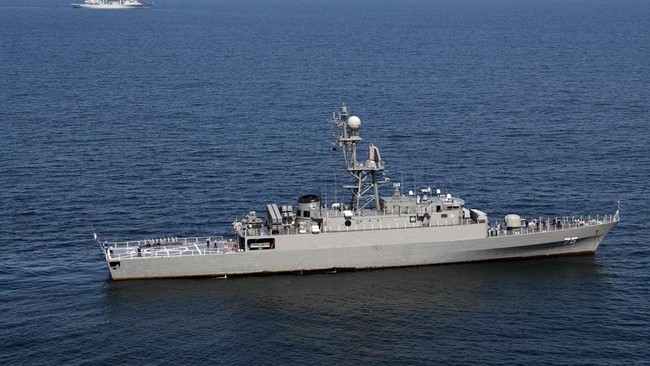
China’s navy is currently respected and recognised globally for its strength. A significant role was played by Liu Huaqing, known as the ‘Father of the Modern Chinese Navy’, in the development of China’s current naval fleet. Liu served as the commander of the People’s Liberation Army Navy (PLAN) from 1982 to 1987, a period that witnessed a major shift in China’s naval strategy away from coastal operations.
Liu Huaqing re-conceptualised China’s maritime power, shifting naval strategy from near-shore defence to near-sea defence and far-sea protection. He advised staff that China’s next conflict would likely involve naval warfare in near-sea locations such as the Taiwan Strait or the South China Sea. Consequently, the PLA transitioned from traditional land-warfare preparations to focusing on new naval warfare capabilities. Liu’s plan prioritised the modernisation of the PLA Navy under third-scale command, alongside efforts in reorganisation, institutional reform, and the enhancement of sustainability systems.
His strategic thinking expanded the nation’s maritime interests, redirecting China’s maritime development and building a blue-water navy capable of operating in the open seas. He transformed the PLAN from a defensive force into an offensive navy, leading to the development of aircraft carrier strike groups, major combatant vessels, and high-tech weapon systems. As a result, China’s shipbuilding industry, aviation technology research, and naval training systems supported impressive naval growth throughout the 1990s and into the 2010s.
While the American strategist Alfred Mahan is often cited as an influence on Liu’s concepts of maritime sovereignty, evidence of a direct link is inconclusive. It is possible that Mahan’s theories represent universal truths of maritime strategy accessible to any expert. Instead, Liu’s fundamental understanding of maritime power drew heavily from the intellectual roots of Soviet Admiral Gorshkov. Liu’s institutional framework and organisational systems closely resembled those of the Soviet naval commander. Therefore, Liu Huaqing was more of China’s ‘Gorshkov’ than a ‘Red Mahan’. Gorshkov influenced Liu on how to build a powerful navy through institutional reform, technological advancement, and centralised party control. Liu studied Gorshkov’s experiences during his four years of study in the Soviet Union.
With geostrategic ambitions and political confidence, Xi Jinping launched the Belt and Road Initiative (BRI) in 2013. The goal was to create a new maritime Silk Road connecting the Pacific to the Indian Ocean, Southeast Asia, South Asia, the Middle East, and Africa, representing the maritime dimension of China’s global ambitions. The BRI encompasses massive programmes in trade, finance, transport, communications, infrastructure, and energy. The BRI is designed to build a China-centric global system.
Liu Huaqing’s new naval strategy effectively prepared China for Xi Jinping’s BRI during the 2010s and 2020s. Since Xi Jinping became China’s supreme commander in 2012, he has emphasised Liu Huaqing’s naval doctrine and expanded China’s maritime policy beyond the eras of Jiang Zemin or Hu Jintao. Liu’s robust naval strategy has become a core component of Xi’s broader strategy. Xi believes the current Asia-Pacific trade system, under US leadership, limits China’s maritime interests, and he has focused on developing a navy capable of winning battles in both near and far seas.
By 2020, the global shipbuilding industry estimated that China’s shipbuilding capacity was the largest in the world, reaching approximately 45 per cent of global capacity. In 2020, the PLAN consisted of 240,000 officers and sailors with a total combat strength of 350 surface ships and submarines, compared to 293 warships in the US Navy at that time. Among the most widely reported developments is the continuous expansion of China’s aircraft carrier fleet.
Source: jawawa.id (https://jawawa.id/newsitem/the-great-role-of-liu-huaqing-behind-chinas-naval-power-1780933587)
Originally published by CNBC Indonesia (https://www.cnbcindonesia.com/research/20260517055203-128-735271/peran-besar-liu-huaqing-dibalik-kekuatan-angkatan-laut-china), translated from Indonesian