
The great matcha rivalry: Can Japan’s centuries-old tradition hold its own against China’s scale?
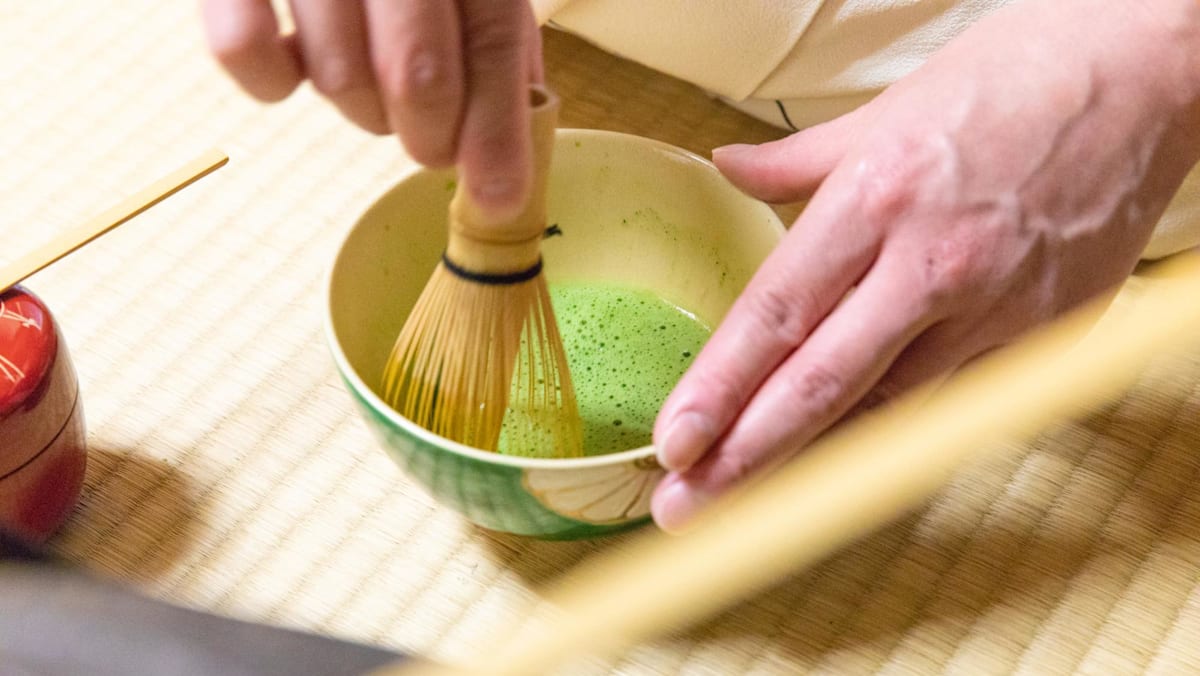
The great matcha rivalry: Can Japan’s centuries-old tradition hold its own against China’s scale?
From New York to London, the world cannot seem to get enough matcha. The boom has revived Japan’s tea industry but also exposed the limits of its supply. Now China, already the world’s biggest producer, sees an opportunity to scale up.
UJI, Japan/TONGREN, China: Before the doors open at Horii Shichimeien, a historic tea store in Uji, customers are already waiting.
They have come to this centuries-old tea city in Kyoto Prefecture for some of Japan’s most prized matcha.
Inside the shop, tins of its award-winning matcha can cost nearly US$170 each. Prices are now three to five times what they were five years ago.
For Horii Shichimeien’s president Chotaro Horii, who inherited the family business, the crowds are a welcome sight.
“Japanese tea was on a downward trend, but the matcha boom overseas rescued us,” he told CNA.
Today, Japan faces a different problem – demand is outpacing supply.
At Horii Shichimeien, producing matcha is a slow and painstaking process.
Tencha, the tea leaves used to make matcha, is grown under shade for 20 to 40 days before being harvested.
For premium-grade matcha, only the first spring harvest – considered the most flavourful – makes the cut.
After they are picked, the leaves are rushed to a processing plant and steamed to prevent oxidation.
They are then dried and stripped of their stems before being ground into a fine green powder with traditional stone mills.
Each mill produces just 40g of matcha in an hour.
There are about 80 stone mills at Horii Shichimeien’s plant, which is shared by seven other tea growers in Uji to reduce costs.
The highest-quality tea is ground at only 10 designated mills.
During peak periods, high demand can keep the mills running through the night. But Horii said they also need periods of rest to maintain the quality of the powder.
Japan’s matcha shortage made headlines around the world in 2025.
At the same time, the country was shipping more tea abroad than ever.
According to Japan’s agriculture ministry, exports of Japanese green tea – including matcha – have reached record highs for six consecutive years. In 2025, exports exceeded 12,600 tonnes, up 43 per cent from the previous year.
Japan has been producing more tencha too. Production roughly tripled over the past decade, reaching more than 6,200 tonnes in 2025.
But it is not the only country ramping up production.
CHINESE GROWERS STEP IN
Shrouded in the mist of Fanjing lies the city of Tongren in China’s southwestern province of Guizhou.
Its cool climate and abundant rainfall have long made the region ideal for growing tea, but the mountainous terrain also held back economic development.
Then, global demand for matcha took off.
Local authorities encouraged farmers to revive tea fields, offering subsidies and other support. Land that once generated little income became part of a growing matcha supply chain.
Farmer Yang Xiuyuan, 71, has worked these fields for much of his life.
“This used to be a wasteland. Now that it’s planted with tea, it brings in income, so earnings are higher,” he said.
Yang earns 100 yuan (US$15) a day pruning, fertilising and harvesting tea.
More than 100,000 farmers now make a living from the matcha industry in Guizhou, once the nation’s poorest province.
Tongren city alone produces roughly a fifth of China’s matcha, helping to drive the country’s rise as the world’s largest producer.
According to the China Tea Marketing Association, the country accounted for about 70 per cent of global matcha supply last year, producing more than 12,000 tonnes.
China’s biggest matcha maker, Gui Tea, sold more than 2,500 tonnes in the same year. More than half was exported to over 50 countries, including to traditional matcha powerhouse Japan.
Chen Xiaoming, Gui Tea Group’s deputy general manager, sees a gap that Chinese producers are well placed to fill.
“Japan’s matcha production has also grown rapidly over the past few years, but it simply cannot keep pace with the speed at which global demand is increasing,” he said.
“As a result, many Chinese companies have entered the matcha industry in recent years.”
Unlike Japanese matcha, which commands a premium, China’s strength lies elsewhere.
“The vast majority of demand in the international market is for beverage-grade matcha,” Chen said.
“This type of matcha doesn’t need to be as ultra-premium or as meticulously crafted as the matcha produced in Japan’s renowned growing regions, such as Uji.
“In China, we have advantages in terms of our tea plantations and our labour force, which allow us to scale up production very quickly.”
Guizhou is investing heavily in matcha, aiming to grow the industry into a US$1.5 billion business by 2030 through upgrades in technology and production.
THE BOOM THAT REVIVED UJI TEA
China’s ability to produce matcha at scale may help meet the world’s growing appetite for the tea. But for Japan’s famed tea-growing regions, matcha is closely tied to where it comes from – and the traditions behind it.
That is especially true in Uji.
Tea first took root in the fertile lands around the city about 800 years ago, using seeds brought from China.
But Uji’s tea industry has not always enjoyed today’s success.
For decades, Japan’s tea farms struggled with falling domestic demand for loose-leaf varieties and historically low prices.
Margins thinned, and fewer young people saw a future in the industry. In Uji, urbanisation also reduced the amount of farmland available.
Now, the global matcha boom has breathed new life into the sector, with the benefits extending beyond tea farms.
In 2025, Uji drew a record 6.2 million tourists, many in search of matcha.
As pride in the city’s matcha – and optimism about its future – grows, a new generation is returning to the fields.
Among Uji’s historic farms is Okunoyama, run by Horii Shichimeien and the sole survivor of the city’s legendary Seven Tea Gardens.
Horii said Uji’s tencha f