
The Great Kalimantan Gold Mountain Fraud: Perpetrator's Corpse Suspected to Be Fake
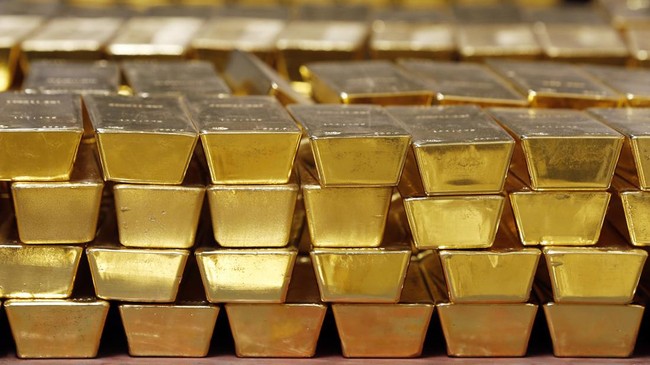
In 1993, Indonesia was rocked by claims of a gold mountain discovery weighing 53 million tonnes in East Kalimantan. The news, which briefly captured the attention of the global mining industry, ultimately proved to be a fraud.
The episode began when a group of researchers from a Canadian mining company claimed to have found enormous gold potential in the region. They estimated that gold reserves at the site could reach 53 million tonnes.
According to an investigative report by Tempo (30 November 1998), the Canadian mining company was named Bre-X. The report described it as a small-time outfit. As detailed by Bondan Winarno in his investigative report Bre-X: A Nugget of Gold at the Foot of the Rainbow (1997:50), in 1993 the company’s geologists undertook a 12-day journey through East Kalimantan. They traversed remote tropical forest to locate an area called Busang, which geologist John Felderhof believed was rich in gold.
After surveying and confirming the area’s potential, the company issued an open letter to investors. The letter outlined Busang’s future prospects, suggesting that if developed seriously, investors could become extremely wealthy. Indonesia already had many people who had grown rich from gold mining; the Freeport project in Papua was cited as one example.
The news immediately caused a sensation. The company also announced that the Busang land contained a gold mountain of 53 million tonnes. As a result, Bre-X shares in Canada soared to record highs. BBC International noted that the company’s value, initially very small, suddenly changed to Rp7 trillion.
In Indonesia, senior state figures and businesspeople were immediately attracted. Among them were people close to President Soeharto, such as businessman Bob Hasan and Soeharto’s son, Sigit Harjojudanto. Through their respective companies, the two gradually came to control the mining area in Busang.
By 1997, Bob Hasan had acquired 50% of the shares in PT Askatindo Karya Mineral and PT Amsya Lina, both of which controlled the Busang I and Busang II mining areas. Sigit was even persuaded by Bre-X with US$1 million per month for his company, PT Panutan Daya, to become a consultant in Busang.
Initially, everything went smoothly. Participation in the gold project amid the economic uncertainty of the 1990s offered a glimmer of hope. However, it was not easy for Bre-X to do business in Indonesia. President Soeharto required foreign companies to share ownership and cooperate with the government. In the Busang case, Soeharto appointed PT Freeport-McMoran as the mining company representing the government. It was from this point that the facts about Busang’s gold began to emerge.
As a well-known company, Freeport followed strict procedures, including field verification. They were required to take samples to prove in a laboratory that the land truly contained gold. A Freeport team was dispatched to the site.
Unexpectedly, on 19 March 1997, the same day Freeport conducted its verification, news spread that the boss of Bre-X had disappeared. The boss was Michael de Guzman, Bre-X’s Director of Exploration. Guzman reportedly died by suicide after jumping from the passenger seat of a helicopter travelling from Samarinda to Busang. A will was also found.
“The back seat with its sole passenger was already empty, and the helicopter’s right door was open,” wrote Bondan Winarno (1997:117). On the ground, a search and rescue team found a body believed to be Guzman. The body was taken to the Philippines for burial. However, Bondan Winarno’s investigative instincts as a journalist told him otherwise. He was convinced that the body was not Guzman.
After conducting investigations as far as Canada, that belief was confirmed. The physical characteristics of the body and Guzman differed. The conclusion was that he was still alive and had been deliberately hidden.
This incident was connected to the Busang gold mountain case. At the same time, Freeport released its verification results: the Busang land contained no gold. Various independent researchers also reported similar findings. There was no gold in the Busang rock samples from 1995 to 1997.
The news immediately caused an uproar in Indonesia, as it meant President Soeharto had been deceived. Bre-X shares plummeted. Investors were furious. They even held Bre-X boss David Walsh hostage to demand their money back.
It took a long time for the case to subside. However, it could not be fully resolved and still leaves unanswered questions, particularly regarding Guzman’s disappearance. Citing BBC International, after the incident Guzman was never seen again. His family has not known his whereabouts to this day. However, the family believes he is still alive. It is said that he went into exile in South America.