
The Grandeur of Hagia Sophia and Çamlıca Mosque in Istanbul
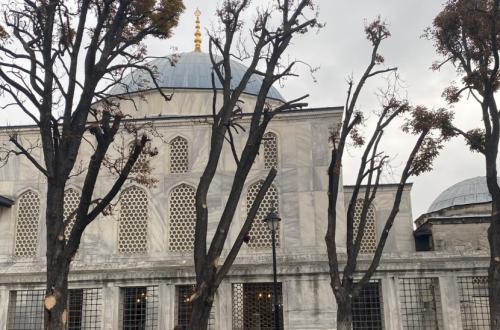
Istanbul, Türkiye, is home to many Muslim places of worship rich in history, architecture and culture from different eras. They range from Hagia Sophia, which has stood since the sixth-century Roman era, and the Blue Mosque, with its artistic legacy dating back to the 17th century, to Çamlıca Mosque, Türkiye’s largest mosque and one rich in national symbolism.
Republika visited these iconic sites in mid-October 2026. Although Istanbul’s autumn weather was intermittently cloudy and rainy, tourist activity showed no sign of slowing.
At many tourist sites, local residents and visitors from various countries could be seen coming and going. This was especially evident around the historic Sultanahmet Square in the Fatih district, where Hagia Sophia and the Blue Mosque are located.
Historical records indicate that Hagia Sophia was built from around 532 and inaugurated in 537 AD. The building is approximately 34 years older than the year of the Prophet Muhammad’s birth.
Hagia Sophia stands on the north-eastern side of Sultanahmet Square, its imposing exterior combining soft pink, reddish brick and pale yellow stone. Visitors entering the building pass through a corridor, or narthex, with marble walls and remnants of historic mosaics.
Inside the main space, visitors are met with the grandeur of the building, which covers around 0.75 hectares. Its interior is dominated by golden tones and subdued lighting, alongside Byzantine gold-leaf mosaics, colourful marble columns and naturally patterned marble flooring.
Hagia Sophia’s vast dome is considered one of the most revolutionary architectural works in world history. It held the record as the world’s tallest and largest dome for nearly 1,000 years. Large Islamic calligraphic inscriptions bearing the names of Allah, Muhammad and the Rightly Guided Caliphs are clearly visible in several places. On the lower floor, some visitors can be seen praying.
Alongside its Islamic symbols, Hagia Sophia also contains Christian artworks from the Byzantine era that have survived to this day. These include mosaics depicting the Virgin Mary, Jesus Christ, Byzantine emperors and the Deesis.
On the way out through the narthex, visitors can see a mosaic panel featuring three figures. On the right, Emperor Constantine holds a model of the city, while on the left Emperor Justinian holds a model of Hagia Sophia, presenting it to the Virgin Mary and the Christ Child.
The range of symbols from different religions reflects Hagia Sophia’s history of repeated changes in use. From 537 to 1453 AD, the building served as a church; after Constantinople was conquered in 1453, it became a mosque. In 1935, President Mustafa Kemal Atatürk converted it into a museum.
Source: jawawa.id (https://jawawa.id/newsitem/the-grandeur-of-hagia-sophia-and-camlica-mosque-in-istanbul-1792572735)
Originally published by Republika (https://news.republika.co.id/berita/tn90ws423/kemegahan-hagia-sophia-hingga-masjid-camlica-di-istanbul), translated from Indonesian