
The Giant Coconut That Captivates the World is Now Growing in Bogor
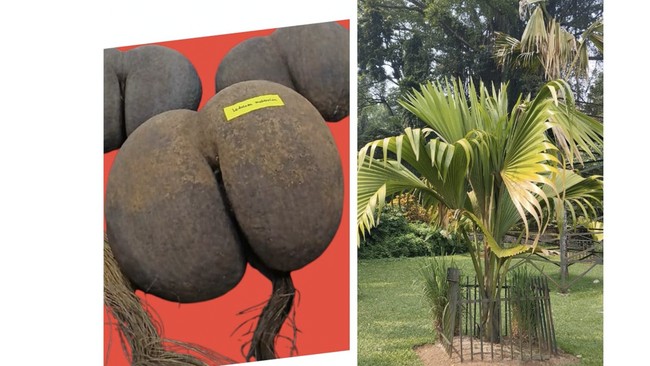
Imagine a coconut far larger than the ones we usually encounter. Its shape is unlike any typical coconut, featuring very distinctive indentations and reaching extraordinary sizes. This is Lodoica maldivica (J.F. Gmel), a palm endemic to the Seychelles, Madagascar, and South Africa, famously known as the ‘coco de mer’.
The giant coconut is one of the most fascinating palm species in the world. Naturally, this plant is only found on a few islands in the Seychelles, particularly Praslin and Curieuse. Its limited distribution makes this species highly significant for biodiversity and serves as an icon of Seychelles flora.
The most striking uniqueness lies in its fruit. The giant coconut produces the largest seed among all living plants. A single fruit can weigh dozens of kilograms. Its unusual size and shape have attracted human attention since ancient times, even before its origins were scientifically understood.
From Mysterious Fruit to ‘Coco de Mer’
There is an interesting story behind the name of the giant coconut. Before the Seychelles were known as the plant’s origin, its fruit was often found floating in the sea and washing up on distant shores. Because people did not know where the fruit originated, various myths and theories emerged regarding its source.
The fruit found at sea became known as ‘coco de mer’, or ‘sea coconut’. This name persists today, even though the plant does not actually grow in the sea.
Historically, the coco de mer fruit was a highly valuable item, believed to possess various medicinal properties and special powers. Its rarity and unique shape made it an object of trade and collection. As science and exploration progressed, it was finally discovered that the fruit originates from palms growing in the Seychelles islands.
A Palm with an Interesting Life Cycle
The giant coconut possesses biological characteristics different from many other palms. This plant is a dioecious palm, meaning male and female flowers are found on separate individuals.
The female trees produce very large fruits, while the male trees have distinctive inflorescences. The reproductive process takes a relatively long time, meaning the natural regeneration of the population does not occur rapidly.
These characteristics are one of the reasons why the existence of Lodoicea maldivica requires attention in conservation efforts. When a population faces pressure, its recovery cannot happen in a short period.
More Than Just a Unique Fruit
Beyond its attractive shape, the giant coconut plays a vital role in the ecosystem where it grows. As part of the island forest vegetation, this plant helps shape habitat structures and provides resources for other organisms.
Its existence also demonstrates how a species can evolve specifically within limited geographical environments. The endemism of the giant coconut serves as a real-world example of how islands can become sites for unique biodiversity formation.
For the scientific world, species like this are not only interesting to observe but also essential to study. Information regarding morphology, ecology, distribution, reproduction, and genetic diversity can serve as a foundation for management and conservation.
From Seychelles to Biodiversity Knowledge
The uniqueness of the giant coconut reminds us that scientific collections play a crucial role in documenting biodiversity. Plant specimens, seeds, fruits, and other collection materials serve as scientific data sources utilised across generations.
For institutions managing scientific collections, materials like Lodoicea maldivica are not merely decorative items. They contain information regarding species identity, collection history, origin, morphological characteristics, and various other data that support research.
Ultimately, Lodoicea maldivica is more than just a story about a ‘giant coconut’. It is a story of evolution, islands, human history, science, and the importance of preserving biodiversity.
A fruit once considered mysterious because it was found floating in the sea has now become a symbol of Seychelles biodiversity. From such a unique fruit, we can learn that every species holds a story—and scientific collections help us ensure those stories remain available for future generations.
Lodoicea maldivica in Indonesia’s Scientific Collections
Interestingly, the story of the giant coconut is not only found in its natural habitat in the Seychelles. This species, which boasts the largest fruit in the world, can also be found within the plant collections of the Bogor Botanical Gardens, currently managed by the Directorate of Scientific Collection Management (DPKI) under the National Research and Innovation Agency (BRIN).
The presence of Lodoicea maldivica in the Bogor Botanical Gardens collection is a vital part of efforts to document and preserve plant biodiversity. Living plant collections like this are not merely ornaments for the botanical gardens; they are scientific resources that support research, education, knowledge development, and plant conservation.
For researchers, the presence of the Lodoicea maldivica collection in Bogor provides an opportunity to study morphological characteristics, growth, development, and various biological aspects outside of its natural habitat. The data and information attached to this collection are part of valuable biodiversity documentation.
Source: jawawa.id (https://jawawa.id/newsitem/the-giant-coconut-that-captivates-the-world-is-now-growing-in-bogor-1790934744)
Originally published by CNBC Indonesia (https://www.cnbcindonesia.com/opini/20261002132133-14-772889/kelapa-raksasa-yang-bikin-dunia-penasaran-kini-tumbuh-di-bogor), translated from Indonesian