
The Future of Indonesian Sport Is Not Determined by Medals Alone
Imagine Indonesia one day becoming a major sporting power in Asia. Modern stadiums standing in every city. Competitions running professionally. The sports industry growing into a promising economic sector. Indonesian athletes increasingly appearing on the world stage and bringing home proud achievements. This picture is not impossible. However, one question needs to be answered now: has the legal foundation supporting the Indonesian sports world been prepared to face that future? This question is important because sporting progress cannot be measured by medals alone. Achievement is important, but the sustainability of a sports system is determined by many other factors. One of them is legal certainty capable of protecting all sports stakeholders, especially athletes as the main actors in the ecosystem. So far, national sports development has often focused more on coaching, competition, facilities, and achievement targets. Meanwhile, discussions on sports legal protection remain relatively limited. Yet modern sport has evolved into more than just an arena for competition. It has transformed into a legal space, an economic space, and a humanitarian space involving various interests and rights that must be protected.
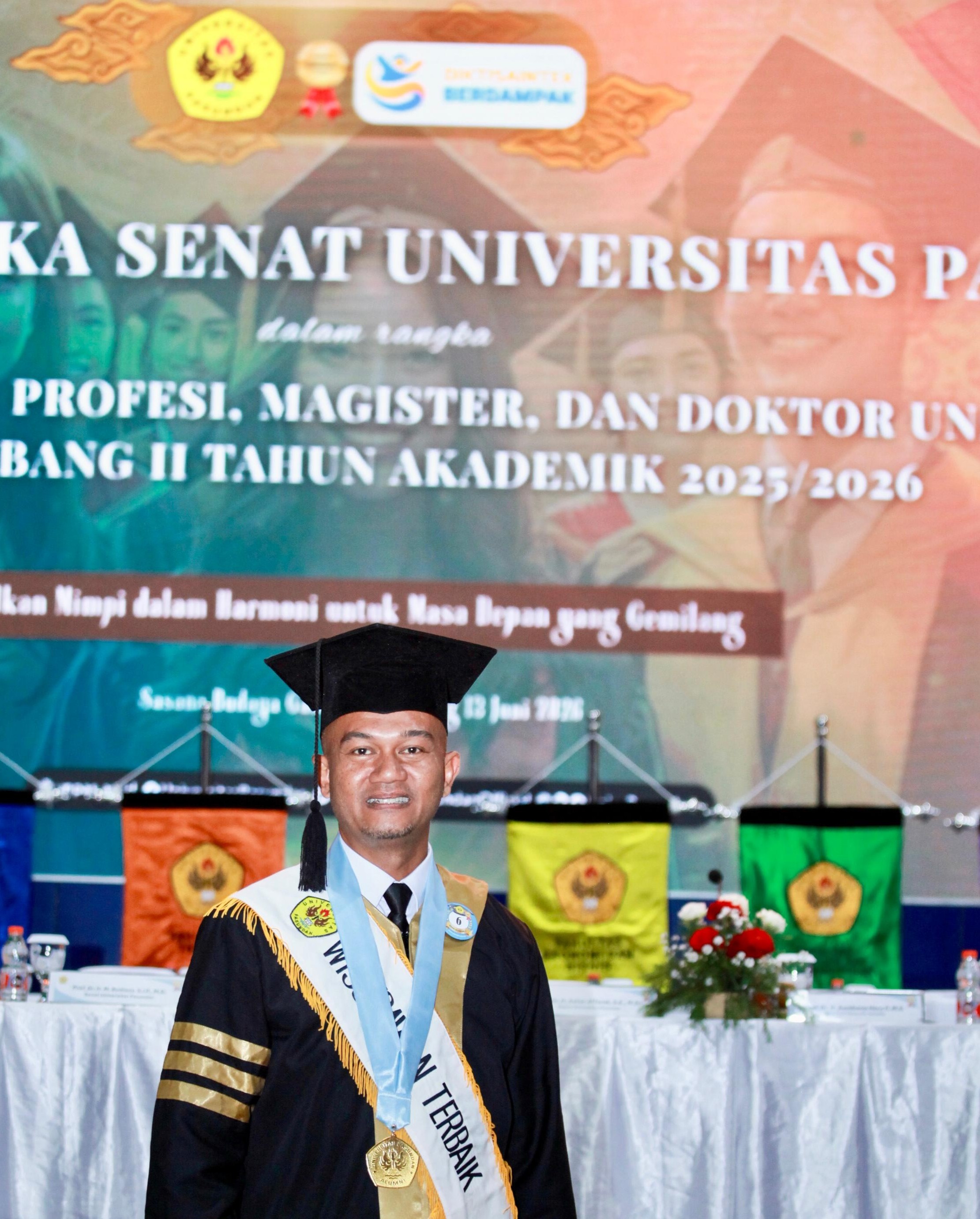
This major change became the focus of Wide Putra Ananda in his dissertation titled ‘Construction of Indonesian Sports Law Through Legal Protection of the Athlete Profession with Legal Certainty’ at Pasundan University, Bandung. In the dissertation, he proposes a different perspective. Athletes should not be continuously positioned merely as achievers of medals. They must be recognised as professionals who have clear rights, obligations, ethical standards, legal protection, and future guarantees, just like other professions. According to Wide, athletes have often been treated as symbols of national sporting success. When they win, they become a source of national pride. In certain situations, athletes can even become part of political symbolism used to demonstrate the success of national development. However, when facing contract issues, injuries, career uncertainty, or retirement, the available protection does not yet fully provide legal certainty. This condition, Wide says, becomes increasingly relevant as sport develops into a high-value industry. Broadcasting rights, sponsorship, investment, professional contracts, and various other economic activities make sport a continuously growing sector. But industrial growth is not always accompanied by adequate legal system growth.
‘To see this issue more comprehensively, I conducted a study of Indonesian sports regulations and compared them with the systems in place in the United States, France, and Japan,’ he explained. The results, Wide stated, show that neither Law Number 3 of 2005 nor Law Number 11 of 2022 provides recognition and legal certainty for athletes as a profession. Even from a broader perspective, athletes have not received firm recognition as an ethical profession within the national legal system. The impact of this situation is visible in various problems still faced by Indonesian athletes. Contractual vulnerability, minimal social security, limited protection of professional rights, weak post-career protection, and suboptimal dispute resolution mechanisms are challenges that continue to arise. In contrast to conditions in the countries used as research comparisons, athletes in the United States, France, and Japan have obtained clearer recognition as professionals. Legal protection of their rights is part of the system underpinning national sports development. Seeing this reality, Wide formulated several steps deemed important for the future of Indonesian sport. One of them is the recognition of athletes as a profession with a clear legal standing. Additionally, he also proposes the establishment of an Athlete Profession Law as a basis for more comprehensive legal protection.
‘Besides that, I encourage the harmonisation of national law with international lex sportiva principles and the strengthening of sports dispute resolution institutions. In this context, the Indonesian Sports Arbitration Body (BAKI) needs to be strengthened so it can provide more effective access to justice for athletes and all sports stakeholders,’ he said. For the Indonesian sports world, Wide continued, these proposals are not only related to legal issues. More broadly, everything relates to how to build a healthy and sustainable sports ecosystem in the future. This thinking was born from a long experience in the world of sports. Wide has served as assistant manager of the U-19 National Football Team and held the position of Chef de Mission (CDM) for the Indonesian National Team at the 2017 Toulon Tournament in Marseille, France. He was also involved in the naturalisation process of football player Ezra Walian. His contribution is also visible in the development of the Kurash sport in Indonesia. In 2016, he initiated the entry of this martial art originating from Uzbekistan into Indonesia and founded the federation which later developed into PB FERKUSHI (Central Board of the Indonesian Kurash Federation). In the same year, he became the coach of the Indonesian National Kurash Team at the Children of Asia event in Yakutsk, Russia. His involvement in national sports expanded further through his role in the initial preparations for the 2018 Jakarta-Palembang Asian Games, becoming one of the initiators of the construction of the Jakarta International Stadium (JIS), and previously owning a Sports Event Promoter company which gave him experience in running the sports industry.