
The Future Energy System Must Not Be Built on Assumptions from the Past
Indonesia’s greatest energy development challenge is not simply building enough capacity to meet future needs, but ensuring that the system being built today can continue to function when the future unfolds differently from expectations.
Energy planning has long relied on projections of demand growth, additional generation capacity and calculations of long-term supply needs. This approach remains necessary, but is no longer sufficient when technology, industrial structures, geopolitics and consumption patterns are changing ever more rapidly.
Energy infrastructure has an investment life measured in decades, while the assumptions underpinning its construction can change much sooner. The measure of an energy system’s success, therefore, should not stop at how much capacity has been built; it should also include how well the system can adapt when projections prove wrong, needs change or disruptions occur.
Indonesia must do more than build energy infrastructure to meet a single future scenario. It needs a system that remains reliable across a range of possible futures. The urgency of this shift in thinking is clear from the scale of Indonesia’s energy development agenda.
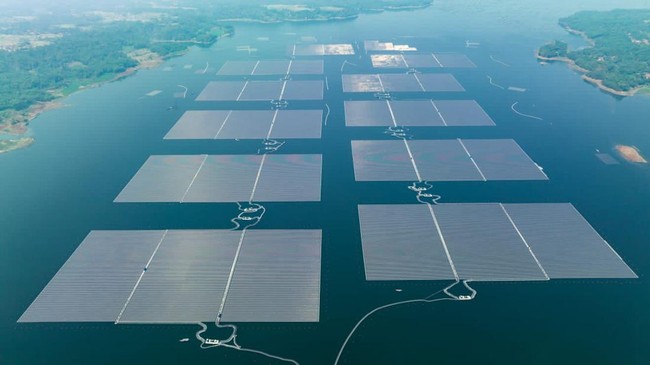
The 2025–2034 Electricity Supply Business Plan (RUPTL) envisages around 69.5 gigawatts (GW) of additional generation capacity, while the 100GWp solar power development agenda signals an ambition to expand the use of solar energy. Both initiatives offer opportunities to strengthen electricity supply, reduce dependence on particular energy sources and lay a new foundation for industrialisation.
However, meeting capacity targets does not in itself guarantee a resilient energy system. Power plants require adequate transmission networks, energy storage, operational flexibility and demand that can be served efficiently.
The system must also be able to anticipate shifts in the locations of industrial growth and technological developments that affect consumption patterns. The strategic question is not merely how many power plants can be built, but whether all parts of the system will develop in an integrated way so that these investments deliver reliable supply and optimal economic benefits.
For many years, demand projections have been one of the main foundations of energy planning. The government estimates electricity needs, draws up plans for additional power plants and develops infrastructure to ensure supply keeps pace with economic growth.
This logic remains fundamental: a shortage of capacity can hamper investment, while unmeasured development can create inefficient costs. But a projection is, by nature, a picture of a possible future, not a certainty about what will happen.
The growth of electric vehicles, data centres, artificial intelligence, mineral downstreaming and manufacturing could change energy needs on a scale and at a pace different from forecasts. Technological efficiency may also reduce consumption in certain sectors, while new industries create significant demand in locations not previously expected to become growth centres.
Energy planning must therefore move beyond estimating a single growth path towards anticipating a range of possibilities and adjusting decisions as circumstances change.
Changes in the mix of energy sources reinforce this need. A system making greater use of solar and wind power must be able to manage generation that depends on natural conditions. This challenge is not a reason to slow the development of renewable energy, but a reason to design the system as a whole more effectively.
Generation capacity needs to be developed alongside transmission networks, energy storage systems, flexible power-plant operations and demand management. In this framework, batteries are not merely add-on devices, networks are not simply channels for moving electricity, and power plants are not just production units.
All are parts of a single architecture that determines whether energy is available at the time and place it is needed. Adding capacity without considering the system’s ability to integrate it risks leaving investments short of their expected benefits.
The same principle should apply to linking energy with industrialisation. Supply reliability, power quality, competitive prices and long-term certainty all influence industrial investment decisions.
Data centres require a high level of reliability; mineral-processing industries need large, continuous supplies; and new industrial estates need certainty that infrastructure will be available when production begins.
Energy planning should therefore ask not only how much electricity needs to be produced, but also which industries Indonesia wants to develop, where they will grow and what kind of energy system will be needed to support them.
Energy is not merely a sector that follows economic growth. If planned well, it can be one of the instruments used to shape the direction and location of that growth.
This requires a closer relationship between energy planning and national economic planning. Investments in power plants that are not aligned with grid readiness may face transmission constraints. Infrastructure built without accounting for changing centres of demand risks being underused.
Conversely, if industrial estates grow faster than the network is developed, investment may be constrained just as economic opportunities emerge. Such mismatches are not merely technical issues; they are matters of strategic coordination.
Energy policy needs to work in tandem with industrial policy, spatial planning, investment, trade and regional development. The aim is not simply to ensure that supply is available, but to ensure that energy development genuinely supports the productive activities Indonesia intends to foster.
Alongside changes in demand and technology, energy planning must take geopolitical and economic uncertainty into account. Changes in fuel prices, conflict along trade routes, disruptions to component supplies, shifts in financing costs and changes in the policies of partner countries can all affect project economics and supply reliability.
In such circumstances, relying on a single planning scenario can narrow the scope for response when initial assumptions no longer hold. Indonesia needs to test investment decisions against a range of possibilities, including faster or slower demand growth, accelerated technology adoption, delays to infrastructure construction and disruptions to overseas supplies.
The aim is not to predict the future perfectly, but to avoid decisions that make the system too expensive, too rigid or too vulnerable to change.
This perspective also affects how energy investments are assessed. Construction costs remain important, but the lowest upfront cost does not always produce the lowest overall system cost.
Investment decisions need to account for reliability, flexibility, long-term operating costs, resilience to disruption and the ability to expand infrastructure as needs evolve. A more flexible system can reduce the risk of supply and demand becoming mismatched, while broadening the options available when prices or technologies change.
Adaptability therefore has economic value that needs to be factored in from the outset. It is not merely a technical characteristic, but part of a strategy to protect investment value and reduce long-term risk.
An adaptable system, however, cannot be built through technology alone. It also requires governance that connects long-term planning with regular review and adjustment. The government needs to assess whether demand assumptions remain relevant, whether grid and storage construction is keeping pace with new generation capacity, and whether changing conditions require investment priorities to be revised.
This does not mean policy should change in response to every short-term fluctuation. A clear direction and regulatory certainty remain necessary for businesses making long-term decisions. What is needed is consistency in objectives, alongside flexibility in implementation in response to technological developments, evidence and economic needs. Consistency need not mean rigidity, just as adaptation need not mean uncertainty.
In this process, building national capabilities is particularly important. Cooperation with overseas technology providers can speed up development and improve efficiency, but Indonesia needs to ensure that energy investments also strengthen its ability to design, operate, maintain and develop the system.
Engineering expertise, the development of domestic suppliers, workforce skills and stronger research and innovation will determine Indonesia’s ability to respond to technological change. Without these capabilities, the system may have modern equipment yet remain limited in its ability to set its own development direction and resolve technical challenges independently.
By contrast, strengthening national capabilities gives Indonesia greater scope to choose technologies, develop solutions and adapt the system to domestic needs.
The measures of success for energy development therefore need to be broadened. Installed capacity and production volumes remain important, but should be complemented by indicators of supply reliability, grid readiness, the ability to integrate different energy sources, system flexibility, recovery time after disruptions and energy’s contribution to industrial productivity.
The government should also assess how far investments generate domestic added value and strengthen national technological capabilities. These indicators help answer a more fundamental question: is Indonesia merely adding energy assets, or building a system capable of supporting economic growth while withstanding uncertainty?
Ultimately, building the energy system of the future does not mean abandoning long-term planning or disregarding demand projections. Indonesia still needs clear targets, measured investment and consistent infrastructure development.
But all these decisions need to be placed within a framework that recognises the future will not always follow today’s assumptions. Power plants must be built, the grid expanded, renewable energy developed and supply secured. At the same time, the system must be designed to adapt when economic needs, technology and the strategic environment change.
Indonesia cannot know for certain what its economic and technological structure will look like one or two decades from now. But it can decide whether its energy system will be flexible enough to deal with the range of possibilities. That is the difference between building capacity based on projections and building the ability to face the future.
A strong energy system is not one that assumes every plan will unfold as expected, but one that remains reliable when reality takes a different course. Indonesia’s energy future cannot be built merely by expanding what it already has. It must be built on the ability to keep learning, adapting and turning uncertainty into an opportunity for national progress.
Source: jawawa.id (https://jawawa.id/newsitem/the-future-energy-system-must-not-be-built-on-assumptions-from-the-past-1793573457)
Originally published by CNBC Indonesia (https://www.cnbcindonesia.com/opini/20261023200346-14-779041/sistem-energi-masa-depan-tidak-boleh-dibangun-dengan-asumsi-masa-lalu), translated from Indonesian