
The Function of Production and Conversion Forests in Jambi
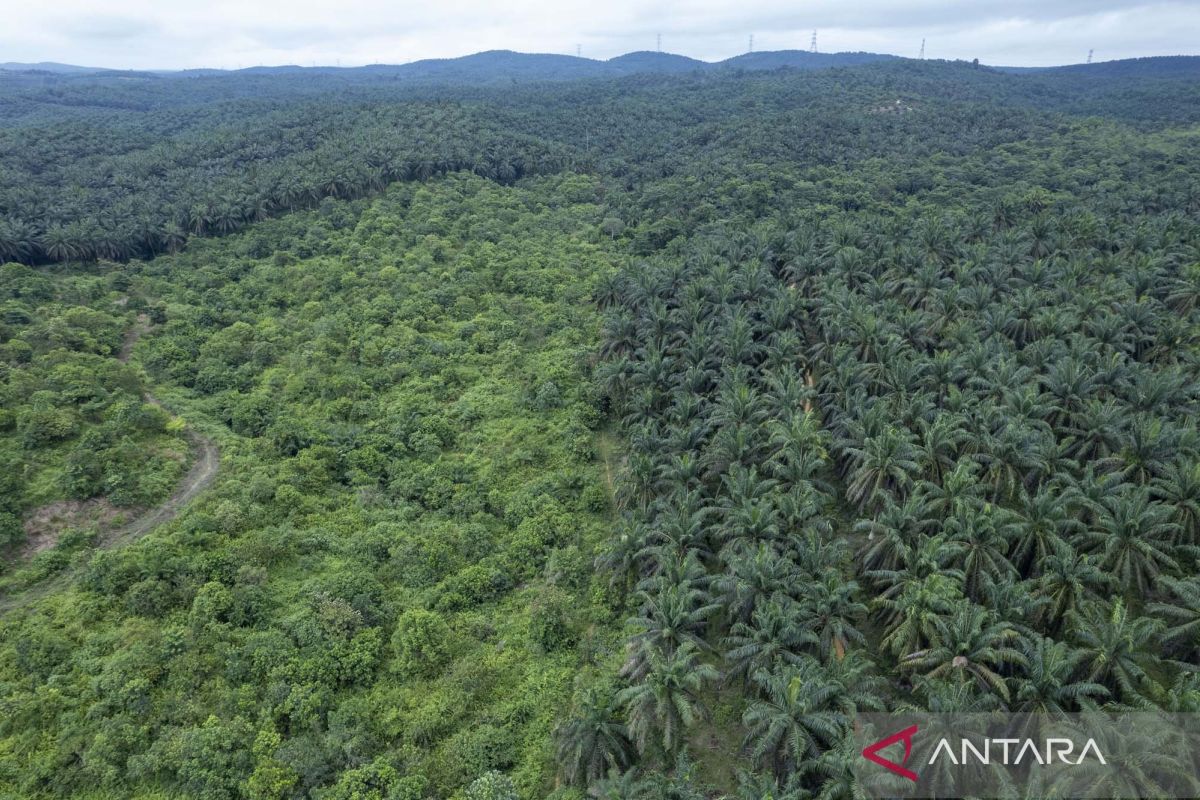
Aerial view of the Bukit Tambi Nature Tourism Park area being restored (left) and planted with oil palm (right) in Tanjung Jabung Barat, Jambi, Friday (15/5/2026). The 660.11-hectare Nature Tourism Park, which was previously a production and conversion forest area in 2025 and has been designated as a Nature Tourism Park by the Ministry of Forestry, is currently in a condition where more than 90 percent of the land has been planted with oil palm owned by companies and individuals. ANTARA FOTO/Wahdi Septiawan/wsj.
Officers from the Jambi KSDA (Natural Resources Conservation Agency) show a map of the Bukit Tambi Nature Tourism Park area, most of which has been planted with oil palm in Tanjung Jabung Barat, Jambi, Friday (15/5/2026). The 660.11-hectare Nature Tourism Park, which was previously a production and conversion forest area in 2025 and has been designated as a Nature Tourism Park by the Ministry of Forestry, is currently in a condition where more than 90 percent of the land has been planted with oil palm owned by companies and individuals. ANTARA FOTO/Wahdi Septiawan/wsj.
Officers from the Jambi KSDA (Natural Resources Conservation Agency) conduct monitoring in the Bukit Tambi Nature Tourism Park area, Tanjung Jabung Barat, Jambi, Friday (15/5/2026). The 660.11-hectare Nature Tourism Park, which was previously a production and conversion forest area in 2025 and has been designated as a Nature Tourism Park by the Ministry of Forestry, is currently in a condition where more than 90 percent of the land has been planted with oil palm owned by companies and individuals. ANTARA FOTO/Wahdi Septiawan/wsj.