
The Full List of Indonesian Finance Ministers: Who Served Longest and Shortest?
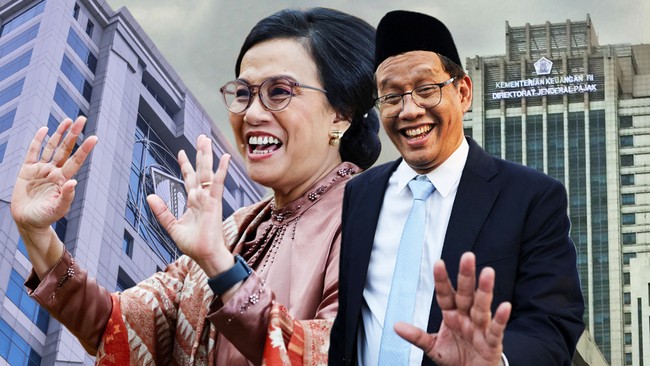
The leadership seat of the Finance Minister has changed hands once again. President Prabowo Subianto inaugurated Suahasil Nazara as Finance Minister at the State Palace in Jakarta on Monday (14 September 2026).
Suahasil replaces Purbaya Yudhi Sadewa, who led the Ministry of Finance for 371 days, or one year and six days, since being sworn in on 8 September 2025.
Before becoming the nation’s treasurer, Suahasil served as Deputy Finance Minister from 2019.
The change makes Suahasil the third person to occupy the Finance Minister’s seat during the Prabowo administration. The post was previously held by Sri Mulyani Indrawati, then Purbaya, and has now passed to Suahasil.
Following his inauguration, Suahasil affirmed that his priority is to execute the State Revenue and Expenditure Budget (APBN) credibly. The government will also keep the budget deficit below the 3% threshold of gross domestic product (GDP).
This latest change adds to the long line of guardians of the state treasury since Indonesia’s independence. Their tenures have varied greatly, from a matter of days to almost 15 years.
Several Finance Ministers have attracted great attention in Indonesian history, including Sri Mulyani, Mar’ie Muhammad, Johannes Baptista Sumarlin, or JB Sumarlin, and Ali Wardhana.
Below are several Indonesian Finance Ministers, along with their journeys and notable records during their time in office.
Sri Mulyani Indrawati (2005–2010 and 2016–2025)
Sri Mulyani is the only Indonesian Finance Minister to have served under three different presidents: Susilo Bambang Yudhoyono, Joko Widodo, and Prabowo Subianto.
Born in Bandar Lampung on 26 August 1962, Sri Mulyani completed her undergraduate economics degree at the University of Indonesia in 1986.
She then continued her studies at the University of Illinois Urbana-Champaign in the United States, obtaining a Master of Science in Policy Economics in 1990, and a Ph.D. in economics from the same university in 1992.
In early October 2002, Sri Mulyani was elected Executive Director of the International Monetary Fund (IMF), representing 12 countries in the Southeast Asia Group.
Sri Mulyani was called to state duty as Finance Minister on 5 December 2005 under President Susilo Bambang Yudhoyono.
She steered reforms at the Ministry of Finance that produced fundamental changes within the ministry, and received numerous awards while serving as minister.
Sri Mulyani was named Asia’s best Finance Minister in 2006 by the Emerging Markets Forum during the World Bank and IMF Annual Meetings in Singapore.
She was also ranked the 23rd most influential woman in the world by Forbes magazine in 2008, and the second most influential woman in Indonesia by Globe Asia magazine in October 2007.
Sri Mulyani left the Finance Minister’s post in May 2010, becoming Managing Director of the World Bank from 1 June 2010.
On 27 July 2016, Sri Mulyani returned to Indonesia and was appointed Finance Minister by President Joko Widodo in the Working Cabinet.
In February 2018, Sri Mulyani received the Best Minister in the World award at the World Government Summit in Dubai, United Arab Emirates.
She was reappointed as Finance Minister in Joko Widodo’s second term from 23 October 2019, and was retained by President Prabowo Subianto in the Red and White Cabinet from 21 October 2024.
Sri Mulyani’s tenure ended on 8 September 2025, when her position was taken over by Purbaya Yudhi Sadewa. Counting all her periods combined, Sri Mulyani served as Finance Minister for more than 13 years.
Mar’ie Muhammad (1993–1998)
Mar’ie was born in Surabaya on 3 April 1939. His highest qualification was a Master of Arts in Economics from the University of Indonesia.
He served as a member of the Gotong Royong People’s Representative Council in 1971. Mar’ie also served in the Directorate General for State-Owned Enterprises (BUMN) Development at the Ministry of Finance.
From 1988 to 1993, he served as Director General of Taxation. Mar’ie was the last Finance Minister to come from a career official within the Ministry of Finance.
He was nicknamed ‘Mr Clean’ for his fight against corruption within the ministry. He also worked to improve efficiency and rid the institution of corrupt officials.
On 17 March 1993, Mar’ie Muhammad was appointed Finance Minister by President Soeharto in the Sixth Development Cabinet.
During his five years as Finance Minister, Indonesia was regarded as one of the economically significant countries in Southeast Asia. However, the end of his tenure was marked by the monetary crisis that swept Indonesia and several other Asian nations.
Johannes Baptista Sumarlin (1988–1993)
Johannes Baptista Sumarlin, or JB Sumarlin, was born in Blitar on 7 December 1932. He completed his undergraduate economics degree at the University of Indonesia in 1958.
Sumarlin then pursued a master’s degree at the University of California in the United States, obtaining a Master of Arts in 1960.
His doctoral studies were completed at the University of Pittsburgh, where he earned his doctorate in 1968.
His government career included serving as Head of Bappenas and interim Finance Minister.
Through the ‘Sumarlin Move I’, the government implemented monetary tightening by raising the interest rate on Bank Indonesia Certificates (SBI).
The policy was followed by improving economic conditions. Economic growth reached 5.7% in 1988, exceeding the average growth target of 5%.
In the Fifth Development Cabinet, Sumarlin was entrusted with the post of Finance Minister.
He then launched the Sumarlin Move II in March 1991, a policy that curbed inflation, gradually bringing it down to 4.9% by 1992.
For his service, Sumarlin received awards as best Finance Minister in 1989 from Euromoney and in 1990 from Asiamoney magazine.
He also received the Mahaputra Adipradana III medal in 1973 and the Grand Cross of the Order of Leopold II from the Belgian government in 1975.
Radius Prawiro (1983–1988)
Radius Prawiro was born in Yogyakarta on 29 June 1928. He studied at the Netherlands School of Economics in Rotterdam and continued his education at the Faculty of Economics of the University of Indonesia.
Radius was appointed Finance Minister during President Soeharto’s administration.
One of the important policies pursued by the Ministry of Finance under his leadership was the abolition of the Development Budget Residual, known as SIAP.
During his career as a government official, he received numerous awards at home and abroad.
These included the Guerrilla Medal in 1992, the Honorary Shark Badge in 1992, and the Main Star of the Republic of Indonesia from the President of the Republic of Indonesia in 1998.
Radius also received the Grand Cordon of the Order of the Sacred Treasure from the Emperor of Japan in 1994, and an honorary doctorate in theology from the Theological University of Kampen in the Netherlands in 2004.
Ali Wardhana (1968–1983)
Ali Wardhana was born in Solo on 6 May 1928. He graduated from the Faculty of Economics of the University of Indonesia in 1958.
He continued his studies at the University of California, Berkeley, earning a Ph.D. in economics in 1962.
Ali Wardhana holds the record as the longest-serving Finance Minister, leading the Ministry of Finance for nearly 15 years, from 1968 to 1983.
During his leadership, the government succeeded in bringing down inflation, which had reached around 650% in the mid-1960s, to far lower levels.
Ali Wardhana also devalued the rupiah, reformed the import duty system, and combated smuggling.
He was known as one of the technocrats of the influential ‘Berkeley Mafia’ who played a key role in economic stabilisation and development during the New Order.
Ali was one of the main architects of economic stabilisation after Indonesia emerged from a period of hyperinflation. A balanced budget policy was also a hallmark of fiscal management during that era.
Soemitro Djojohadikusumo (1952–1953 and 1955–1956)
Soemitro Djojohadikusumo was born in Kebumen on 29 May 1917. He studied at the Netherlands School of Economics and the Sorbonne in Paris, obtaining a Master of Arts in economics from Rotterdam in 1940.
He was known as a visionary economist and an important technocrat during the Old Order.
Soemitro was involved in the nationalisation of De Javasche Bank into Bank Indonesia and initiated the severing of economic ties with the Netherlands through the cancellation of the Financial-Economic Agreement, known as Finek, in 1956.
His policies often sparked debate, but were directed at building national economic independence.
Soemitro later also became known as one of the key figures in economic development during the New Order.
Rizal Ramli (12 June – 9 August 2001)
Rizal Ramli became one of the shortest-serving Finance Ministers. In the Reform era, no other Finance Minister has served a shorter term.
He was appointed Finance Minister by President Gus Dur on 12 June 2001. Previously, Rizal had served as Coordinating Minister for Economic Affairs.
His tenure as Finance Minister ended on 9 August 2001, roughly 58 days after his inauguration.
The change occurred after the Gus Dur administration ended and Megawati became president. The post of Finance Minister was then handed to Boediono.
Samsi Sastrawidagda (September 1945)
Rizal Ramli holds the record for the shortest-serving Finance Minister of the Reform era. However, looking back to the pre-reform era, that record belongs to Samsi Sastrawidagda.
Samsi was Indonesia’s first Finance Minister. Born in Solo on 13 March 1894, he studied economics in Rotterdam, the Netherlands, earning a doctorate in 1925.
He was appointed Finance Minister on 19 August 1945, only two days after Indonesia proclaimed its independence. His task was extremely difficult, as the newly founded state had no budget or adequate financial management system.
One of the most fascinating episodes occurred when Samsi learned of deposits of the Dutch East Indies government that had been seized and held in a Japanese bank. He used his closeness to several Japanese officials to bring the money into the treasury of the Republic of Indonesia. The episode became known as the operation to ‘empty’ the Japanese bank.
However, ill health limited his contribution. Samsi served for only 14 days, from 19 August to 2 September 1945, before being replaced by A.A. Maramis.
The following is the list of Finance Ministers since Indonesia’s independence, along with their terms of office, arranged from the most recent to the earliest.
Source: jawawa.id (https://jawawa.id/newsitem/the-full-list-of-indonesian-finance-ministers-who-served-longest-and-shortest-1789451496)
Originally published by CNBC Indonesia (https://www.cnbcindonesia.com/research/20260915101416-128-767958/daftar-menteri-keuangan-ri-sepanjang-masa-siapa-terlama-terpendek), translated from Indonesian