
The Fractured Relationship Between President Soeharto and His Successor B.J. Habibie
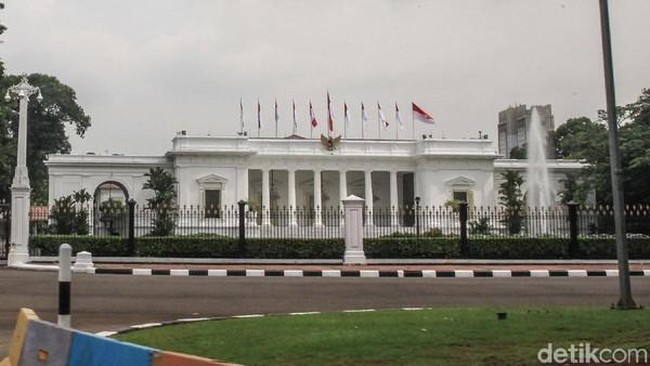
The relationship between a president and his predecessor in Indonesia has not always been harmonious. One of the most famous rifts occurred between the second President of the Republic of Indonesia, Soeharto, and his successor, the third President, B.J. Habibie. Habibie was known to be one of Soeharto’s trusted confidants. For more than two decades, he was an important part of the New Order government, serving as Minister of Research and Technology before being appointed Vice President in March 1998. However, this close relationship changed drastically after Soeharto stepped down on 21 May 1998 and Habibie replaced him as president. According to Habibie’s account in his 2006 memoir, ‘Detik-Detik Yang Menentukan: Jalan Panjang Indonesia Menuju Demokrasi’ (The Decisive Moments: Indonesia’s Long Road to Democracy), he found it difficult to meet Soeharto after his inauguration. Various attempts at communication received no response, and a face-to-face meeting never took place. The first and only contact after the transfer of power was a brief telephone call on 9 June 1998, when Habibie wished Soeharto a happy birthday. ‘Why is Pak Harto unwilling to meet or communicate with me until now?’ Habibie recalled writing in his 2006 memoir. It later emerged that the rejection stemmed from Soeharto’s disappointment with several political decisions made by Habibie. Soeharto’s younger brother, Probosutedjo, in his 2010 memoir ‘Saya dan Mas Harto’ (My Brother Harto and I), revealed that the first disappointment arose during the power transition process. Soeharto had asked Habibie about his readiness to become president. Initially, Habibie said he was not ready, but he then accepted the position without objection. ‘This made my older brother very disappointed,’ Probosutedjo recalled. The rift deepened when Habibie’s administration decided to grant a referendum for East Timor in 1999. The policy shocked Soeharto, who felt that Indonesia had made enormous sacrifices to retain the territory. ‘How could he decide this! He knows the huge sacrifices Indonesia made for East Timor,’ Soeharto asserted. The relationship worsened further when Habibie’s government paved the way for an investigation into alleged corruption involving Soeharto. For the former president, this move was considered a severe blow, especially when the case was addressed through a decree of the People’s Consultative Assembly (TAP MPR). ‘For him, it was a great humiliation,’ Probosutedjo wrote. From that point on, the relationship between Soeharto and Habibie practically never recovered. The two never met in person again. Even when Habibie made several attempts to visit and reconcile with the ailing Soeharto, these efforts were reportedly not welcomed until the second president passed away in January 2008.