
The Foundations Are in Place; Now KDEKS Must Weave Them Together
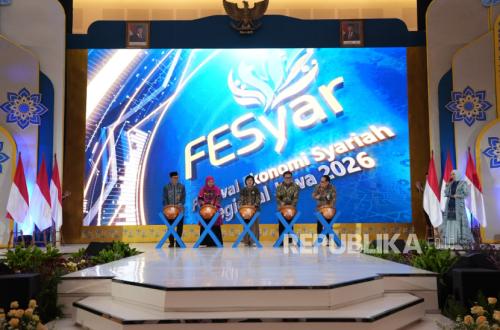
On the morning of Friday, 2 October 2026, Graha Bina Praja Hall in Palembang witnessed an uncommon undertaking. The management of the South Sumatra Regional Sharia Economy and Finance Committee (KDEKS) was inaugurated alongside KDEKS committees in all 17 regencies and cities. The entire province moved in unison, from the capital to the regencies.
South Sumatra deserves sincere recognition. With the inauguration, the Land of Sriwijaya became a province with KDEKS bodies throughout, from the provincial level to every regency and city. It has shown that when governors, regents and mayors move in step, a sharia-economy ecosystem can be woven together from upstream to downstream.
Recognition is also due to the pioneers. Long before this, Pariaman, Agam Regency and Padang, followed by Lima Puluh Kota Regency and Solok, in West Sumatra had established KDEKS bodies. The West Sumatra governor had even sent a letter to all regencies and cities urging them to form KDEKS committees. They opened the way, demonstrating that the sharia economy can be managed from the points closest to the community.
Expectations have quickly risen. A clear message came from Palembang: KDEKS must be a driving force, not an addition to ceremonial events. Such hopes deserve to be welcomed, because they spring from a genuine desire for the sharia economy to move beyond the podium.
Yet every inauguration leaves a question that outlasts the event: what will keep that day’s enthusiasm alive five years from now, when new people occupy the offices of regional heads? The good news is that the answer does not start from scratch. The tracks have been laid, and the train is already moving. What is now needed is a driver to ensure that all the carriages head for the same station.
The Tracks Are Already in Place
At national level, sharia-economy development falls under Presidential Regulation No. 28 of 2020 on the National Committee for Sharia Economy and Finance. In the regions, regional heads establish KDEKS committees through decisions issued under their authority.
What is often overlooked in public debate is that the sharia economy has in fact entered the heart of regional planning and budgeting. It no longer exists only on banners and at seminars, but also in the Regional Government Information System (SIPD), where every rupiah of the regional budget (APBD) is planned and accounted for.
Home Affairs Ministerial Regulation No. 90/2019 on the Classification, Codification and Nomenclature of Regional Development Planning and Finance, together with its updates, provides a common language for all regional governments. A Home Affairs Minister’s Circular on Guidelines for Cross-Affairs Collaboration in Developing the Sharia Economy and Finance sets out how sharia-economy programmes can be incorporated into regional medium-term development plans (RPJMD), regional government work plans (RKPD) and regional budgets (APBD). The guidelines for preparing the 2027 RKPD, in Ministerial Regulation No. 14/2026, even designate sharia-economy development as a thematic programme, alongside gender mainstreaming and disaster-risk reduction.
On the ground, those tracks are already being used. Regional agencies select relevant sub-activities, take responsibility for them and allocate their budgets. The sharia economy now has codes, responsible agencies and budget ceilings. In the language of public finance law, there is no stronger anchor than an activity recorded in a duly approved budget document.
The message delivered by Vice-President KH Ma’ruf Amin when he inaugurated the Central Sulawesi KDEKS in 2023—that the sharia-economy agenda should be included in the RPJMD regardless of who leads in future—has now found a way forward. And as more regional agencies join in, the role awaiting KDEKS becomes clearer.
Many Agencies, One Weaver
Sharia-economy sub-activities are now spread across many agencies: trade, industry, cooperatives and small and medium-sized enterprises, tourism, as well as the regional secretariat’s economics bureau. But however beautiful its colours, a strand of loose thread only becomes cloth when someone weaves it.
First, national policy calls for such a weaver. The term “cross-affairs” in the Home Affairs Minister’s circular and the designation of a thematic programme in the RKPD guidelines carry the same implication: work spanning multiple regional agencies cannot be managed by just one department.
Gender mainstreaming has long provided a model: it is implemented by many regional agencies and coordinated by a dedicated working group. For the sharia economy, that coordinating hub already exists and has been inaugurated: KDEKS.
Second, the division of authority is appropriate and complementary. Philipus M. Hadjon divides the sources of government authority into attribution, delegation and mandate; all three are now codified in Articles 11 to 14 of Law No. 30/2014 on Government Administration. Budgetary authority remains with the regional agencies. KDEKS operates under a coordination mandate from the regional head, who, under Law No. 23/2014 on Regional Government, leads the administration of regional government affairs. Since responsibility under a mandate remains with the party granting it, KDEKS is effectively the regional head’s arm in leading an agenda that spans multiple agencies. No authority is taken away, no budget ceiling is transferred and no bureaucracy is expanded.
Third, governance scholarship reminds us that collaboration does not emerge on its own. In their 2008 study of collaborative governance, Chris Ansell and Alison Gash found that collaboration across institutions succeeds only when there is facilitative leadership: someone to bring parties together, nurture trust and ensure that shared objectives do not get lost. That is where KDEKS comes in, bringing regional government, Islamic financial institutions, businesses, academics and the public to the same table.
Source: jawawa.id (https://jawawa.id/newsitem/the-foundations-are-in-place-now-kdeks-must-weave-them-together-1791766293)
Originally published by Republika (https://opini.republika.co.id/berita/tmrpek451/cantolannya-sudah-ada-saatnya-kdeks-merajut), translated from Indonesian