
The Forgotten Radar: Reading Sharia Compliance Before Crisis Speaks
There is an assumption that is too often taken for granted: as long as a bank displays the word ‘Sharia’ on its signboard, its Sharia compliance is considered complete. However, a name is not proof.
To test this, let us borrow Lawrence Friedman’s compass: law works not because it is written, but because three elements move together: substance (rules), structure (implementing bodies), and legal culture (the inner attitude that brings it to life).
These three will guide this writing, because in Sharia Rural Banks (B_PRS_), these are the determinants of whether the Sharia label means something or is merely an identity on paper. Sharia compliance must be present in contracts, products, operational processes, and management decisions, rather than being just an institutional identity.
In BPRS, this is crucial because these banks live close to the economic pulse of the people and micro-enterprises; customer trust depends on the belief that their transactions truly proceed according to the promised Sharia principles.
Therefore, the question is no longer whether Sharia compliance is mandatory, as the answer is crystal clear. What must be continuously tested is whether the aforementioned substance, structure, and legal culture are truly functioning, or if they remain merely as written articles that never translate into practice.
Sharia Principles are Not Slogans
Law Number 21 of 2008 concerning Sharia Banking places Sharia principles alongside economic democracy and prudence. Sharia principles are defined as Islamic legal principles based on fatwas from authorised Sharia institutions as the basis for Sharia banking activities.
The consequence is firm: contracts such as murabahah, mudharable, musyarakah, ijarah, or qardh are not enough if they are correct in name only. The transaction structure, risk sharing, determination of margins or nisbah, documentation, and dispute resolution must align with the substance of the contract and the fatwa that governs it.
This is where the Sharia Supervisory Board (DPS) holds a central role as one of the most decisive structural elements for Sharia banks. The Sharia Banking Law mandates a DPS for Sharia Commercial Banks, Sharia Business Units, and BPRS.
The DPS is appointed by the General Meeting of Shareholders (RUPS) upon the recommendation of the DSN-MUI, tasked with advising the directors and supervising the bank’s compliance with Sharia principles. The functional distinction between the DPS, directors, commissioners, compliance functions, risk management, and internal audit must not turn into institutional silos.
Directors must provide access to information and follow up on recommendations, the compliance function must detect deviations early, and commissioners must ensure the DPS works independently. The independence, competence, and depth of the DPS’s supervision are the measures of whether Sharia principles truly guide bank decisions or merely serve as a structural supplement to documentation.
In many governance forums, the DPS is still frequently placed at the end of the process: asked to assess after a product has been designed, rather than being involved from the moment risks and contract structures are formed. That is where supervision easily turns into mere administrative ratification.
Rules Exist, They Must Work
The regulatory framework for BPRS has actually evolved. OJK Regulation (POJK) Number 9 of 2024 regulates the general governance of BPR and BPRS; POJK Number 25 of 2024 complements this with specific Sharia governance for BPRS, the duties and authority of the DPS, Sharia risk management, Sharia compliance functions, and Sharia internal audit.
SEOJK Number 8/SEOJK.03/2025 serves as a guideline for implementing the compliance function, emphasising a culture of compliance, independence, and the responsibility of directors. Sharia governance, therefore, cannot be left to good intentions alone; it must be supported by systems, procedures, and accountability that can be tested.
However, the completeness of regulations does not guarantee that compliance is working. The aforementioned substance and structure only hold meaning if the legal culture also moves. We need to observe to what extent compliance findings are truly translated into corrections, rather than stopping as mere meeting notes.
Norms may be available, but structures may not necessarily work and culture may not necessarily grow. Within that void, governance weaknesses find their way in, turning administrative issues into more serious problems. Sharia principles must not stop at being the boundaries of a contract; they must be the compass for the behaviour of all bank organs.
Sanctions, Trust, and the Same Root
When that compass falters, deviations in Sharia principles, governance violations, and criminal acts such as fraud must still be distinguished. All three have different elements, methods of proof, and handling authorities, so that criticism does not exceed the facts.
However, distinguishing categories does not mean every risk stands alone: when supervisory independence weakens and internal controls fail, governance violations and Sharia non-compliance risks can become intertwined. At that point, amanah (trust/integrity) finds its meaning. It is not just a beautiful ethical value to be spoken, but the very foundation of the relationship between the bank and its customers.
International standards from the IFSB also place Sharia compliance supervision as part of strengthening the integrity and resilience of Islamic financial institutions, not merely a matter of contract forms.
If Sharia compliance supervision is understood as part of the integrity and resilience of an institution, then every bank failure must be read not only from its end result but also from the quality of the control systems in place before a crisis occurs.
Revocation of Licenses is Not the End of the Story
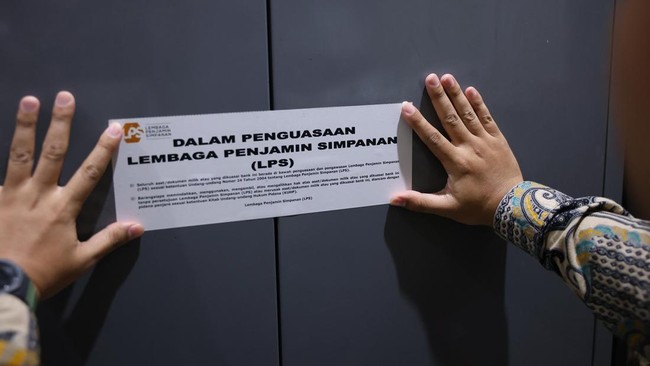
The revocation of the business license for BPRS Gebu Prima on 17 April 2025 and BPRS Hasanah Mandai on 16 July 2026 should be read not as a verdict on Sharia compliance, but as an alarm for how the industry reads risk from an early stage.
Both were revoked due to capital and liquidity issues, not due to an official ruling regarding violations of Sharia principles. However, that fact still leaves questions regarding governance: whether the Sharia supervisory system, which should be connected to…
Source: jawawa.id (https://jawawa.id/newsitem/the-forgotten-radar-reading-sharia-compliance-before-crisis-speaks-1788609228)
Originally published by CNBC Indonesia (https://www.cnbcindonesia.com/opini/20260905173041-14-765317/radar-yang-terlupakan-membaca-kepatuhan-syariah-sebelum-krisis-bicara), translated from Indonesian