
The Fed's New Boss Dilemma: Pleasing Trump or Safeguarding the US Economy?
Several months ago, the argument for cutting interest rates seemed logical. The post-pandemic inflation surge was waning. The labour market was showing signs of weakening. Across various countries, central banks were beginning to open room for policy easing. Investors started to imagine a world with cheaper borrowing costs. Today, that picture is beginning to fade. The American economy has not truly cooled. Inflation remains stubbornly above target. And the news the market wants to hear is becoming increasingly difficult to deliver.
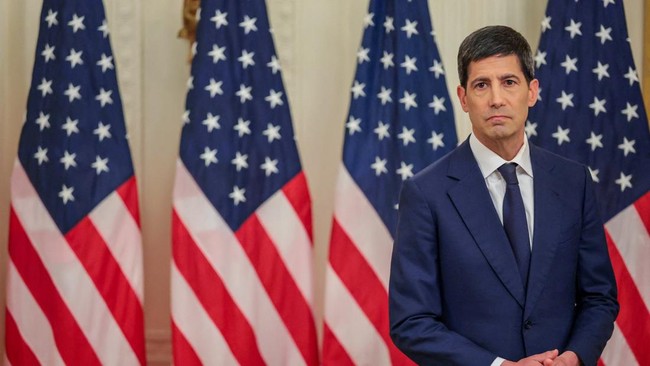
For the past two years, the Federal Reserve’s main focus has been controlling inflation. Interest rates were raised to their highest level in decades with one goal: to slow demand and ease price pressures. As inflation began to move downwards, market expectations shifted. Investors started betting that the next move would no longer be a rate hike, but a cut. This view even became part of the logic behind the appointment of Kevin Warsh as Federal Reserve Chair last January. At that time, the labour market appeared to be softening and inflation seemed to be getting closer to the target. The problem is, subsequent data did not follow that script.
From March to May, the American economy added an average of 188,000 jobs per month. That figure far exceeds labour force growth at a time when migration is at a low or even negative level. The unemployment rate, which had slowly crept up until the end of last year, now stands at 4.3%. Economic growth also remains solid. The Federal Reserve Bank of Atlanta’s GDPNow model estimates the economy is growing at an annualised rate of around 3% in the second quarter. Optimism is also evident in the financial markets. Stock indices are still near record highs, propped up by a combination of tax cuts and technology investment euphoria. In other words, the American economy does not yet look like one that needs additional stimulus. The stronger the incoming data, the thinner the justification for an imminent rate cut.
The issue is not just persistent strong growth. Inflation has also not truly returned to where the Federal Reserve wants it. The central bank’s target is 2%. Meanwhile, inflation is currently at 3.8%, partly driven by rising energy prices following the conflict between the United States and Iran. Under normal conditions, a central bank often overlooks a temporary spike in oil prices. But the current situation is different. Inflation has been above target for more than five years. The longer this situation persists, the greater the risk that households and businesses come to view rising prices as normal. For a central bank, the greatest threat is not just today’s inflation, but inflation that becomes embedded in public expectations.
Warsh had previously argued that productivity improvements thanks to technological advances would help suppress inflation and create room for lower interest rates. So far, the opposite seems to be true. The surge in investment, data centre construction, and market optimism is helping to keep consumption and economic activity robust. Instead of cooling the economy, the new wave of investment is actually helping to sustain growth. Many Federal Reserve officials now caution that higher productivity does not automatically mean lower interest rates. In some conditions, the outcome could even be the opposite. Warsh also once proposed reducing the Federal Reserve’s bond holdings as compensation for lowering interest rates. However, this approach is considered to have a limited impact. Stephen Miran, a proponent of the idea, estimates that reducing the balance sheet by 5% of GDP would only have an effect roughly equivalent to a quarter-percentage-point rate hike. Not large enough to change the direction of the narrative.
The market almost always favours lower interest rates. Borrowing costs fall, asset valuations rise, and money becomes cheaper. But the Federal Reserve is not tasked with protecting stock prices. Its job is to maintain price stability. Therefore, when investor hopes collide with economic data, the central bank usually prefers to follow the data. And right now, the data does not yet strongly support the notion of cutting interest rates. For the past several months, investors have become accustomed to imagining a world with lower interest rates. That world might still arrive, just not as quickly as hoped. The economy often ignores the market’s preferred narrative. When growth stays strong, the labour market remains resilient, and inflation persists above target, the news investors least want to hear may well be the most sensible message for the central bank.
Source: jawawa.id (https://jawawa.id/newsitem/the-feds-new-boss-dilemma-pleasing-trump-or-safeguarding-the-us-economy-1781081620)
Originally published by CNBC Indonesia (https://www.cnbcindonesia.com/research/20260610140627-128-741698/dilema-bos-baru-the-fed-menyenangkan-trump-atau-menjaga-ekonomi-as), translated from Indonesian