
The Fed Will Never Be the Same! Kevin Warsh Forms 5 Special Task Forces
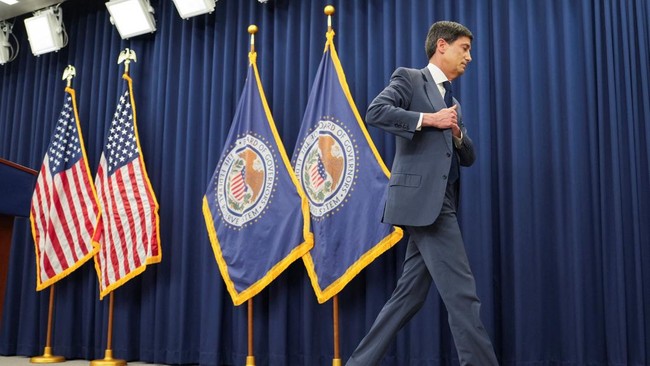
The United States central bank, the Federal Reserve (The Fed), made a fresh breakthrough in the Federal Open Market Committee (FOMC) meeting results early Thursday morning Indonesia time (18/6/2026). In the meeting, The Fed decided to hold its benchmark interest rate (Fed Fund Rate) in the range of 3.50%-3.75%. This decision was in line with market expectations that The Fed would not change its monetary policy at this meeting. However, the market also reacted to a shift in The Fed’s future policy direction, especially as the likelihood of an interest rate hike in 2026 appeared to be growing. The latest projections from Fed officials showed The Fed adopting a more cautious stance in addressing consumer price inflation. Ultimately, hopes for further interest rate cuts in 2026 began to fade. This FOMC meeting was also the inaugural meeting for Kevin Warsh as the new Fed Chair. In his first press conference, Warsh immediately signalled that he wanted to take The Fed in a different direction. Warsh stressed that The Fed must refocus on its primary task of maintaining price stability. He also conveyed his long-held view that inflation is not something that can be left unchecked. The Fed must not be too lax in allowing prices to continue rising. Beyond interest rates, one important part of Warsh’s press conference caught the market’s attention. He announced the formation of several task forces to review The Fed’s working methods. “I am appointing a task force in each of five areas that are important parts of the broad implementation of monetary policy. They will begin work in the coming weeks,” Warsh said in his press conference, as quoted by Reuters on Thursday (18/6/2026). Typically, a task force is a special working team formed to discuss a specific issue in greater depth. This team does not usually work like a permanent division. Task forces are created to examine specific problems, identify what needs improvement, and then provide recommendations to policymakers. The task forces formed by Kevin Warsh will serve as a tool to review several key areas within the US central bank. The focus is not only on interest rates but also on how The Fed understands the economy and communicates policy to the public. Among the five task forces, the one closest to the market’s attention is the communications task force. This is because financial markets are highly sensitive to every sentence that comes out of The Fed. A single statement from the Fed Chair can cause the US dollar, US government bond yields, stock exchanges, and emerging market currencies to move. Therefore, a change in The Fed’s communication style could have a major impact on global markets. Warsh himself signalled that The Fed under his leadership might become more tight-lipped. He also chose not to submit his own economic projections in the Summary of Economic Projections (SEP), the document containing economic projections and the dot plot of Fed officials. This move means the market did not receive a direct signal from the most influential official at The Fed regarding the future direction of interest rates. Consequently, investors must read The Fed’s policy direction more carefully. The other task forces are no less important, particularly the balance sheet task force, which will re-examine how The Fed manages its large asset holdings. This is crucial because The Fed’s balance sheet affects banking liquidity, the bond market, and monetary policy operations. Meanwhile, the data task force will assess whether The Fed is using sufficiently timely and relevant data to read economic conditions. This is important because inflation, the labour market, and energy prices can change very rapidly. The productivity and employment task force will examine the impact of new technology, including AI. If technology boosts productivity, the economy could grow faster without immediately triggering inflation. However, if technology disrupts the labour market, The Fed needs to account for the risks. The inflation framework task force is the most critical part of Warsh’s agenda. From the outset, Warsh stressed that The Fed must refocus on maintaining price stability. With this task force, The Fed will review whether the old strategy is still effective enough to control inflation amid a constantly changing economy. These task forces are not merely discussion forums. They are Warsh’s way of building change within The Fed gradually.