
The Fed to China: The Sentiments That Will Shake Markets Next Week
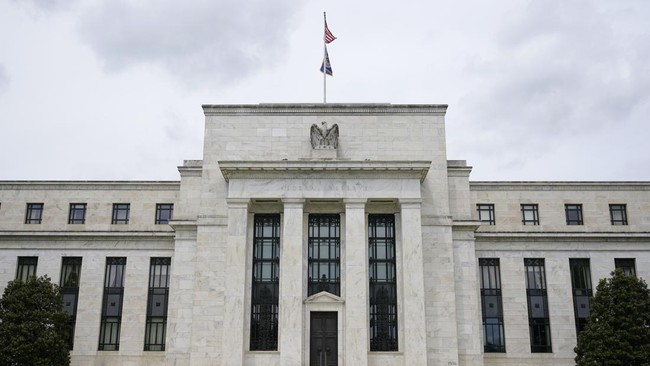
Global financial markets are expected to move more dynamically next week, driven by a packed agenda of economic events from the United States, China, and Europe. Investor attention will be focused on the US central bank’s interest rate decision, inflation data that serves as a benchmark for The Federal Reserve, and signals of economic policy from China. This series of events will provide new clues regarding the direction of global interest rates, economic growth prospects, and sentiment towards risky assets, including those in developing markets such as Indonesia.
On Monday, the market will open with two important agendas from the world’s two largest economies: US durable goods orders data and China’s Politburo meeting. From the United States, the market will scrutinise durable goods orders for the June period. In May, this indicator plummeted 4.5% month-on-month, reversing a surge of 8.5% in April. This decline was the steepest since June 2025 and was primarily triggered by a slump in demand for commercial aircraft and transportation equipment. However, components reflecting business capital spending still showed resilience. Orders for non-defence capital goods excluding aircraft, often used as a proxy for corporate investment, actually grew 1.6% after contracting the previous month. This condition indicates that US companies remain aggressive in their expansion, particularly in investments related to data centre construction and artificial intelligence infrastructure. For June, Trading Economics estimates that durable goods orders will rebound with growth of 1.8%. If the realisation meets or exceeds this projection, it would reinforce the view that US manufacturing activity remains solid despite high interest rates.
On the same day, investors are also awaiting the outcome of China’s Politburo meeting, a forum that determines the direction of the country’s economic policy for the second half of the year. The meeting is expected to discuss further measures to support domestic consumption, the property sector, and the manufacturing and export industries. The market will also look for signals regarding additional fiscal or monetary stimulus, given that China’s economic recovery remains uneven. For Indonesia, the outcome of the Politburo meeting is crucial as China is its largest trading partner. More aggressive stimulus policies could potentially boost demand for various Indonesian export commodities, ranging from coal and nickel to palm oil.
The most anticipated agenda of the week falls on Thursday in the early hours when the Federal Reserve announces the results of its monetary policy meeting. The majority of market participants expect the US central bank to maintain its benchmark interest rate in the range of 3.75%. Investor focus will not be on the rate decision itself, but rather on the message to be delivered by Fed Chair Kevin Warsh during the subsequent press conference. Warsh previously emphasised that the central bank still places inflation control as its top priority. He stated that high inflation over the past five years must be brought back to target, while assessing that the American economy remains in strong condition. According to Warsh, household consumption continues to grow moderately, the manufacturing sector keeps expanding, and business investment is a main growth engine, particularly in data centre construction and high demand for AI-based hardware and software. On the employment side, job creation is considered sufficient to keep pace with labour force growth, with the unemployment rate remaining low. The tone of Warsh’s statement will be a crucial indicator of whether the Fed will maintain its tight stance for longer or begin to open the door for policy easing in the remainder of the year.
A few hours after the Fed’s decision, the market will face a flood of US economic data. The most closely watched indicator is the Core PCE Price Index, the Fed’s preferred inflation gauge. In May, core PCE inflation rose 0.3% month-on-month, the same pace as April, while the annual rate reached 3.4%, the highest level since October 2023 and still far above the central bank’s 2% target. For June, core inflation is estimated to slow to 0.1%. If the realisation again exceeds estimates, the chance of an interest rate cut could be pushed further back. On the same day, the US government will also release its initial estimate of economic growth for the second quarter. After the economy grew 2.1% in the first quarter, growth is estimated to have increased to 2.2%. The combination of persistently strong economic growth and inflation that has not yet returned to target could reinforce expectations that high interest rates will persist longer. Meanwhile, the Eurozone will also release its initial estimate of second-quarter economic growth. Previously, the euro area economy recorded a quarterly contraction of 0.2%, its first decline since 2022. For the second quarter, the market expects a recovery with quarterly growth of 0.1% and annual growth of 0.7%. These figures will provide a picture of whether the European economy is beginning to emerge from pressures caused by expensive energy and weak investment.
Global sentiment will close the week with two important data releases from Asia and Europe on Friday. China will release its NBS Manufacturing PMI for the July period. In June, this index rose to 50.3, marking the third consecutive month that the manufacturing sector has been in expansion territory. The improvement was supported by an increase in new orders and exports of high-tech products, which continue to benefit from the artificial intelligence investment boom. For July, Trading Economics estimates the PMI will remain stable at 50.3.