
The Fed Says AI 'War' Is Driving Up Inflation, Signals Rate Hike?
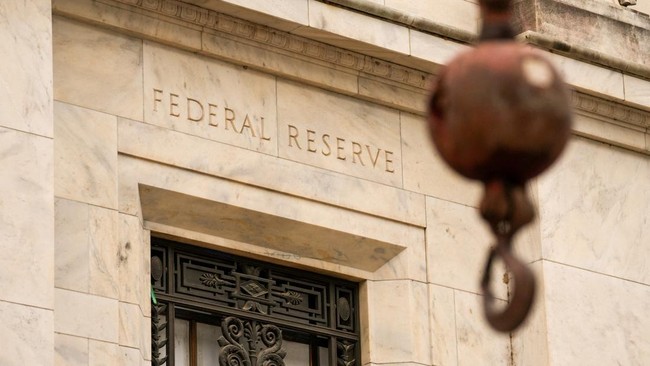
The US Federal Reserve (The Fed) has stated that inflationary pressures in the United States increased again this spring. The rise was fuelled by a combination of tariff impacts, surging energy prices due to war, and the rapid build-out of artificial intelligence (AI) infrastructure. The assessment was delivered in the central bank’s monetary policy report to the US Congress, released on Friday (10/7/2026). The report noted that inflation remains far above the central bank’s 2% target. “Inflation has risen this year and remains elevated relative to the Federal Open Market Committee’s longer-run objective of 2%,” the report stated. Recent data shows the Personal Consumption Expenditures (PCE) index, the Fed’s preferred inflation gauge, was still hovering at roughly double the target level through May. Meanwhile, labour market conditions were assessed as stable. The Fed recorded the unemployment rate at 4.2% in June, which is still considered low. According to the report, labour demand and supply are now relatively balanced. Job vacancies have been largely flat, layoff rates remain low, while the size of the labour force has stagnated. “Slowing immigration and declining labour force participation due to population ageing are causing a slowdown in labour supply growth,” the report stated. Despite this, the Fed assesses that the US economy’s capacity continues to expand at a solid pace, as the slowdown in labour growth is being offset by productivity improvements. During the first few months of 2026, the US economy also recorded moderate growth. Gross domestic product (GDP) grew at an annualised rate of 2.1%, driven by heavy investment in AI, although it was held back by a sluggish housing market and only limited increases in household consumption. This report is the first published under the leadership of new Fed Chair Kevin Warsh. He is scheduled to testify before committees of the US House of Representatives and Senate next week as part of the regular monetary policy oversight agenda. The hearings, typically held in the spring, were delayed amid controversy between former Fed Chair Jerome Powell and President Donald Trump. Warsh officially took over leadership of the central bank in late May after Powell’s term expired. The Fed has held its benchmark interest rate steady since last December. However, mounting inflation concerns, particularly since the outbreak of war between the US-Israel and Iran in late February, have led market participants to begin pricing in a rate hike this year. Although Warsh has been reluctant to discuss the future policy path, projections from the Fed’s 16-17 June meeting showed a divided outlook. Some officials forecast that rates would need to rise this year, while others believed rates could be held steady or even cut. In the report, the Fed also highlighted AI as a factor driving inflation in the short term. This is considered noteworthy because Warsh had previously viewed AI as potentially dampening inflation through productivity gains. However, he has recently acknowledged that these benefits may not be immediate, while demand for electricity, specialised chips, and other materials for AI infrastructure continues to surge. Additionally, the report revisited the growth of the money supply, or M2, for the first time since 2016. The Fed noted that M2 growth has returned to a range typical of the 2010s. The report also reviewed various monetary policy rules that currently suggest the need for higher interest rates, though the central bank cautioned against using these recommendations as a rigid guide. “The prescriptions shown ignore that the economy would evolve differently if the policy rate followed any of the paths specified by the rules, and therefore, these prescriptions should be interpreted with caution,” the report stated.