
The Fed Interest Rate Hikes Could Pressure Manufacturing Industry
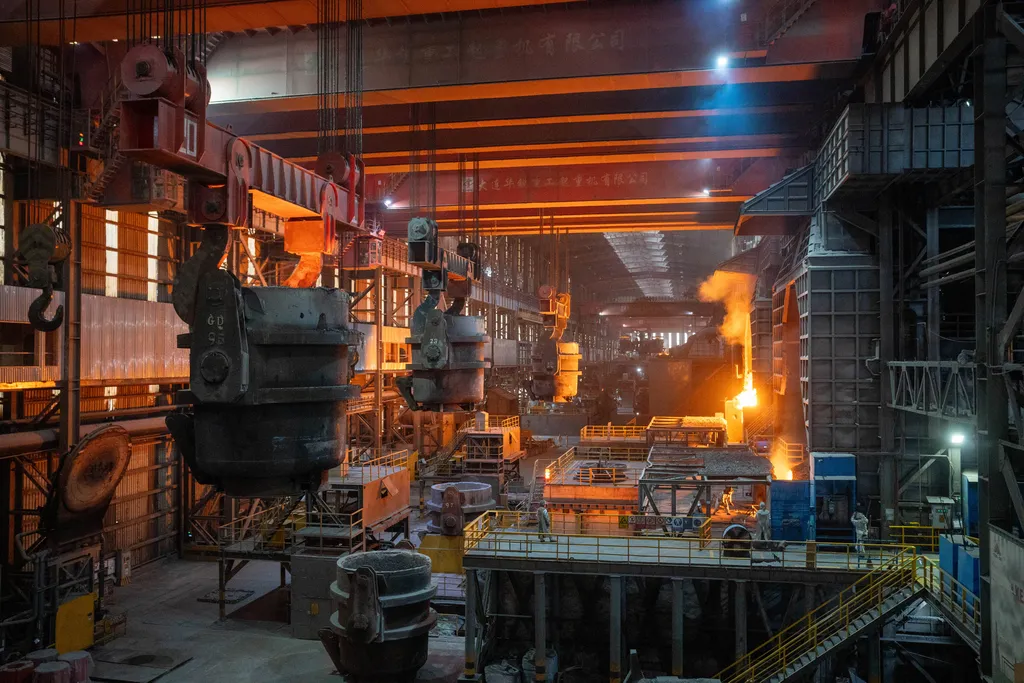
The manufacturing industry needs to implement efficiencies to anticipate the impact of rising global interest rates.
An increase in interest rates by the US central bank, the Federal Reserve, has the potential to restrain investment expansion in Indonesia while adding pressure to the manufacturing industry through a weakening rupiah and rising costs for financing and imported raw materials.
The General Chair of the Indonesian Industrial Estate Association (HKI), Akhmad Ma’ruf Maulana, stated that the Fed’s rate hikes will impact investment decisions in various countries, including Indonesia. The impact is felt not only in direct investment but also in indirect investment, such as the placement of funds in debt securities.
“Undoubtedly, the rise in Fed rates will affect the investment world that is looking to expand into several countries, including Indonesia. This investment can be direct or indirect, such as bonds. There will certainly be an impact,” Ma’laruf said on Friday (18/9/2026).
According to Ma’ruf, this condition requires industrial estate operators to carry out efficiencies to anticipate the impact of global interest rate hikes. On the other hand, Bank Indonesia’s decision not to raise interest rates yet is a factor being closely watched by the business community.
“Fortunately, historically Bank Indonesia has not raised rates. We must ensure that such a hike does not occur,” he added.
Pressure on expansion also stems from rising global oil prices. Uncertainty regarding when oil prices will stabilise is forcing businesses to re-evaluate costs and business development plans.
Ma’ruf noted that if oil prices rise to around US$100 per barrel, a number of entrepreneurs may undertake evaluations and efficiencies. Such steps could potentially influence companies’ decisions to expand within industrial estates.
Nevertheless, ongoing expansions by several businesses are continuing. However, prospective investors currently drafting expansion plans are expected to be more cautious in their decision-making amidst global uncertainty.
Ma’ruf hopes that geopolitical and global economic conditions will stabilise soon so that oil prices and interest rates return to levels more conducive to investment activities. He noted that global certainty is required so that investors currently waiting can realise their expansion plans.
The US Federal Reserve’s interest rate hike is also a concern for the manufacturing industry that relies on imported raw materials. A weakening rupiah can increase production costs because raw materials must be paid for in US dollars.
The General Chair of the Indonesian Filament Fibre and Yarn Producers Association (APSyFI), Redma Gita Wirawacia, stated that US dollar exchange rate developments are one of the risks currently being monitored by the industry.
An increase in Fed rates could strengthen the US dollar, thereby increasing the cost of purchasing raw materials in that currency when converted to rupiah.
“We fear the dollar. When the Fed raises rates, it affects raw material purchases, which could also rise. This becomes heavy for our industry because we pay in dollars,” said Redma.
Generally, a rise in US interest rates can increase the attractiveness of US financial assets by providing higher yields. This shift in fund flows can increase demand for the US dollar and put pressure on other currencies, including the rupiah.
For the fibre and yarn industry, Redma noted that this exchange rate risk primarily arises when companies must make new raw material purchases. He mentioned that the impact of a stronger US dollar is not immediately felt in full because companies hold inventory and some raw material needs have been secured through purchase contracts.
“Since raw materials are not instantaneous, we have stock. We also have many contracts. Some contracts are for five months or even one year. So, we can still manage the prices by accounting for market dynamics,” he said.
However, when new contracts must be made under conditions where the US dollar is more expensive against the rupiah, raw material costs could potentially rise. This situation poses a challenge for the industry, as the room to raise product selling prices also depends on market demand.
This pressure could intensify if global interest rate hikes are followed by domestic rate hikes. Redma hopes Bank Indonesia can maintain its interest rates to prevent industrial financing costs from increasing further.
Based on data from the Financial Services Authority (OJK), interest rates for the manufacturing sector’s credit from January to June 2026 increased by 19.3 basis points to 7.90 per cent. This increase aligns with the benchmark interest rate hike of 100 basis points in May-June 2026.
Although it increased in the first half of 2026, the manufacturing sector’s credit interest rate is still lower on an annual basis. In June 2025, the sector’s interest rate was recorded at 8.40 per cent, whereas in June 2026, it stood at 7.90 per cent.
Meanwhile, the direct impact of the Fed’s interest rate hike has not yet been felt by the glass industry. The Secretary General of the Flat Glass and Safety Association (AKLP), Sander L. Sembiring, said industry players are still monitoring the influence on both imported and local raw material prices.
“The Fed hike has no direct influence, but the rise in non-subsidised oil prices impacts the increase in raw material prices,” said Sander. Nevertheless, he added that businesses will continue to monitor raw material price developments resulting from the impact of the Fed’s interest rate hikes.
According to Sander, the pressure felt most acutely at present comes from the reduction in gas supply from PGN, which has only reached approximately 78 per cent of the minimum contract. Additionally, rising global oil prices have the potential to increase raw material prices through increased transport costs.