
The Fed Has Raised Interest Rates, Will the BI Rate Follow Suit?
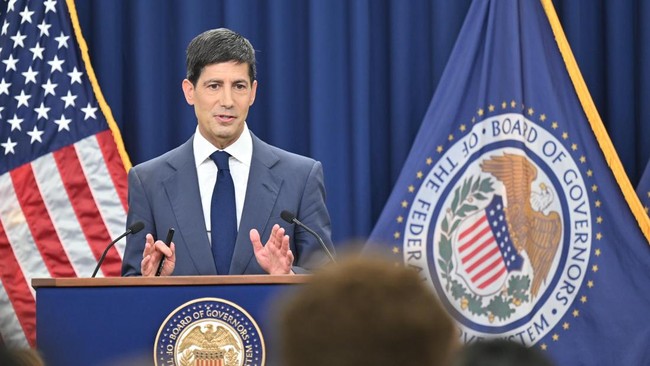
The United States central bank (The Federal Reserve/The Fed) has officially raised its benchmark interest rate. This decision aligns with market projections that the Fed would implement its first rate hike since July 2023.
The Federal Open Market Committee (FOMC) meeting on 15-16 September 2026 decided to raise the Fed Funds Rate by 25 basis points (bps) to a range of 3.75%-4.00%. All FOMC members agreed on the decision, with a unanimous 12-0 vote.
The Fed took this step because US inflation remains high and has not moved swiftly towards the Fed’s 2% target. “Inflation remains high. Today’s policy will support a faster return of inflation towards the Committee’s 2% target,” the Fed stated in its official communique.
This decision simultaneously shifts the direction of US monetary policy. Throughout 2024 and 2025, the Fed had actively cut rates, bringing the upper limit down from 5.50% to 3.75%. However, persistent inflationary pressures have forced the Fed to apply the brakes once again. This rate hike marks the first under the leadership of Kevin Warsh.
This increase must be closely monitored, as US interest rate movements can influence the US dollar, foreign capital flows, bond markets, and the Rupiah exchange rate. The direction of the Fed is often linked to Bank Indonesia’s (BI) interest rate decisions. When US rates rise, BI is considered to need an appropriate interest rate spread to ensure Rupiah-denominated assets remain attractive to investors.
How strong is the relationship between every change in US interest rates and the BI Rate?
BI Rate vs Fed Funds Rate
Looking back at the trajectory since 201s, there were periods when BI moved several months after the Fed. However, there were also times when BI took action first due to more pressing pressure on the Rupiah or inflation.
The first example occurred in 2018. At the beginning of the year, the BI Rate was at 4.25%, while the upper limit of the Fed Funds Rate had reached 1.50%. The Fed began raising rates in March 2018. BI did not follow immediately, only raising its rate in May from 4.25% to 4.75%.
After that, BI raised interest rates more aggressively. The BI Rate was increased to 5.25% in June, 5.50% in August, 5.75% in September, and finally 6.00% in November. Throughout 2018, BI raised rates by a total of 175 basis points. This aggressive move was necessary to curb pressure on the Rupiah and prevent foreign funds from exiting the Indonesian financial market.
By the end of 2018, the upper limit of the Fed Funds Rate reached 2.50%, while the BI Rate stood at 6.00%, creating a spread of 350 bps. BI raised interest rates as a pre-emptive, front-loading, and ahead-of-the-curve measure to maintain the competitiveness of the domestic financial market amidst external shocks. BI’s aggressive stance was driven by the global high-interest-rate trend, particularly after the Fed raised rates four times in 2018 (March, June, September, and December).
BI Lowered Rates First
A different story unfolded in 2019, when the direction of central banks began to turn “dovish.” BI cut rates by 25 bps to 5.75% on 18 July 2019. The Fed only took a similar step on 31 July, approximately 13 days later. BI initiated the rate-cutting cycle first during this period. Following the first cut, BI continued to reduce rates gradually until reaching 5.00% in October 2019.
The Fed also continued to cut rates, with the upper limit of the Fed Funds Rate dropping from 2.50% to 1.75% in October. Although both were easing policy, BI maintained a wide interest rate spread. The difference between the BI Rate and the upper limit of the Fed Funds Rate remained in the range of 3.25-3.50 bps. This gap provided BI with the room to support the economy through rate reductions without excessively reducing the attractiveness of Rupiah assets.
Pandemic Forced the Fed to Move Faster
In 2020, the Covid-19 pandemic changed the situation rapidly. Economic activity halted abruptly, causing panic in global financial markets. BI had actually cut rates to 4.75% by 20 February 2020. About two weeks later, the Fed held an emergency meeting on 3 March and cut rates by 50 basis points.
Economic pressure continued to mount, prompting the Fed to hold another emergency meeting on 15 March, lowering the upper limit of the Fed Funds Rate to just 0.25%. Unlike the Fed, BI did not cut rates as deeply or as quickly. BI chose to reduce them incrementally, from 4.50% in March to 4.25% in June, 4.00% in July, and 3.75% in November. This difference in speed caused the interest rate gap between the two countries to widen. Between March and May 2020, the BI Rate was 4.25 bps above the upper limit of the Fed Funds Rate, marking one of the largest spreads.
BI later cut rates again to 3.50% in February 2021, a level maintained until mid-2022, while the Fed kept its upper limit at 0.25%.
The Fed Accelerated, BI Waited
The situation changed again in 2022. US inflation surged sharply following the rise in global commodity prices due to the Russia-Ukraine war, forcing the Fed to end the era of low interest rates. The Fed began raising rates in March 2022. Subsequently, the hikes were quite aggressive. The Fed Funds Rate reached 1.00% in May, 1.75% in June, and 2.50% in July.
At the same time, BI maintained its rate at 3.50%. BI only raised its rate to 3.75% in August, approximately five months after the Fed’s first move. While BI waited, the interest rate spread between the two countries continued to narrow. The spread, which reached 3.25 bps in early 2022, shrank to just 1 bps by July. BI then began to catch up, raising rates to 4.25%.
Source: jawawa.id (https://jawawa.id/newsitem/the-fed-has-raised-interest-rates-will-the-bi-rate-follow-suit-1789639201)
Originally published by CNBC Indonesia (https://www.cnbcindonesia.com/research/20260917102331-128-768638/the-fed-sudah-mengerek-suku-bunga-apakah-bi-rate-ikutan-naik), translated from Indonesian