
The Fate of Kalimantan's Last Rhino: Evacuation for Genetic Rescue
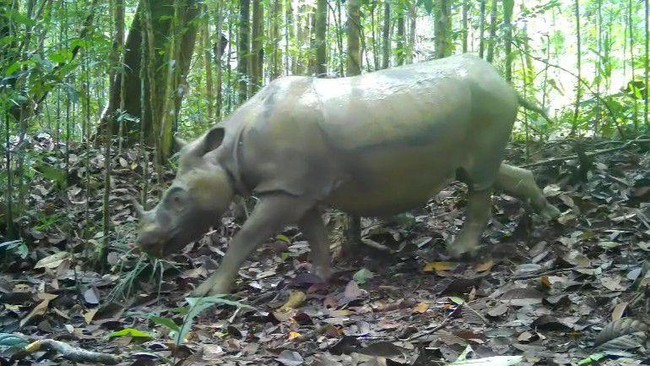
The government is preparing the evacuation of the rhino Pari from the Buring Ayok Protection Forest to the Kelian Rhino Sanctuary in West Kutai, East Kalimantan, as part of a species rescue mission. This evacuation is not an emptying of the habitat, but a crucial step to ensure the survival of the critically endangered Kalimantan rhino.
The East Kalimantan Natural Resources Conservation Agency (BKSDA) has assured that Pari’s habitat will be maintained even though the animal is relocated. BKSDA Kaltim Head M. Ari Wibawanto stated the relocation is being carried out because Pari’s biological condition has reached a very alarming stage.
“Its habitat will not be lost. We are actually pushing for this area to become a preservation area that remains protected,” he said during a provincial-level coordination meeting on the rescue of the Mahulu rhino Pari. Ari emphasised that after the translocation, the government will propose the Buring Ayok area as a conservation zone so its ecological function is maintained, including if future breeding results allow for reintroduction.
“The government also ensures that post-translocation, the Buring Ayok Protection Forest area will be maintained as an intact ecological fortress, and even proposed as a permanent preservation area,” Ari stated.
From a medical perspective, Indonesian rhino reproduction expert Drh Muhammad Agil stated that evacuating Pari is the only chance to save the species’ genetic material before it is too late. With Pari’s condition still relatively stable, he said, there is an opportunity to harvest egg cells and tissue samples such as skin and gum mucosa, which can be developed into cell lines for assisted reproductive technology.
“If she dies in the wild and is not found, we lose everything. But if she is rescued, we can still develop cells, even to the embryo and cloning stage,” he explained. From this material, scientists can form artificial gametes, both sperm and egg cells, to support an in-vitro fertilisation programme for the animal.
“From skin cells and gum mucosa, we can develop cell lines, then turn them into artificial gametes. There is even a chance for cloning, so a new individual can be produced with identical genetics,” he clarified. He also stressed that without evacuation, if Pari dies in the wild, all biological material will be lost within a short time due to natural decomposition, where proteins and cells will be damaged within hours. This would leave the species only in skeletal form, with no chance for further scientific development.
“If she dies in the wild and is not found quickly, we can only keep her bones like a museum skeleton. But the living cells are lost,” he asserted. Placing Pari in a sanctuary allows intervention whenever needed, including repeated sampling for the development of assisted reproductive technology, up to the possibility of birthing a new individual genetically identical to Pari or other individuals developed in the future.
“With this approach, the evacuation is positioned as a long-term species rescue strategy, not just an animal relocation,” he explained. Stakeholders hope that conservation technology can rebirth the Kalimantan rhino population in the sanctuary laboratory. When that happens, its natural habitat is expected to be ready as a safe, intact, and protected release site.
Source: jawawa.id (https://jawawa.id/newsitem/the-fate-of-kalimantans-last-rhino-evacuation-for-genetic-rescue-1781661045)
Originally published by CNBC Indonesia (https://www.cnbcindonesia.com/tech/20260617075348-37-743214/ternyata-ada-badak-di-kalimantan-begini-nasibnya), translated from Indonesian