
The Fate of Indonesian Farmers Under Prabowo's Administration
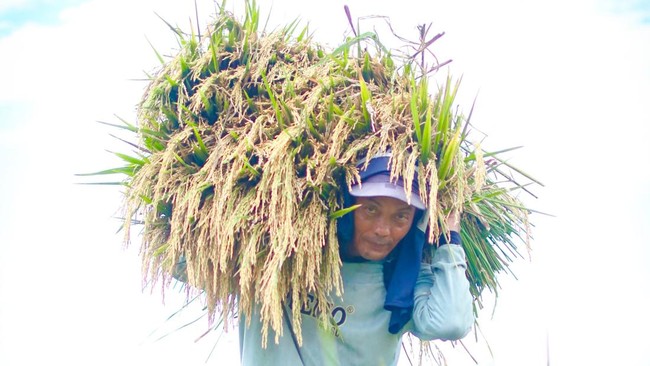
Minister of Agriculture Amran Sulaiman has assured that Indonesia’s food security remains very strong despite global pressures stemming from geopolitical tensions. “We are very strong. When world food prices rise, fertiliser prices rise, and fuel prices rise, Indonesia’s subsidised fuel prices do not rise, right? Secondly, our food prices are stable, right?” Amran said during the CNBC Indonesia Economic Update 2026 on Monday (22/6/2026). He noted that rice, previously the largest contributor to inflation, is now stable. At the same time, Indonesia is supplying 10,000 tonnes of rice to assist Palestinians and exporting fertiliser to countries like Australia, even as global fertiliser supplies become scarce due to the domino effect of the Middle East conflict. “This shows Indonesia is strong. If we believe we are strong, the results will be good. We must be grateful, our natural resources are abundant,” he added. Currently, several countries are queuing to import fertiliser from Indonesia, which has a surplus of 1.5 million tonnes, though exports will only proceed once domestic needs are fully secured.
Amran emphasised that Indonesia has achieved food self-sufficiency, as declared by President Prabowo Subianto on 7 January 2026. The focus now is on maintaining this self-sufficiency and prioritising farmer welfare. He warned that if farmer welfare is not guaranteed and continues to erode, it will impact national food production, potentially leading to national famine with 1-2 million direct victims. Responding to complaints about high rice prices, Amran argued that farmers work in the mud for four months and earn only Rp30,000 to Rp75,000 per day, far less than an office worker’s Rp200,000. He questioned the conscience of those demanding lower rice prices, which would further reduce farmers’ incomes. He cautioned that constant demands to lower prices could force farmers to stop planting, jeopardising the nation’s last line of food defence.
The government is prioritising downstream processing to add value to agricultural products. Amran cited the example of coconuts, where processing could increase export value from Rp24 trillion to Rp2,400 trillion. Programmes like the Free Nutritious Meals (MBG) initiative and the Red and White Village Cooperatives are also key supports. The MBG programme acts as an off-taker for 160 million farmers, while the cooperatives shorten the supply chain from eight stages to three, strengthening farmers and public purchasing power. The Central Statistics Agency (BPS) recorded that the Farmers’ Terms of Trade (NTP) rose to 127.73 in May 2026, a 1.99% increase from April, indicating that farmer incomes are growing faster than their costs. Amran hailed this as proof that government programmes are delivering real benefits, stating, “We want farmers to be more prosperous. The focus is not only on increasing production but also ensuring the results have good economic value.”