
The Fate of Humanity in an Era of Increasingly Intelligent Artificial Intelligence
For years, humans believed that the ability to think was an insurmountable barrier for machines. However, today, AI is beginning to read patterns, compose language, and even assist in decision-making at speeds that are hard for humans to match.
This has given rise to concerns when machines start to understand how humans think. Are humans sufficiently prepared to comprehend the direction of the changes they are creating themselves?
Then, will artificial intelligence become a tool for liberation or instead widen new inequalities?
These questions no longer sound like futuristic discourse but have become part of the world’s geopolitical conversation. Major countries are no longer just competing to control natural resources or trade routes, but also to master the digital infrastructure that forms the backbone of artificial intelligence.
In recent years, the world has witnessed how AI technology has developed far beyond its initial function as a productivity aid.
AI is now beginning to determine how information is produced, disseminated, and controlled. In such a situation, mastery over semiconductor chips, data centres, cloud computing, and even large language models is slowly transforming into a new symbol of power.
What once happened with oil in the 20th century is now beginning to occur with data and computing in the 21st century.
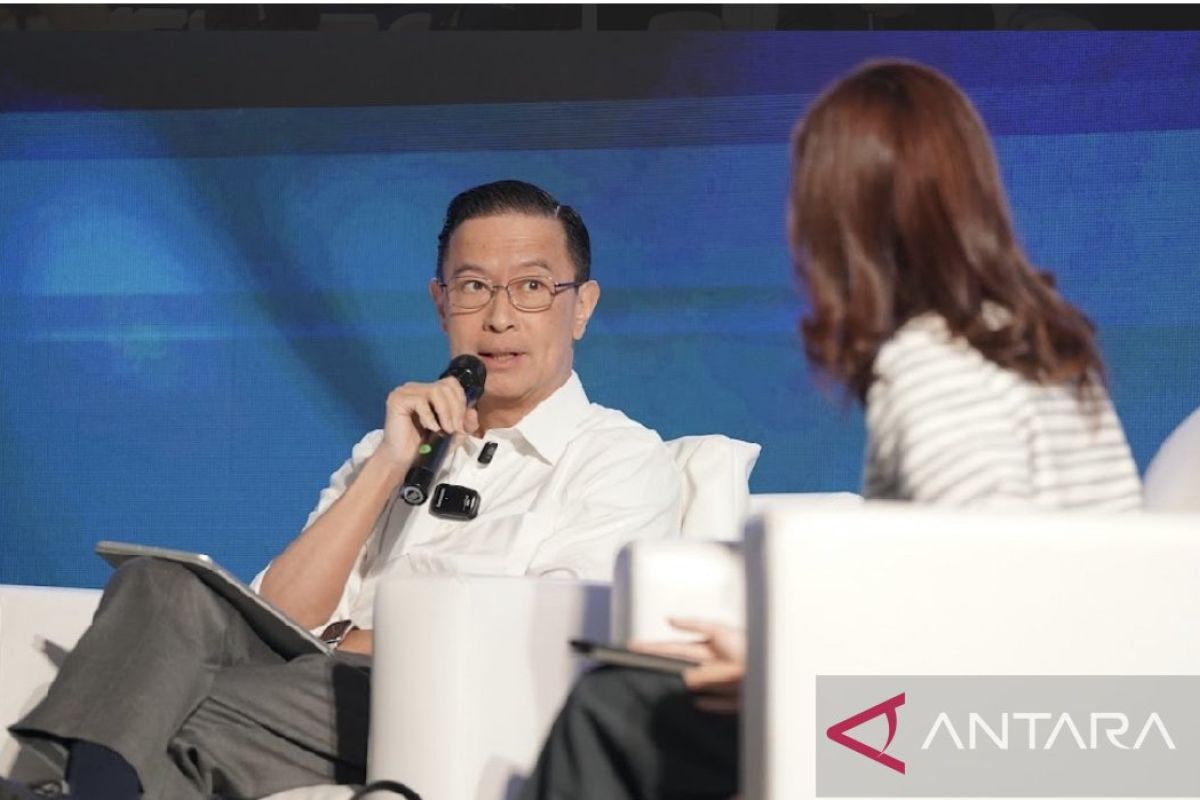
This perspective was one of the key highlights at the national conference of The Cornerstone through a discussion titled “AI. Power. Global Order” in Jakarta recently.
Former Indonesian Trade Minister Tom Lembong spotlighted how the world is moving towards a new configuration of power that positions technology as an instrument of diplomacy as well as an arena for economic competition.
Countries capable of mastering AI infrastructure have the potential to exert significant influence in determining the global flow of information.
The Struggle for Influence
Tom Lembong illustrated that the issue of AI is not as simple as the ability to create digital images or write automatically. Behind all that ease lies a struggle for economic, industrial, and even informational sovereignty influence.
When one country has large data centre capacity, high semiconductor production capabilities, and a mature digital ecosystem, that country not only gains economic advantages but also holds a strategic bargaining position in international relations.
Therefore, warnings about the importance of consistent long-term policies are highly relevant. In the discussion, Tom exemplified how neighbouring countries have built their digital industry foundations over decades consistently.
Malaysia, for instance, is said to operate most of the data centre capacity in Southeast Asia, while Thailand holds dominance in global hard drive production. These facts show that success in the technology industry is not the result of short-term policies, but an accumulation of stable and sustainable development direction.
Indonesia itself is in a unique yet vulnerable position. As a country with a large population and continuously growing internet users, Indonesia has a highly promising digital market.
However, the size of the market can also become a trap if not balanced with the ability to build a national technology industry. In such a situation, Indonesia risks becoming only a consumer of global technology products, without control over their development direction.
Anxiety regarding Indonesia’s position amid the rivalry between the United States and China also became an interesting part of the discussion.
The discussion moderator, Mercy Wijaya, highlighted an important question about whether Indonesia has the opportunity to become a major player towards the Golden Indonesia Vision 2045 or will merely become a large market for the interests of other countries. This thinking actually represents the anxiety of the young generation living amid very rapid waves of technological change.
However, behind those concerns, there is another interesting perspective to consider. Tom Lembong assessed that AI competition will ultimately move towards a commodity phase.
Language models and various AI services will gradually become increasingly uniform, so competitive advantage will no longer be determined solely by the technology itself. In such conditions, countries that can read the next wave will have the opportunity to leap further ahead.
This view is important because society often focuses too much on the technology that is popular today, without preparing the ability to face the next changes.
Yet history shows that technological dominance always moves quickly. What is considered revolutionary today can become commonplace in a short time. Therefore, the ability to think critically, adaptively, and have a strong identity becomes far more important capital than merely the ability to use AI applications.
Moral Decisions
Tom’s message to the young generation about the importance of self-recognition feels very apt in an era of information overload. AI can indeed help humans reduce limitations, but technology cannot replace character, empathy, or the ability to make moral decisions.
In a situation where everyone can access instant answers, the ability to distinguish valuable information from misleading ones becomes the greatest challenge.
Thus, education plays a far broader role than just chasing academic grades. Education is no longer sufficient to only produce graduates who are good at memorising or quick at solving problems.
The world needs a generation capable of reading global changes, understanding the social impacts of technology, and having the courage to engage in public discourse. This awareness seems to be what is being built through the emergence of forums like The Cornerstone, initiated by EduALL.
Interestingly, the approach built is not just…