
The Fall of Indonesia's Retail King: How the Riady Family Took Over Matahari
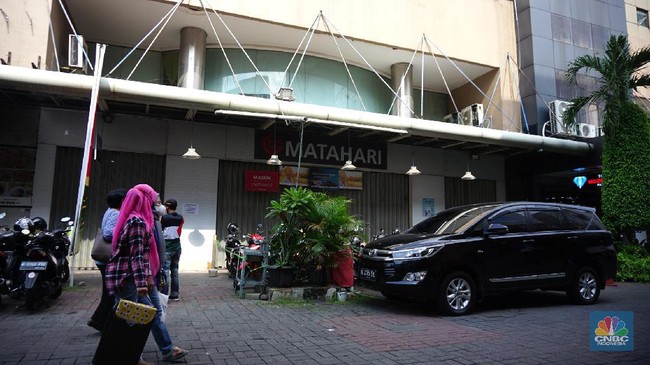
Matahari has become one of the biggest names in the Indonesian retail industry, and for years was known as the public’s destination for shopping for various fashion needs. To date, the company operates 155 outlets spread across 81 cities throughout Indonesia.
However, that success began with a small business built decades ago. Initially, Hari Darmawan founded a clothing store called Micky Mouse in the Pasar Baru area in 1960. The store sold imported clothing as well as a collection of the MM Fashion brand, a label produced by his wife.
In fact, the Micky Mouse business thrived during its first five years because it had its own market. However, Hari harboured envy towards the neighbouring store, De Zion, because it was always busy and visited by wealthy people. Attempts to copy De Zion’s success were always made, but yielded no results. Until finally, the desire to acquire the store resurfaced in 1968.
News spread that the owner of De Zion wanted to sell the store. Immediately, Hari rushed to buy it. Citing Kristin Samah & Sigit Triyono in Filosofi Bisnis Matahari (2017), with a loan of US$200 million from Citibank, Hari successfully acquired two De Zion stores in Jakarta and Bogor. De Zion was immediately renamed "Matahari".
"De Zion in Dutch means Matahari (the sun)," said Hari Darmawan, as quoted by Muhammad Ma’ruf in 50 Great Business Ideas From Indonesia (2010).
To develop his new store, Hari copied the Japanese retail store, Sogo Department Store. He wanted Matahari to be like Sogo, selling clothes as completely as possible so that consumers could choose the best and cheapest goods. As a result, thanks to imitating Sogo’s strategy, Matahari attracted many visitors. Matahari then grew rapidly throughout the 1970s and 1980s. Its outlets no longer sold only clothing, but also jewellery, bags, shoes, cosmetics, electronic equipment, toys, stationery, books and more.
This rapid growth enabled Hari to open other outlets outside the city in the 1990s. Matahari was present in almost every city in Indonesia. No one did not know Matahari. In fact, so triumphant was Matahari that it was confident enough to list on the stock exchange. In 1989, PT Matahari Department Store Tbk officially sold its shares to the public under the ticker code LPPF.
However, Matahari’s greatness did not make Hari complacent. Even though he was already the king, he wanted to make Matahari an important retail business centre in Indonesia. His ambition was huge: to create 1,000 Matahari outlets. At the same time, this desire was heard by James Riady, a young banker and son of the conglomerate founder of Lippo Group, Mochtar Riady. James intended to provide a loan to Hari amounting to Rp 1.6 trillion.
Hari agreed and received the loan at a low interest rate. However, this was where the problem lay, something Hari never anticipated. Still quoting 50 Great Business Ideas From Indonesia (2010), not long after the loan was disbursed, James Riady also intended to enter the retail business. He brought a well-known US retail brand to Indonesia, WalMart.
Interestingly, WalMart was established right in front of Matahari. So, wherever there was a Matahari, there was sure to be a WalMart. The case was similar to Indomaret and Alfamart, which are always close to each other. The emergence of WalMart was clearly a red flag of business competition for Matahari. However, Hari still refused to lose to his competitor, who was also his creditor.
He remained focused on running Matahari. And in reality, WalMart lost the competition and Matahari remained the king. However, shocking news came in 1996. Hari and Matahari, which were at the height of their glory, suddenly received a purchase offer for Matahari from James. This meant that from that moment on, Matahari, with a turnover of Rp 2 trillion, officially became part of Lippo Group.
This sale sparked wild speculation. Many were baffled because Matahari was very successful and triumphant at the time. Hari could not possibly have gone bankrupt because Matahari was sure to keep running. Since that acquisition, Matahari officially became the property of Lippo Group. The name Hari Darmawan also slowly began to fade.
Source: jawawa.id (https://jawawa.id/newsitem/the-fall-of-indonesias-retail-king-how-the-riady-family-took-over-matahari-1783763493)
Originally published by CNBC Indonesia (https://www.cnbcindonesia.com/market/20260711120017-17-750060/raja-ritel-indonesia-tumbang-seketika-diambil-alih-keluarga-riady), translated from Indonesian