
The Face of the World’s Earliest Human Brought Back to Life
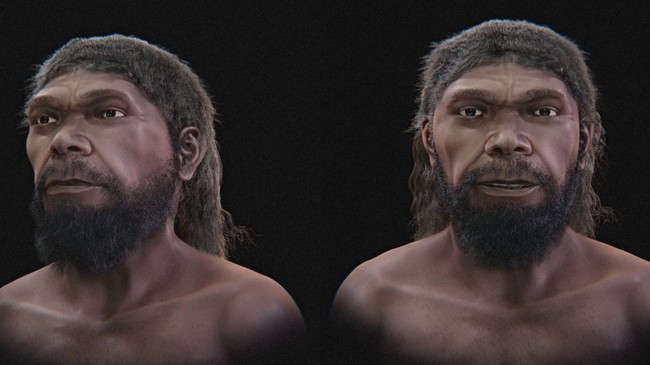
Scientists have reconstructed the face of the oldest known human, dating back around 315,000 years. The result is striking: if this person were among a crowd today, they might not be recognised as someone who lived tens of thousands of generations ago.
The story began in the early 1960s, when a mine worker discovered an ancient skull at the Jebel Irhoud site in Morocco. It was initially thought to belong to a Neanderthal relative who lived about 40,000 years ago. However, further research published in 2017 transformed our understanding of history.
The fossil turned out to belong to Homo sapiens, our own species, and was 315,000 years old. The discovery pushed back the earliest known appearance of modern humans by 100,000 years compared with previous estimates.
Researchers have now digitally combined bone remains from several individuals to create a complete facial reconstruction. The main part of the skull came from one specimen, while the lower jaw was taken from another find in the same layer.
Reconstruction artist Cícero Moraes said the pieces fitted together very well.
The resulting face has pronounced features, a prominent brow, a strong jaw and larger teeth than those of people today. Overall, however, its basic shape is already very close to ours.
“If this person walked through a crowd, perhaps no one would look twice. But on closer inspection, you would see the differences — particularly the more robust features and prominent jaw,” Moraes said, as quoted by Science Alert.
To recreate the face over the bones, the team used tissue-depth data from modern humans and adapted the contours to the ancient skull. The final reconstruction was presented in two forms: a grey version without hair or skin colour, showing the facial structure scientifically, and a more artistic colour version with hair, skin and a beard.
The findings reinforce the understanding that modern human characteristics did not emerge all at once. A face recognisably like ours existed hundreds of thousands of years ago, while the brain and the back of the skull continued to change shape before reaching their present form.
The visual reconstruction of the oldest Homo sapiens was published in the journal Heritage in a research paper entitled “Digital Facial Approximation of Jebel Irhoud Composite Skull (~315,000 BP)”.
Source: jawawa.id (https://jawawa.id/newsitem/the-face-of-the-worlds-earliest-human-brought-back-to-life-1793026232)
Originally published by CNBC Indonesia (https://www.cnbcindonesia.com/tech/20261026114523-37-779439/wajah-manusia-pertama-di-dunia-dihidupkan-kembali), translated from Indonesian