
The essence of nickel downstreaming and its impact on the nation
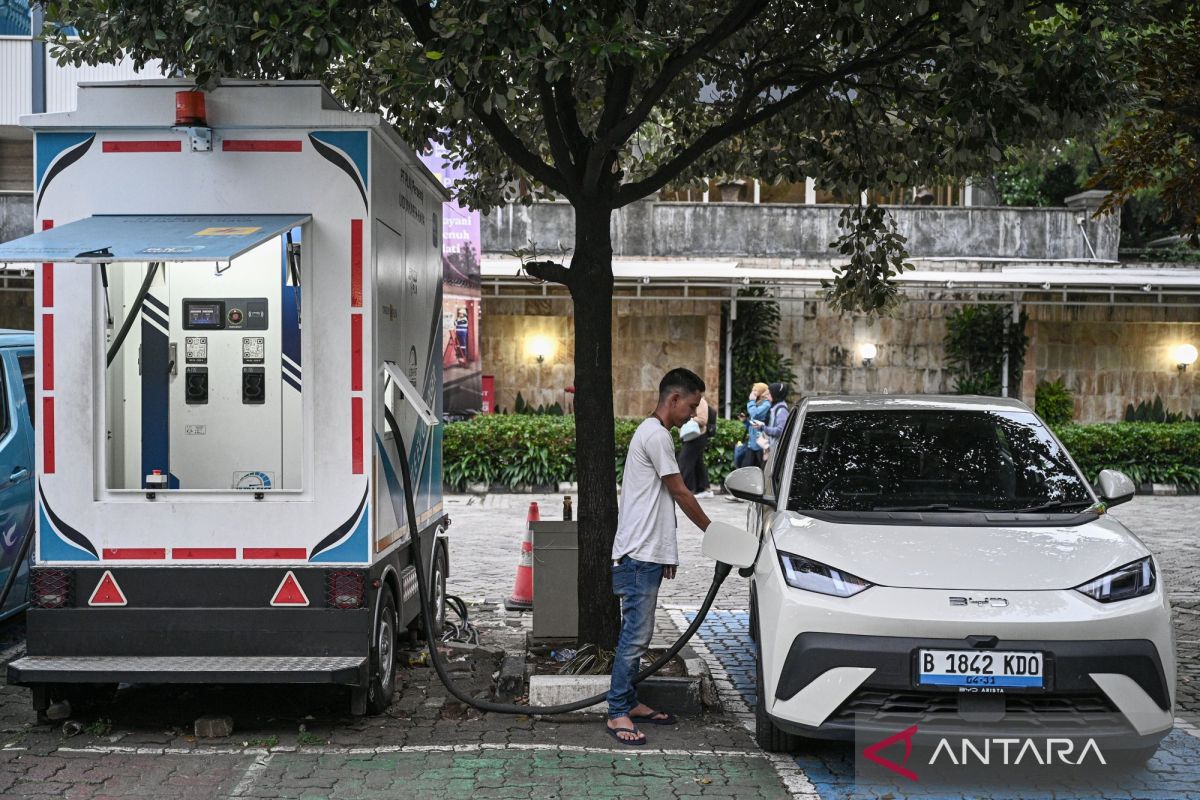
In recent years, downstreaming has become a buzzword seen as a solution for achieving public welfare. Unfortunately, not many truly understand the essence of downstreaming and its real impact on this country.
In an ideal scenario, downstreaming is necessary because natural resource wealth does not automatically make a country strong.
History has shown that countries with large mineral reserves do not necessarily enjoy the greatest economic value from those minerals.
The real value is created when natural resources meet technology, industry, human resources, markets, and policies capable of connecting them all.
Indonesia itself actually possesses substantial capital in the form of nickel resources. However, having mineral reserves is not the ultimate goal of development.
The challenge lies in how far that wealth can be translated into industry, technology, quality jobs, state revenue, and national production capacity.
Indonesia is also genuinely trying to build something bigger than a battery factory. The supply chain is being assembled from nickel mining, mineral processing, battery materials, cell production, through to electric vehicles.
In terms of regulation, the government plans to provide incentives for electric vehicles based on nickel-manganese-cobalt (NMC) batteries.
This policy is not merely an effort to make electric vehicles more affordable. There is a far greater economic interest: ensuring that Indonesia’s nickel downstreaming moves further away from extraction activities towards high-value-added manufacturing.
Therefore, electric vehicle incentives should be placed under industrial development, not merely consumption policy. Every rupiah of incentive must ultimately generate broader economic benefits than simply increasing vehicle sales.
ENTREV Project Coordinator Eko Adji Buwono sees the NMC-based electric vehicle incentive as a signal that nickel downstreaming is beginning to be directed towards manufacturing with higher added value.
This is the task of Indonesia Battery Corporation (IBC), a member of the MIND ID Holding Group, which is a state-owned company mandated to build and develop the nickel-based battery industry.
The challenge is not light. The global battery industry is developing rapidly and technological competition is increasingly fierce. NMC batteries must compete with lithium iron phosphate (LFP), which has a different cost structure and has gained a significant foothold in the global electric vehicle industry.
In such a situation, Eko believes that policies providing room for the use of nickel-based batteries in the domestic market are important. Without an adequate market, investment from upstream to downstream will face challenges in achieving economies of scale.
Through the electric vehicle battery plant of PT Contemporary Amperex Technology Indonesia Battery in Karawang, IBC currently has an initial production capacity of 6.9 GWh.
That figure is relatively large, but the measure of downstreaming success cannot be counted solely by factory capacity. The more substantive measures are the amount of domestic raw materials that can be processed into high-value products, the number of workers who gain improved skills, how much technology can be mastered, and how strongly the national industry is connected to the global supply chain.
Indeed, behind technical terms such as NMC, gigawatt-hour capacity, or supply chains, there are job opportunities, the growth of new expertise, the development of local suppliers, and the possibility of a generation of engineers and industrial workers mastering future technologies. This is the essence of impactful downstreaming.
Eko said various calculations have shown the potential multiplier effects of the battery industry downstreaming. The most tangible impacts, according to him, include increased mineral added value, job creation, reduced battery imports, and reduced fuel oil imports as electric vehicle usage increases.
Source: jawawa.id (https://jawawa.id/newsitem/the-essence-of-nickel-downstreaming-and-its-impact-on-the-nation-1787889157)
Originally published by Antara (Indonesian) (https://www.antaranews.com/berita/5714785/hakikat-hilirisasi-nikel-yang-berdampak-bagi-negeri), translated from Indonesian