
The Erosion of US Dollar Hegemony?
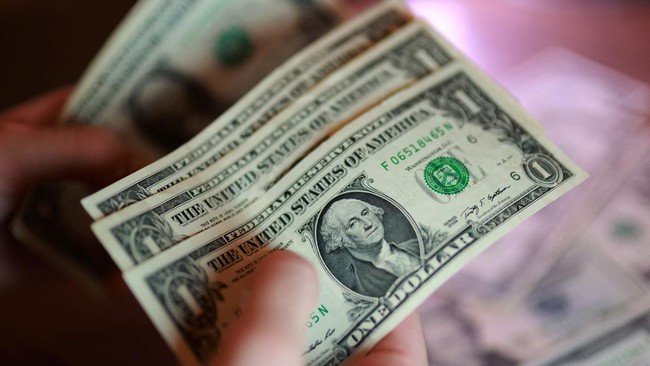
The global economy is moving from unipolar to multipolar. The unipolar world is marked by the dominance of the United States (US) with its dollar as the sole dominant currency in international transactions.
Meanwhile, the multipolar world positions the US no longer as the sole player (monopoly). Other countries are involved in controlling the global economy with their respective currencies. The candidates are the European Union with the euro and China with the yuan.
The discourse on the end of US dollar dominance was triggered by US sanctions against Russia following the annexation of Crimea, Ukraine in 2014. This forced Russia to stop using the US dollar in its international transactions. The Russian government then switched to using the Chinese yuan.
This situation was exacerbated by the behaviour of US President Donald Trump, who imposed extra high reciprocal tariffs on several countries, including those in the BRICS group: Brazil, Russia, India, China, and South Africa. This prompted Brazilian President Lula to propose the creation of a common currency for BRICS countries.
Historically, the British pound sterling was the dominant currency in international transactions until the late 1930s, the beginning of the Second World War. The role of the British pound sterling faded since the First World War because the British government faced financial difficulties, selling assets to finance the war and facing competitive pressures from other currencies.
During that period, the British government’s debt increased sixfold to 130 per cent of Gross Domestic Product (GDP). The risk of debt default rose. Debt costs increased, with the yield on British government bonds rising as prices fell.
Until the Great Depression period in the 1930s, the British pound sterling remained the dominant currency in international transactions. Its role was completely replaced by the US dollar after the Second World War. The pound sterling was devalued in 1949.
The end of the golden era of the pound sterling marked the beginning of the global dominance of the US dollar. The momentum came at the meeting of around 700 delegates from 44 countries in 1944 in Bretton Woods, New Hampshire, US.
That meeting gave birth to the Bretton Woods Agreement. This agreement became the starting point for the US dollar to replace the role of the British pound sterling as the dominant global currency. To this day, the dominance of the US dollar in the global financial system has lasted more than 80 years.
The Bretton Woods meeting gave birth to the Bretton Woods System (BWS), a foreign exchange system that links each country’s currency to the US dollar. There were 44 countries that agreed to convert their foreign exchange reserves into US dollars.
Factually, after more than 70 years, the world index of international currency usage shows a decline in the role of the US dollar as the world’s primary currency. The US dollar usage index fell from 61 in 2015 to 59.65 in 2025.
In contrast, the usage index for the European Union’s euro and China’s yuan has increased. The euro usage index rose from 29.94 in 2015 to 30.22 in 2025. Similarly, yuan usage rose several-fold from 0.95 in 2015 to 2.85 in 2025.
The yuan usage index does not align with China’s dominance in global trade. In the early 2000s, China’s international trade value was US$474 billion, four times smaller than the US international trade value of US$2.0 trillion.
However, since 2012, China’s international trade has surpassed that of the US. By 2024, the US international trade value is US$5.3 trillion. This is smaller than China’s international trade value of US$6.2 trillion.
This situation contrasts with the use of the Chinese yuan as a global foreign exchange reserve, which is only US$1.95 trillion in 2025. Meanwhile, the use of the US dollar as a global foreign exchange reserve reaches 56.77 per cent. This is a decline of around 14.42 per cent over the last 10 years from 71.19 per cent.
So, the question is, is the transition from a unipolar world monopolised by the US with the US dollar to a multipolar world accelerating due to the US and Israel war against Iran and Trump’s reciprocal tariff policies? Will the Chinese yuan become the dominant global currency? What are the implications for Indonesia?
In line with US senior economist Nouriel Roubini in May 2023, who stated that the global foreign exchange reserve system is undergoing a change, from unipolar dominated by the US dollar to multipolar with three or more major global currencies, namely the US dollar, the European Union’s euro, and China’s yuan.
These three economies contribute nearly half of global trade, around 45 per cent. The US economy contributes about 13 per cent, China 15 per cent, and the European Union 17 per cent to world trade in 2024.
Furthermore, regarding the role of the Chinese yuan in international transactions, it will not displace the US dollar as the dominant currency in the short term. This is related to China’s central bank policy that controls its capital flows.
Capital control policies give rise to issues of freedom to convert yuan assets to assets in other currencies. China’s central bank oversees currency conversions from yuan to US dollars or others. Or vice versa, from US dollars to yuan.
This policy is based on the impossible trinity or monetary policy trilemma framework, which states that a country cannot achieve three objectives simultaneously: exchange rate stability, monetary policy independence, and freedom of capital flows.
Capital control policies hinder China with the yuan from becoming a dominant global player. In this regard