
The Era of Ex-Japanese Commuter Trains in Indonesia is Ending; Here is the Replacement
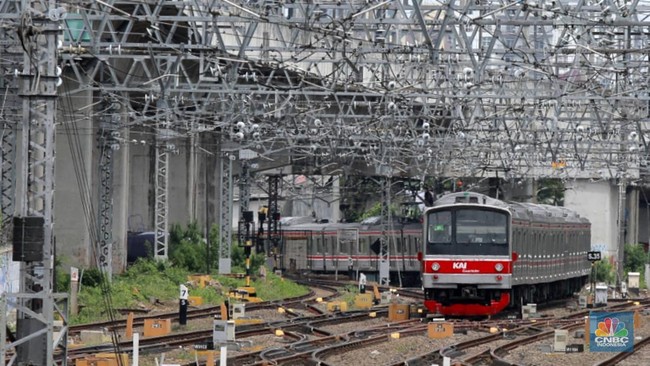
PT Kereta Api Indonesia (Persero) has revealed that the era of ex-Japanese Commuter Line (KRL) trains, such as the Tokyo Metro 6000 and Japan Railways (JR) 205 series that serve the Greater Jakarta area, will gradually come to an end. KAI plans to replace dozens of these decades-old train sets with new fleets manufactured domestically by PT Industri Kereta Api (INKA).
The President Director of PT KAI, Bobby Rasyidin, stated that fleet modernisation is a key corporate agenda to improve urban transport service quality and strengthen the national railway industry. Speaking during a Hearing with Commission VI of the Indonesian House of Representatives (DPR RI) in Jakarta, Rasyidin noted that out of 104 total train sets, 84 are ex-Japanese models with an average age of 40 years, some even reaching 55 years.
KAI is preparing a gradual replacement programme using domestically produced trains. “We will gradually replace these 84 sets, which will be produced by INKA. If we multiply 84 sets by 12 cars, that is nearly 1,000 carriages. This allows us to rebuild our railway industry simultaneously,” he said.
Beyond commuter trains, KAI is also planning a large-scale regeneration of its locomotive fleet, which serves as the backbone for long-distance passenger and freight services. Rasyidin revealed that there are currently 151 CC201 series locomotives, mostly produced around 1977, which are facing operational challenges. Specifically, these older models struggle to utilise B50 biodiesel due to the lack of compatible technology from that era, and they are prone to frequent breakdowns.
KAI plans to replace these 151 units with new locomotives, also expected to be produced by INKA. The next-generation locomotives will feature increased carrying capacity by raising the axle load from 15 tonnes to 18 tonnes. This upgrade is expected to increase hauling capacity by approximately 30%, moving from a 50-tonne capacity to 65 tonnes.
To ensure these new locomotives can operate optimally, KAI must also upgrade railway infrastructure across Java. The company has prepared repairs for hundreds of structures and supporting track components. “The consequence is that we must upgrade the railway network and 275 supporting structures, with an estimated cost of around Rp200 billion. This work will be carried out from 2026 to 2027, so we expect the new 18-tonne axle load locomotives to be operational in Java by 2027,” Rasyidin concluded.