
The Enduring Legacy of Marsinah
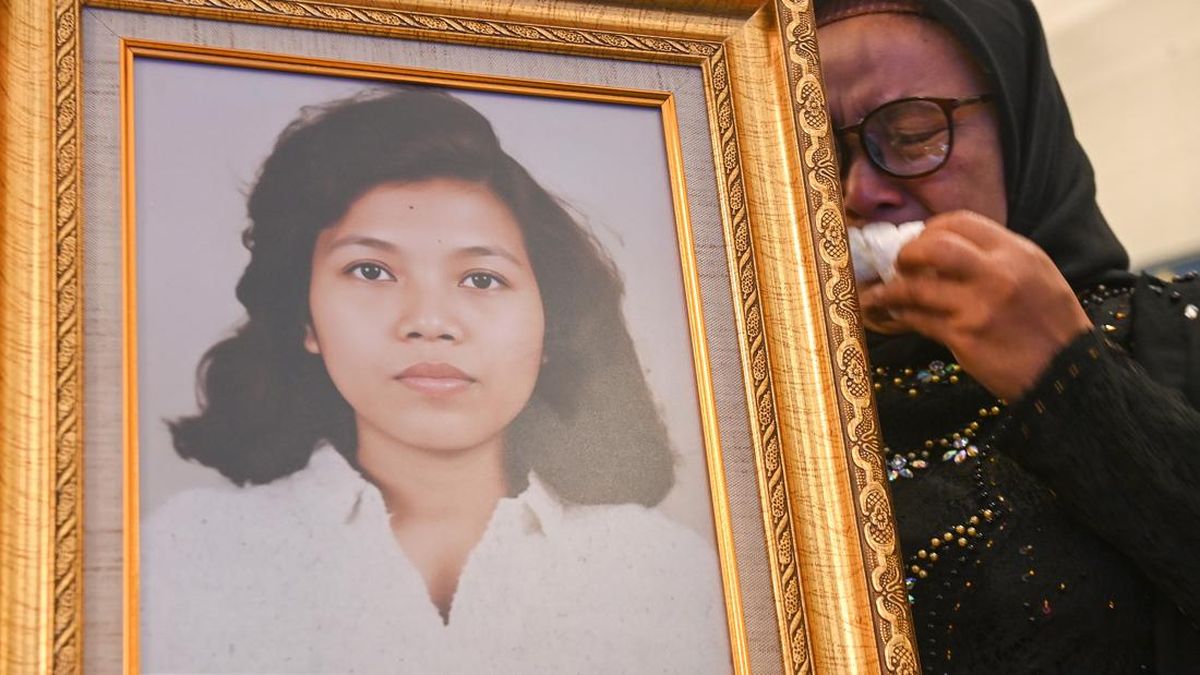
Marsinah never truly “died”. Thirty-three years after her body was found in a horrific condition in a farmer’s hut in Nganjuk, East Java, the voice of this female labourer resonates even more strongly.
Marsinah is not merely a statistic in the record of violence during the New Order era. She is a symbol of civil courage that refuses to bow to capitalist hegemony.
Marsinah was born on 10 April 1969 in Nglundo Village, Nganjuk, East Java. She was the child of Mastin and Sumini, with an elder sister Marsini and younger sister Widjiati.
However, her mother, Sumini, died when Marsinah was just three years old. She was then raised by her grandmother Puriah, her aunt Sini, and her uncle Suraji.
Her family lived modestly with a hand-to-mouth economy. Young Marsinah even had to work in the market selling rice and corn. This shaped her into an independent and bold individual.
At school, Marsinah was known as a bright student who often topped her class. She once dreamed of attending university and becoming a law graduate. However, the barrier of poverty forced her to bury that dream deeply.
After graduating from Muhammadiyah 1 Nganjuk High School in 1987, Marsinah migrated to Surabaya. After briefly working at the Bata shoe factory, she finally settled at PT Catur Putra Surya (CPS), a watch factory in Porong, Sidoarjo, starting in 1990.
There, she was known as a vocal labourer who strongly advocated for fair wages. She also frequently defended her colleagues who were treated unjustly by the company.
Marsinah’s Resistance
The tragedy began with the issuance of East Java Governor’s Circular No. 50/1992, which urged entrepreneurs to raise the basic wage by 20 percent. But PT CPS remained unmoved. The company’s reluctance sparked the anger of the workers, including Marsinah.
On 3 and 4 May 1993, Marsinah led her colleagues in a work strike. They submitted 12 demands, starting from a wage increase from Rp1,700 to Rp2,250 per day, a one-month salary bonus for Lebaran, as well as women’s rights such as maternity leave, health allowances, and others.
Marsinah’s struggle reached a critical point in May 1993, when 13 workers were summoned by the authorities and forced to resign.
Hearing the news that her colleagues had been treated unfairly, Marsinah was furious. On 5 May 1993, Marsinah and a friend submitted a protest letter to PT CPS. She questioned the reasons for summoning the other 13 workers, as the action was deemed to violate a previously agreed settlement.
That night, Marsinah also gathered and discussed with her work colleagues about the situation following the summons. However, after bidding farewell to leave Siring Village around 9:30 PM WIB, she disappeared and her whereabouts became unknown. That was the last moment Marsinah was seen alive.
For three days, Marsinah was missing and her whereabouts unknown. Searches conducted by her colleagues and family yielded nothing, until shocking news came from Nganjuk on 9 May 1993.
Marsinah’s body was found by a group of children in a hut in the middle of a rice field in Jegong Hamlet, Wilangan Village, Nganjuk. Her corpse was already stiff and showed signs of violence all over her body.
After being found dead, Marsinah’s body was autopsied twice. She was said to have died on 8 May 1993, or a day before she was found in the horrific condition in that hut.
Marsinah’s death triggered public outrage and international attention. The immense pressure led the government to form the East Java Bakorstanasda Integrated Team to investigate the case.
Nine people were arrested, including PT CPS owner Yudi Susanto and several company management staff. They were brought to court in a legal process full of irregularities.
The defendants claimed they were tortured by the authorities during the investigation to admit to acts they did not commit. As a result, at the Cassation level, the Supreme Court acquitted all the defendants due to a lack of physical evidence; they were not proven to have killed Marsinah. To this day, the main figure behind Marsinah’s murder has never been revealed.
State Recognition
After decades, Marsinah’s history entered a new chapter. On 10 November 2025, Indonesian President Prabowo Subianto officially bestowed the title of National Hero upon Marsinah.
Now, in 2026, the tribute to Marsinah does not stop at a single certificate. The government will inaugurate the Marsinah Museum in Nganjuk and designate her birth village as an Educational Tourism Village.
“Our brothers and sisters have elevated Mother Marsinah as a national hero. And this month too, I will go to Nglundo Village, Nganjuk, East Java, to inaugurate the Labour Struggle Museum named the Marsinah Museum,” said Prabowo while attending the International Labour Day commemoration or May Day 2026 at the National Monument (Monas), Jakarta, on Friday (1/5).
Once again, 33 years have passed, Marsinah never “died”. Her name still lives on the streets, in every labour demonstration that continues to fight for their rights; she remains etched in the collective memory of the working class.