
The End of American Soft Power Hegemony?
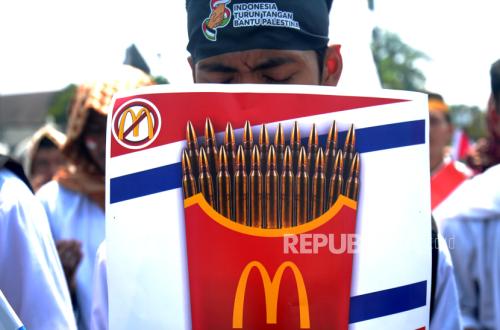
For more than half a century, American cultural influence appeared so dominant that many considered it natural. Hollywood, Disney, MTV, Coca-Cola, the NBA, and Silicon Valley shaped the imagination of billions worldwide. This dominance fostered a belief that globalisation would ultimately produce a global culture—increasingly uniform and transcending national boundaries. The opening of trade, investment, technology, and information flows was expected to drive cultural convergence, where societies across the globe would consume the same cultural products and gradually adopt similar values and lifestyles. In this view, the future world was predicted to increasingly resemble America.
However, recent developments indicate a different direction. K-pop from South Korea, Japanese anime, Turkish series, Indian Bollywood, Latin American music, and China’s gaming industry increasingly demonstrate that globalisation does not always produce an increasingly uniform culture. The world is indeed more connected, but cultural preferences are becoming more diverse. This paradox was highlighted by The Economist magazine (13 June 2026) in an article titled ‘A World Cup Paradox’. Amidst a World Cup watched by billions, the magazine posed an intriguing question: why, in an era of unprecedented global connectivity, are people increasingly enjoying content close to their local identities? The question may sound simple, but its implications are profound for how we understand globalisation and cultural influence in the 21st century.
To understand this phenomenon, we must return to the concept of soft power introduced by American political scientist Joseph Nye. Unlike hard power, which relies on military force or economic pressure, soft power is the ability to influence others through attraction. People follow, admire, or even imitate a country not because they are coerced, but because they are attracted to the values, culture, institutions, and way of life that country offers. For several decades, the United States was the most successful example of soft power use. Hollywood films, pop music, prestigious universities, technology companies, and ideas about freedom and social mobility made America not just a powerful country, but one widely admired. For millions around the world, America was not merely a country, but an aspiration.
This dominance strengthened after the end of the Cold War. At that time, many observers believed globalisation would extend American cultural influence worldwide. In simple terms, the more global the world became, the more ‘American’ it would be. Yet history took a different turn. The internet and digital technology did remove many distribution barriers. However, instead of reinforcing a single dominant global culture, technology opened space for the emergence of diverse local cultures capable of reaching international audiences. Netflix allows Korean series to be watched in Latin America. Spotify introduces Latin music to Europe. YouTube paves the way for creators from various countries to reach a global audience. TikTok even enables songs in local languages to become international phenomena within days. This phenomenon shows that globalisation does not end cultural identity. On the contrary, global technology provides a new stage for the revival of local culture.
This is what The Economist calls the World Cup Paradox. The world is increasingly connected, but culture is not becoming more uniform. Instead, people are increasingly free to choose content closest to their own language, experience, and identity. Globalisation, it turns out, does not erase cultural differences but provides new means to express them. In Brazil, around 96 of the 100 most listened-to artists are local. On YouTube, most trending videos are popular only in one country. Facts like these demonstrate that global technology does not always produce uniform global tastes.
Does this mean American soft power has ended? Not necessarily. America still possesses extraordinary soft power assets, from Hollywood and Silicon Valley to the world’s best universities, which remain a magnet for international talent. For many families in Indonesia, acceptance to Harvard, Berkeley, Princeton, MIT, Stanford, or other elite American campuses is still viewed as a proud achievement. This phenomenon shows that America’s appeal remains strong, not only in entertainment and technology but also in education, research, and innovation. English also remains the dominant global language in business, science, technology, and international diplomacy.
What may be ending is not American soft power, but its hegemony over the global cultural space. If at the end of the 20th century America had almost no serious competitors in shaping the world’s cultural imagination, the situation is now far more competitive. South Korea, India, Turkey, China, and various other countries are beginning to have cultural influence that transcends their geographical boundaries. The world appears to be moving from a relatively centralised soft power system towards a more multipolar one. This change brings good news for Indonesia. If the world’s cultural stage was once dominated by a handful of large countries, the door is now much more open. South Korea shows that cultural influence does not always follow the size of territory or military strength. What is needed is creativity, consistency, and capability.