
The Elderly, AI, and Digital Ethics: Countering Hoaxes
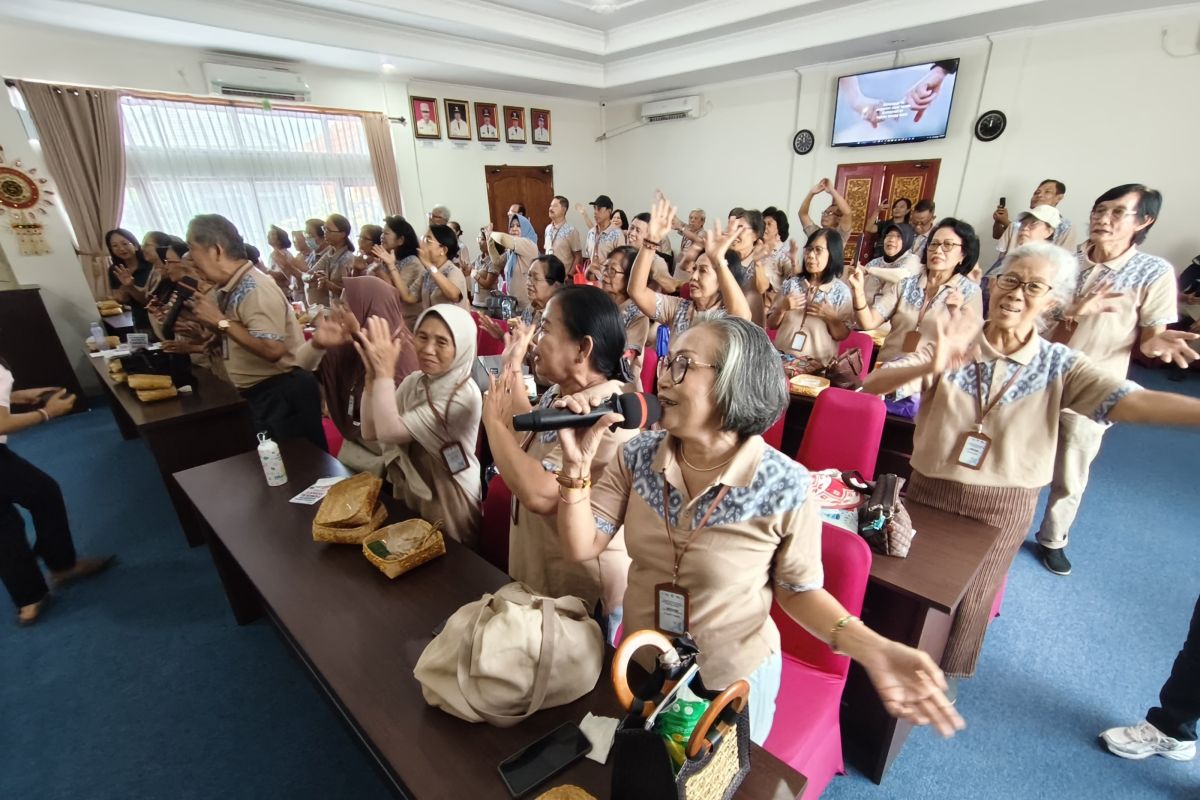
Digital literacy can equip the elderly to be responsive, resilient, and independent when facing the risks of hoaxes and online scams.
Denpasar (ANTARA) - In the past, before information technology became as advanced as it is today, senior citizens usually enjoyed their retirement through farming, gardening, exercising, deepening their spirituality, or playing with their grandchildren.
Nowadays, the elderly also spend their time utilising information technology, notably through social media. Through social media, they can expand cross-generational connections, engage in virtual face-to-face interactions with old friends or family, share photos and videos, share beautiful memories, and use these platforms as a source of information.
The options are diverse, ranging from instant messaging applications like WhatsApp to platforms such as YouTube, Facebook, Instagram, and TikTok, which are currently trending.
The Ministry of Communication and Digital (Kemkomdigues), through the 2025 Indonesia Digital Society Index (IMDI), revealed that the Indonesian public in general is digitally proficient. This is evidenced by an increase in the 2025 IMDI by 1.19 points to 44.53, up from 43.34 in 2024.
This picture aligns with the 2025 survey results from the Indonesian Internet Service Providers Association (APJII), which shows that the elderly are one of the highest groups of mobile phone users, reaching 91.13 per cent.
However, the high usage of smartphones by the elderly is not necessarily balanced by adequate understanding or literacy levels. This is because one of the four pillars measured in the IMDI, namely digital literacy, actually requires extra attention and effort as its value decreased by 8.97 points to 49.28.
The rapid flow of information and entertainment on social media brings its own risks to society, including the elderly. This group is vulnerable to becoming targets of online scams and exposure to false information or hoaxes spreading across the digital space.
These information disturbances are generally divided into three forms: misinformation, disinformation, and malinformation. This concept was formulated by Claire Wardle and Hossein Derakhshan in their 2017 book, ‘Information Disorder: Toward an Interdisciplinary Framework for Research and Policymaking’.
Although all three forms of information disorder have negative impacts, they possess distinct differences and characteristics.
Misinformation is incorrect information spread without the intention to cause harm, although it remains misleading. Unlike misinformation, disinformation is false information that is intentionally created and spread to harm others through manipulation or engineering.
Meanwhile, malinformation is fact-based information spread with malicious intent to harm specific parties, such as leaking personal data into the public domain to trigger harassment or hate speech.