
The Effectiveness of Foreign Loans in Integrating Weapons Systems
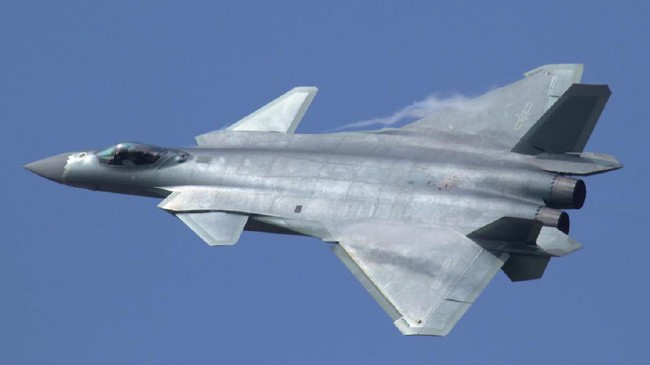
Indonesia’s fighter aircraft acquisition programme has so far relied on foreign loans, normally provided by the jet-producing country through credit facilities from export credit agencies (ECAs).
There are exceptions: imports of China’s J-10C are based on commercial credit from foreign private creditors, while the purchase of Russian Su-35s uses domestic-currency funding.
For the first time, Indonesia decided to procure fighters from China even though Beijing was unwilling to offer an ECA-backed financing scheme. The use of domestic-currency funding for the Su-35 followed the threat of CAATSA sanctions, which meant no lender was willing to provide Indonesia with a foreign loan.
Indonesia appears unconcerned about the consequences of each financing choice, considering diversification of weapons systems more important than the resulting debt burden. In addition to showing little concern about that burden, the acquisition of Chinese fighter aircraft further underscores the Ministry of Defence’s policy of continuing to create silos in the defence system.
In the fighter aircraft domain, logistical and communications silos have already emerged across equipment from the United States, the United Kingdom, Russia and France, making it difficult to achieve seamless integration and unified command and control.
If trainer aircraft are included, the silos expand to include the T-50i, which uses South Korean and US technology. They would multiply further if Chinese and South Korean products are added, should Indonesia proceed with acquiring the KF-21 Block II.
Many countries have long given particular priority to secure, encrypted communications between fighters, including the use of data links capable of transmitting and receiving voice, video and data.
The experience of several developing countries suggests that the more diverse the sources of fighter aircraft, the more complex the challenge of achieving integrated systems and interoperability.
Communications are inseparable from command and control: without reliable and secure communications networks, command and control cannot function properly. A breakdown caused by an adversary’s electronic attack or other factors can lead to an operation’s failure by severing communications between decision-makers and those carrying it out.
The diversity of Indonesia’s fighter fleet also means it uses different data links, such as Link 16 for the F-16, LCall for the Rafale, and Telecode for the Su-27/30. In theory, different data links can be integrated, although this requires several layers of gateways and consequently introduces latency.
Political factors can also prevent the integration of different data links: permission may be required from the country that owns a system, even when the countries involved are politically aligned. Indonesian stakeholders are aware of the complexity of data-link integration, but such technical issues have not been considered when decisions are made about which fighter types to procure.
Under the 2020–2024 Minimum Essential Force (MEF) programme, the Ministry of Defence has a US$200 million Joint National Operational Command (JNOC) project financed through foreign private credit. Previously, the Indonesian National Armed Forces (TNI) Headquarters had a US$49 million Command-and-Control Interoperability System (SIK) programme, which covers only a few segments.
It remains unclear whether the two programmes can be integrated, given that JNOC adopts a Turkish system while SIK uses a Greek one. Integrating Turkish and Greek products is difficult, the author argues, because of the political hostility between the two countries.
JNOC and SIK operate at a higher level of the data-link integration architecture, although their positions within the TNI’s command-and-control architecture remain unclear. This illustrates how Indonesia’s decision to acquire weapons systems and subsystems from diverse sources is not supported by the international geopolitical landscape.
Integrating JNOC and SIK will pose a challenge if political barriers cannot be overcome by engineering alone. This is just one example of the difficulties involved in integrating different systems to achieve interoperability, including links between fighter aircraft and air-defence radars.
As the Ministry of Defence acquires an increasingly varied range of combat aircraft for the Indonesian Air Force, while air-defence radar procurement—particularly Ground Control Interception (GCI) systems—is concentrated among just two manufacturers, the command-and-control integration challenge is growing. One of the two radar producers has a proven track record; the other is new and unproven, having produced its system for the first time.
Since the air-defence radar network in eastern Indonesia will be equipped entirely with Thales-made GM400α radars, achieving seamless integration with Chinese fighters will be a major challenge because of political factors.
Engineering could make it possible to integrate the J-10C with the French-made GM400α so that the radar’s air picture can be shared with the Chinese aircraft. However, this would require several gateways, with the resulting risk of latency.
The Ministry of Defence can continue to diversify fighter types as long as fiscal space remains to take on new debt, but a diverse fleet is not aligned with the interests of interoperability and logistics.
This raises the question of whether spending nearly US$10 billion under the 2020–2024 MEF programme to import fighters from France and China represents value for money when the need for integrated systems and unified command and control is taken into account.
Alongside procurement policies that promote diversity in countries of origin, another reason integration has become a major and challenging task is the absence of plans to integrate equipment from different countries at the stage when requirements are drawn up.
Responsibility for this problem cannot be placed on domestic or international defence electronics firms tasked with finding integration solutions, because integration between systems is both an engineering and a political issue.
Indonesia’s efforts to develop its own data link are commendable, but data links are not the root cause of the integration problem. Whether the country can produce its own data link that effectively integrates several different systems remains to be seen. The underlying issue that the government appears unwilling to address is the need to reduce the number of countries supplying fighter aircraft.