
The Economy of Qurbani and Dam: Strengthening Food Resilience
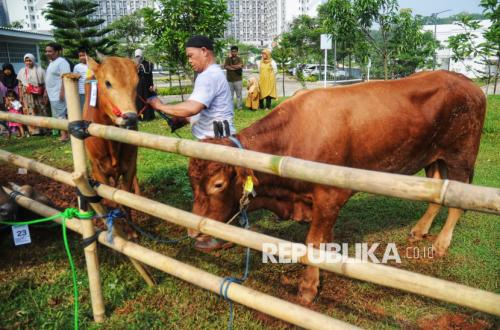
Every Hajj season, Indonesia witnesses a major economic phenomenon that has yet to be optimally harnessed. Behind the enthusiasm for the departure of pilgrims and the ritual of standing at Arafah, there is extraordinary activity in the economy of qurbani and dam. These two acts of worship are not merely manifestations of spiritual devotion but also engines driving social-religious resources, with potential reaching tens of trillions of rupiah. However, efforts to manage this potential as an instrument of national development still need to be intensified. The state has provided a solid legal foundation. Based on Law No. 23 of 2011 on the Management of Zakat, the National Amil Zakat Agency (BAZNAS) is not only mandated to manage zakat, infak, and sedekah (ZIS), but also Other Social-Religious Funds (DSKL). This mandate positions BAZNAS as the institution responsible for managing all the religious potential of the ummah, including qurbani and dam, in a professional and accountable manner. This mandate is further clarified by the Minister of Religious Affairs Decree (KMA) No. 437 of 2025 on Guidelines for the Governance of Dam or Hadyu in the Implementation of Hajj Worship. This regulation is a breakthrough because it officially designates BAZNAS as the authorised party to receive dam payments. Moreover, BAZNAS is tasked with distributing and allocating the dam meat to entitled parties, both in the Holy Land and in the homeland. However, following the transfer of authority for organising the fifth pillar of Islam from the Ministry of Religious Affairs, the Ministry of Hajj and Umrah has now issued Circular Letter No. S-50/BN/2026, which regulates the freedom of pilgrims to choose the type of Hajj (tamattu’, qiran, ifrad) and establishes the mechanism for dam payments. This rule emphasises that its implementation must be through official channels, with options for slaughter in Saudi Arabia or via official institutions in Indonesia such as BAZNAS. Data from the BAZNAS Strategic Studies Centre (Puskas) website shows fantastic figures. In 2025, the potential qurbani economy in Indonesia is projected to reach Rp 34.85 trillion. This figure is not just a paper calculation but a reflection of active community participation. Estimates indicate that around 3.56 million households or mudhohi (qurbani participants) will take part in this year’s qurbani worship. From such participation, the real economic volume that moves can be calculated. It is estimated that around 2.8 million livestock animals will be slaughtered on Eid al-Adha. The breakdown consists of 2.2 million sheep or goats and 647 thousand cattle. From this number, approximately 239.5 thousand tonnes of qurbani meat will be produced, ready for distribution across the country. In addition to qurbani, the dam instrument also holds no less significant economic potential. If all Hajj pilgrims and officials, numbering around 225 thousand people, pay dam, the collected funds will reach Rp 567 billion. This amount is equivalent to the production of around 3.4 million pouches of processed meat, with each pouch weighing 2.5 kilograms. This is a very significant source of animal protein. If qurbani and dam are managed optimally for the nation’s interests, this potential will become a solution to various pressing social problems. Indonesia is still grappling with high stunting rates and food insecurity in many regions. The mass distribution of meat at the same time becomes a golden opportunity for nutritional intervention, especially for poor families and vulnerable groups in the outermost, foremost, and most underdeveloped areas (3T). The economic benefits of managing qurbani and dam are not only felt by the meat beneficiaries (mustahik). Livestock farmers are one of the most benefited parties, especially if dam slaughter can be carried out in the homeland. Large-scale demand for livestock during the Hajj season creates market certainty and drives up selling prices, ultimately improving the welfare of farmers in villages. For this reason, BAZNAS RI continues to open avenues for innovation. One strategic breakthrough being pursued is opening opportunities for Hajj pilgrims to pay and carry out dam slaughter domestically. This option emerged after support from the Ministry of Hajj and Umrah as well as fatwas from several Islamic organisations such as Muhammadiyah, which permit the practice under certain conditions. BAZNAS fully recognises that there are differing opinions among scholars regarding the location of dam slaughter. Fatwa of the Indonesian Ulema Council (MUI) No. 41 of 2011 states that the law of dam slaughter outside the Haram Land is invalid. However, BAZNAS’s principle is to respect existing differences of opinion. Therefore, BAZNAS only provides facilitation options for pilgrims who believe in the permissibility of slaughter in the homeland. This step aligns with the Ministry of Hajj’s vision to build an inclusive national Hajj economic ecosystem, including the affirmation that dam governance in the future must become a strategic instrument. Standardised and integrated management across sectors is expected to create multiplier effects for UMKM actors, farmers, and the wider community, not just stopping at administrative aspects. As one example, to ensure a quality supply of livestock and empower small farmers, BAZNAS has long prepared upstream infrastructure. The BAZNAS Livestock Centre programme continues to be strengthened in various regions. For instance, recently, BAZNAS inaugurated one of its strategic programmes in Central Lombok, West Nusa Tenggara, which is the 59th point out of a total of 70 Livestock Centre locations across Indonesia. In Pagutan Village, mustahik farmers are facilitated with facilities to raise dozens of cattle consisting of bulls, broodstock, and young males. This is not just about distributing animals but a continuous mentoring programme designed to lift farmers out of the poverty trap. For this one point alone, the total assistance provided
Source: jawawa.id (https://jawawa.id/newsitem/the-economy-of-qurbani-and-dam-strengthening-food-resilience-1777474350)
Originally published by Republika (https://analisis.republika.co.id/berita/te9cr3472/ekonomi-kurban-dan-dam-memperkuat-ketahanan-pangan), translated from Indonesian