
The Economy Is Growing, So Why Are Households Still Under Pressure?
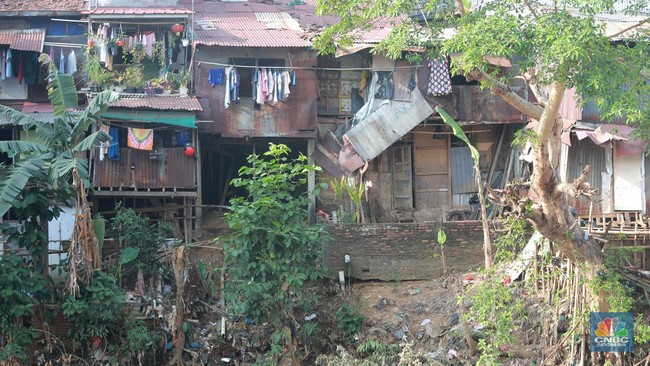
Economic growth should expand employment opportunities, strengthen purchasing power and give families room to plan for the future. Strong growth figures are not enough if the benefits are not felt evenly in everyday life.
Two realities coexist in Indonesia’s economy. On the one hand, growth figures point to relatively strong performance. On the other, many families still have to calculate carefully how to cover monthly needs, pay for their children’s education and instalments, and build savings.
For some families, the challenge is not yet how to improve their welfare, but how to ensure their spending does not exceed their income.
Statistics Indonesia (BPS) reported that the economy grew by 5.29% year on year in the second quarter of 2026. Growth reached 5.45% over the first half of the year.
Household consumption also grew by 5.06% in the same quarter. These figures show that economic activity continues and that public spending remains one of its supports. But aggregate growth does not, by itself, explain how well each household can meet its living costs.
The figures and lived experience
Gross domestic product measures the value of goods and services produced by the economy. It is important for gauging the national economic outlook, but it is not a complete picture of the circumstances of every household. Growth can rise alongside cost-of-living pressures, unequal access to jobs or inadequate incomes for some groups.
Inflation in September 2026 was 3.28% year on year and 0.30% month on month. The annual rate reflects price changes compared with September a year earlier; it does not mean that the prices of all goods rose by the same amount.
Even so, the national figure does not alter the fact that household spending is strongly shaped by what families buy. Lower-income households, for example, have less room to adjust their spending when the prices of essentials and transport rise.
For that reason, claims that purchasing power remains strong should be treated cautiously when based only on growth in consumption. Higher consumption does not necessarily mean that every family is better off.
Some households spend more because their incomes have risen. Others maintain their spending by drawing down savings, borrowing or postponing other needs. Aggregate data are not enough to distinguish all these circumstances.
Degrees and jobs
Household pressures are also evident in the labour market. For many families, higher education is a long-term investment, made in the hope that their children will secure better jobs and become financially independent.
That hope becomes a burden when graduation is not followed promptly by employment. BPS data recorded 1,010,652 unemployed people with university degrees in February 2025. By August 2025, the number stood at 904,440, out of 7,461,507 people who were openly unemployed.
In August that year, the open unemployment rate among university graduates was 5.39%. This does not mean higher education has lost its value, but it shows that a degree does not automatically guarantee access to a job.
Unemployment among university graduates cannot be blamed entirely on universities. Mismatches between skills and industry needs need to be addressed through adaptable curricula, work experience, training and stronger links between education and business.
But improving education alone will not be enough if the economy does not generate a sufficient number of productive jobs. Behind those statistics are families that continue to support their children after graduation, while graduates postpone financial independence and building savings.
An investment in education that should expand social mobility can turn into a prolonged wait. The government needs to ensure that its growth strategy, industrial policy and investment genuinely expand access to decent jobs, rather than merely increasing output figures.
Inequality in view
The picture of welfare also needs to be understood through the distribution of income and expenditure. In March 2026, Indonesia’s poverty rate was 8.07%, or around 22.93 million people. This was down from September 2025, a development worth noting.
However, over the same period, the Gini ratio for expenditure rose from 0.363 in September 2025 to 0.368 in March 2026. The bottom 40% of the population accounted for 19.22% of expenditure.
These figures do not mean that every household’s welfare has declined. Falling poverty indicates progress, while the higher Gini ratio is a reminder that the distribution of expenditure remains a challenge. Growth and equitable distribution are not competing agendas; both determine whether economic progress is felt more widely.
Measuring welfare
The government needs growth figures to formulate policy and assess economic performance. But the success of development should not be measured by that figure alone.
Growth needs to translate into jobs with adequate wages, well-targeted social protection, access to education that opens up opportunities, and prices for basic necessities that do not erode household incomes.
Economic policy evaluations should also pay closer attention to job quality, changes in real incomes, household spending burdens and the distribution of the benefits of growth. Government programmes should be judged by their impact on people’s lives, not only by the size of their budgets or the scale of their activities.
A growing economy is an important foundation for welfare. But for a family, success is tangible when income is enough to meet needs without constant borrowing, when a child who has graduated finds a job, and when money can still be put aside for the future.
Growth of more than 5% deserves recognition, but it should not leave the government complacent. The most immediate measure of economic progress is whether people can live with greater security and dignity.
When national figures improve while many families are still grappling with living costs and job insecurity, that is a serious reminder that the work of development is not finished.
Source: jawawa.id (https://jawawa.id/newsitem/the-economy-is-growing-so-why-are-households-still-under-pressure-1791787854)
Originally published by CNBC Indonesia (https://www.cnbcindonesia.com/opini/20261012111513-14-775278/ekonomi-tumbuh-mengapa-rumah-tangga-masih-tertekan), translated from Indonesian